Preparing With the Risk Manager
เตรียมตัวร่วมกับผู้จัดการความเสี่ยง
Dr. Mia Patel meets with risk manager David Chen before speaking with the family. They review the confirmed facts, consider what remains uncertain, and plan how to disclose the error clearly without speculating.
ดร. มีอา พาเทลพบกับเดวิด เฉิน ผู้จัดการความเสี่ยง ก่อนพูดคุยกับครอบครัว ทั้งคู่ทบทวนข้อเท็จจริงที่ยืนยันแล้ว พิจารณาสิ่งที่ยังไม่แน่ชัด และวางแผนว่าจะเปิดเผยข้อผิดพลาดอย่างชัดเจนโดยไม่คาดเดาได้อย่างไร
บทสนทนา12
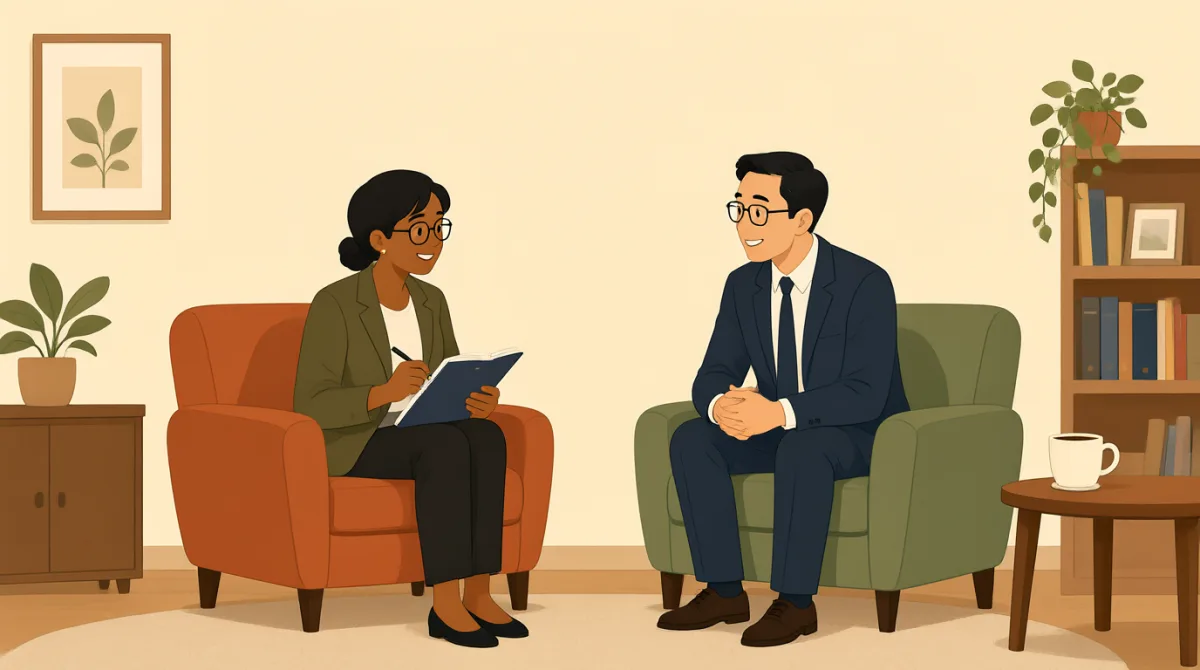

Before we meet with the family, I want to make sure I can explain the confirmed facts plainly and distinguish them from what we’re still investigating.
ก่อนที่เราจะพบครอบครัว ฉันอยากแน่ใจว่าฉันอธิบายข้อเท็จจริงที่ยืนยันแล้วได้อย่างตรงไปตรงมา และแยกให้ชัดว่าเรื่องไหนยังอยู่ระหว่างการตรวจสอบ

That’s the right approach. The medication record confirms that the patient received a dose intended for a different schedule. We should not infer how the error occurred until the review establishes that.
นั่นเป็นวิธีที่ถูกต้อง เวชระเบียนยืนยันว่าผู้ป่วยได้รับยาในขนาดที่กำหนดไว้สำหรับตารางการให้ยาอีกแบบหนึ่ง เราไม่ควรสรุปว่าเกิดข้อผิดพลาดขึ้นได้อย่างไร จนกว่าการตรวจสอบจะยืนยันเรื่องนั้น
We also know his condition worsened afterward, and the care team treated him. But we can’t yet say with confidence that the incorrect dose caused the change in his condition.
เรายังทราบด้วยว่าอาการของเขาทรุดลงหลังจากนั้น และทีมดูแลได้ให้การรักษาแล้ว แต่ตอนนี้เรายังบอกอย่างมั่นใจไม่ได้ว่าขนาดยาที่ไม่ถูกต้องทำให้อาการของเขาเปลี่ยนแปลง
Exactly. Be transparent about the sequence, but don’t present timing as proof of causation. If his daughter asks whether the medication caused harm, tell her what’s known and what remains unresolved.
ถูกต้อง บอกลำดับเหตุการณ์ตามจริง แต่อย่าเสนอว่าการเกิดขึ้นตามลำดับเวลาเป็นหลักฐานยืนยันเหตุและผล ถ้าลูกสาวของเขาถามว่ายาทำให้เกิดอันตรายหรือไม่ ก็บอกเธอว่าเรารู้อะไรแล้วและอะไรที่ยังไม่ได้ข้อสรุป
I’m concerned that saying “we’re still investigating” may sound evasive. I want to be honest about the uncertainty without making it seem as though we’re withholding information.
ฉันกังวลว่าการพูดว่า “เรายังอยู่ระหว่างการตรวจสอบ” อาจฟังเหมือนกำลังเลี่ยงคำตอบ ฉันอยากพูดตรงไปตรงมาเรื่องความไม่แน่ชัด โดยไม่ทำให้ดูเหมือนว่าเรากำลังปิดบังข้อมูล
Then pair the uncertainty with specifics: say what the record confirms, what the team has done, and what the review is examining. Avoid vague reassurance or promises about the outcome.
ถ้าอย่างนั้นก็พูดถึงความไม่แน่ชัดควบคู่กับข้อมูลที่เฉพาะเจาะจง บอกว่าเวชระเบียนยืนยันอะไร ทีมได้ทำอะไรไปแล้ว และการตรวจสอบกำลังพิจารณาเรื่องใด หลีกเลี่ยงการให้ความมั่นใจแบบคลุมเครือหรือสัญญาว่าผลจะออกมาอย่างไร
Should I explain that the dose was given incorrectly, even though we don’t yet know whether it affected his condition? I don’t want the family to hear a softened version of what happened.
ฉันควรอธิบายไหมว่าให้ยาไม่ถูกต้อง ทั้งที่เรายังไม่รู้ว่าส่งผลต่ออาการของเขาหรือเปล่า ฉันไม่อยากให้ครอบครัวได้ยินเรื่องที่เกิดขึ้นในแบบที่ถูกลดทอนความจริง
Yes. Name the error directly. You can say the patient received medication in a way that did not match the prescribed schedule, then explain that the clinical impact is still being assessed.
ควร บอกข้อผิดพลาดตรง ๆ คุณพูดได้ว่าผู้ป่วยได้รับยาไม่ตรงตามตารางการให้ยาที่แพทย์สั่ง จากนั้นก็อธิบายว่าผลกระทบทางคลินิกยังอยู่ระหว่างการประเมิน
And if I don’t know the answer to something, I should say so, rather than fill the silence. I can tell her we’ll follow up when we have reliable information.
แล้วถ้าฉันไม่รู้คำตอบ ฉันก็ควรบอกไปตามนั้น แทนที่จะพูดอะไรเพื่อกลบความเงียบ ฉันบอกเธอได้ว่าเราจะติดต่อกลับเมื่อมีข้อมูลที่เชื่อถือได้
Right. Don’t speculate about who was responsible or why it happened. We can explain that the review will examine the circumstances and share its findings with the family as they become available.
ใช่ อย่าคาดเดาว่าใครเป็นคนรับผิดชอบหรือทำไมเรื่องนี้ถึงเกิดขึ้น เราอธิบายได้ว่าการตรวจสอบจะพิจารณาสถานการณ์ที่เกี่ยวข้อง และจะแจ้งผลให้ครอบครัวทราบเมื่อมีข้อมูล
I’ll keep the conversation direct and leave room for their questions. I can’t undo the error, but I can make sure they hear an accurate account and know what we’re doing next.
ฉันจะคุยอย่างตรงไปตรงมาและเปิดโอกาสให้พวกเขาถาม ฉันแก้ไขข้อผิดพลาดที่เกิดขึ้นไปแล้วไม่ได้ แต่ฉันทำให้แน่ใจได้ว่าพวกเขาจะได้รับข้อมูลที่ถูกต้องและรู้ว่าเราจะทำอะไรต่อ
That’s what they need from us: candor, not certainty we don’t have. If the conversation becomes difficult, pause, listen, and answer only what we can support with facts.
สิ่งที่พวกเขาต้องการจากเราคือความจริงใจ ไม่ใช่การแสร้งว่ามั่นใจทั้งที่เราไม่รู้แน่ชัด ถ้าการพูดคุยเริ่มยากขึ้น ก็หยุดพัก รับฟัง และตอบเฉพาะเรื่องที่เรามีข้อเท็จจริงรองรับ
คำศัพท์8
- confirmed factsข้อเท็จจริงที่ยืนยันแล้ว
Information that has been verified and is supported by evidence. Use this phrase to distinguish established details from assumptions.
ข้อมูลที่ผ่านการตรวจสอบและมีหลักฐานรองรับ ใช้วลีนี้เพื่อแยกรายละเอียดที่ยืนยันได้แล้วออกจากข้อสันนิษฐาน
- inferอนุมาน
To form a conclusion from available information, even when it has not been directly confirmed. Here, the speaker cautions against guessing how the error happened.
สรุปจากข้อมูลที่มีอยู่ แม้จะยังไม่มีการยืนยันโดยตรง ในที่นี้ ผู้พูดเตือนไม่ให้คาดเดาว่าข้อผิดพลาดเกิดขึ้นได้อย่างไร
- with confidenceอย่างมั่นใจ
In a way that is sufficiently certain or well-supported. Use this phrase when explaining what can or cannot yet be stated as fact.
ในลักษณะที่มีความแน่นอนหรือมีหลักฐานรองรับเพียงพอ ใช้วลีนี้เมื่ออธิบายว่าสิ่งใดที่ตอนนี้กล่าวเป็นข้อเท็จจริงได้หรือยังไม่ได้
- causationเหตุและผล
A relationship in which one event or action directly produces another. The dialogue distinguishes a sequence of events from proof that one caused the other.
ความสัมพันธ์ที่เหตุการณ์หรือการกระทำหนึ่งทำให้เกิดอีกเหตุการณ์หนึ่งโดยตรง บทสนทนานี้แยกการเกิดขึ้นตามลำดับเวลาออกจากหลักฐานที่พิสูจน์ว่าเหตุการณ์หนึ่งเป็นสาเหตุของอีกเหตุการณ์หนึ่ง
- evasiveเลี่ยงตอบ
Seeming to avoid answering directly. This is useful when discussing how an honest but incomplete answer might be perceived.
ทำให้รู้สึกเหมือนกำลังหลีกเลี่ยงการตอบอย่างตรงไปตรงมา ใช้คำนี้เมื่อพูดถึงว่าคำตอบที่จริงใจแต่ยังไม่ครบถ้วนอาจถูกมองอย่างไร
- pair the uncertainty with specificsพูดถึงความไม่แน่ชัดควบคู่กับข้อมูลที่เฉพาะเจาะจง
Explain what is not yet known while also giving concrete information that is known. This helps make an uncertain answer transparent rather than vague.
อธิบายสิ่งที่ยังไม่รู้ พร้อมให้ข้อมูลที่ชัดเจนเกี่ยวกับสิ่งที่รู้แล้ว วิธีนี้ช่วยให้คำตอบที่ยังไม่แน่ชัดโปร่งใส ไม่คลุมเครือ
- speculateคาดเดา
To make a guess without enough reliable evidence. In this context, it means avoiding unsupported claims about responsibility or causes.
เดาโดยไม่มีหลักฐานที่เชื่อถือได้เพียงพอ ในบริบทนี้หมายถึงการหลีกเลี่ยงการกล่าวอ้างเรื่องผู้รับผิดชอบหรือสาเหตุโดยไม่มีหลักฐานรองรับ
- candorความจริงใจ
Honest, direct communication. The dialogue presents candor as more important than pretending to have certainty.
การสื่อสารอย่างซื่อสัตย์และตรงไปตรงมา บทสนทนานี้ชี้ว่าความจริงใจสำคัญกว่าการแสร้งทำเป็นมั่นใจ
ประโยคสำคัญ8
- 1
Before we meet with the family, I want to make sure I can explain the confirmed facts plainly and distinguish them from what we’re still investigating.
ก่อนที่เราจะพบครอบครัว ฉันอยากแน่ใจว่าฉันอธิบายข้อเท็จจริงที่ยืนยันแล้วได้อย่างตรงไปตรงมา และแยกให้ชัดว่าเรื่องไหนยังอยู่ระหว่างการตรวจสอบ
This sentence sets a careful, transparent goal for a difficult conversation. Reuse the structure “distinguish [known information] from [what remains uncertain]” when clarifying complex issues.
ประโยคนี้กำหนดเป้าหมายอย่างรอบคอบและโปร่งใสสำหรับบทสนทนาที่ยาก คุณนำโครงสร้าง “distinguish [known information] from [what remains uncertain]” (แยก [ข้อมูลที่รู้แล้ว] ออกจาก [สิ่งที่ยังไม่แน่ชัด]) ไปใช้เมื่อต้องอธิบายเรื่องซับซ้อนได้
- 2
We should not infer how the error occurred until the review establishes that.
เราไม่ควรอนุมานว่าข้อผิดพลาดเกิดขึ้นได้อย่างไร จนกว่าการตรวจสอบจะยืนยันเรื่องนั้น
This is a concise way to avoid presenting an unverified explanation as fact. Reuse “We should not infer [claim] until [evidence or process] establishes that” in professional discussions.
นี่เป็นวิธีพูดสั้น ๆ เพื่อไม่ให้นำคำอธิบายที่ยังไม่ได้รับการยืนยันมาเสนอเป็นข้อเท็จจริง ในการพูดคุยเรื่องงาน คุณนำรูปแบบ “We should not infer [claim] until [evidence or process] establishes that” (เราไม่ควรอนุมาน [ข้อกล่าวอ้าง] จนกว่า [หลักฐานหรือกระบวนการ] จะยืนยันเรื่องนั้น) ไปใช้ได้
- 3
But we can’t yet say with confidence that the incorrect dose caused the change in his condition.
แต่ตอนนี้เรายังบอกอย่างมั่นใจไม่ได้ว่าขนาดยาที่ไม่ถูกต้องทำให้อาการของเขาเปลี่ยนแปลง
This sentence communicates uncertainty about causation without denying the known sequence of events. Reuse “We can’t yet say with confidence that…” when evidence is incomplete.
ประโยคนี้สื่อถึงความไม่แน่ชัดเกี่ยวกับเหตุและผล โดยไม่ได้ปฏิเสธลำดับเหตุการณ์ที่เรารู้อยู่แล้ว เมื่อหลักฐานยังไม่ครบ คุณนำรูปแบบ “We can’t yet say with confidence that…” (ตอนนี้เรายังบอกอย่างมั่นใจไม่ได้ว่า…) ไปใช้ได้
- 4
Be transparent about the sequence, but don’t present timing as proof of causation.
บอกลำดับเหตุการณ์ตามจริง แต่อย่าเสนอว่าการเกิดขึ้นตามลำดับเวลาเป็นหลักฐานยืนยันเหตุและผล
This sentence gives practical guidance for describing events accurately without overstating what they prove. The contrastive pattern “Be [quality], but don’t [risk]” is useful for setting clear limits.
ประโยคนี้ให้คำแนะนำที่นำไปใช้ได้จริงในการเล่าเหตุการณ์อย่างถูกต้อง โดยไม่กล่าวเกินกว่าที่หลักฐานพิสูจน์ได้ รูปแบบที่ใช้เปรียบต่าง “Be [quality], but don’t [risk]” (จง [คุณลักษณะ] แต่อย่า [ความเสี่ยง]) มีประโยชน์เมื่อต้องกำหนดขอบเขตให้ชัดเจน
- 5
Then pair the uncertainty with specifics: say what the record confirms, what the team has done, and what the review is examining.
ถ้าอย่างนั้นก็พูดถึงความไม่แน่ชัดควบคู่กับข้อมูลที่เฉพาะเจาะจง บอกว่าเวชระเบียนยืนยันอะไร ทีมได้ทำอะไรไปแล้ว และการตรวจสอบกำลังพิจารณาเรื่องใด
This provides a concrete method for making an uncertain response informative rather than evasive. Reuse “pair [uncertainty or concern] with specifics” when explaining how to communicate clearly.
ประโยคนี้เสนอวิธีที่เป็นรูปธรรมในการทำให้คำตอบที่ยังไม่แน่ชัดมีข้อมูล ไม่ใช่ฟังเหมือนเลี่ยงตอบ คุณนำรูปแบบ “pair [uncertainty or concern] with specifics” (พูดถึง [ความไม่แน่ชัดหรือข้อกังวล] ควบคู่กับข้อมูลที่เฉพาะเจาะจง) ไปใช้เมื่อต้องอธิบายวิธีสื่อสารให้ชัดเจนได้
- 6
Name the error directly.
บอกข้อผิดพลาดตรง ๆ
This short sentence emphasizes the importance of using plain, direct language instead of softening difficult facts. It can be reused as advice when accurate disclosure matters.
ประโยคสั้น ๆ นี้เน้นความสำคัญของการใช้ภาษาที่เรียบง่ายและตรงไปตรงมา แทนการพูดลดทอนข้อเท็จจริงที่ยากจะบอก คุณนำประโยคนี้ไปใช้เป็นคำแนะนำได้เมื่อต้องเปิดเผยข้อมูลอย่างถูกต้อง
- 7
I can tell her we’ll follow up when we have reliable information.
ฉันบอกเธอได้ว่าเราจะติดต่อกลับเมื่อมีข้อมูลที่เชื่อถือได้
This offers a clear next step without promising an answer before the facts are known. Reuse “We’ll follow up when we have reliable information” to set a realistic expectation.
ประโยคนี้บอกขั้นตอนต่อไปอย่างชัดเจน โดยไม่สัญญาว่าจะมีคำตอบก่อนที่ข้อเท็จจริงจะปรากฏ คุณนำ “We’ll follow up when we have reliable information” (เราจะติดต่อกลับเมื่อมีข้อมูลที่เชื่อถือได้) ไปใช้เพื่อกำหนดความคาดหวังอย่างสมเหตุสมผลได้
- 8
That’s what they need from us: candor, not certainty we don’t have.
สิ่งที่พวกเขาต้องการจากเราคือความจริงใจ ไม่ใช่การแสร้งว่ามั่นใจทั้งที่เราไม่รู้แน่ชัด
This sentence contrasts honesty with unsupported confidence and summarizes the approach to the conversation. The pattern “They need [quality], not [thing we cannot provide]” is useful for emphasizing priorities.
ประโยคนี้เปรียบเทียบความซื่อสัตย์กับความมั่นใจที่ไม่มีหลักฐานรองรับ และสรุปแนวทางในการพูดคุย รูปแบบ “They need [quality], not [thing we cannot provide]” (พวกเขาต้องการ [คุณลักษณะ] ไม่ใช่ [สิ่งที่เราให้ไม่ได้]) มีประโยชน์เมื่อต้องเน้นสิ่งที่สำคัญเป็นอันดับแรก