Preparing With the Risk Manager
Preparação com o gestor de riscos
Dr. Mia Patel meets with risk manager David Chen before speaking with the family. They review the confirmed facts, consider what remains uncertain, and plan how to disclose the error clearly without speculating.
A Dra. Mia Patel se reúne com o gestor de riscos David Chen antes de conversar com a família. Eles revisam os fatos confirmados, consideram o que ainda é incerto e planejam como comunicar o erro com clareza, sem especular.
Diálogo12
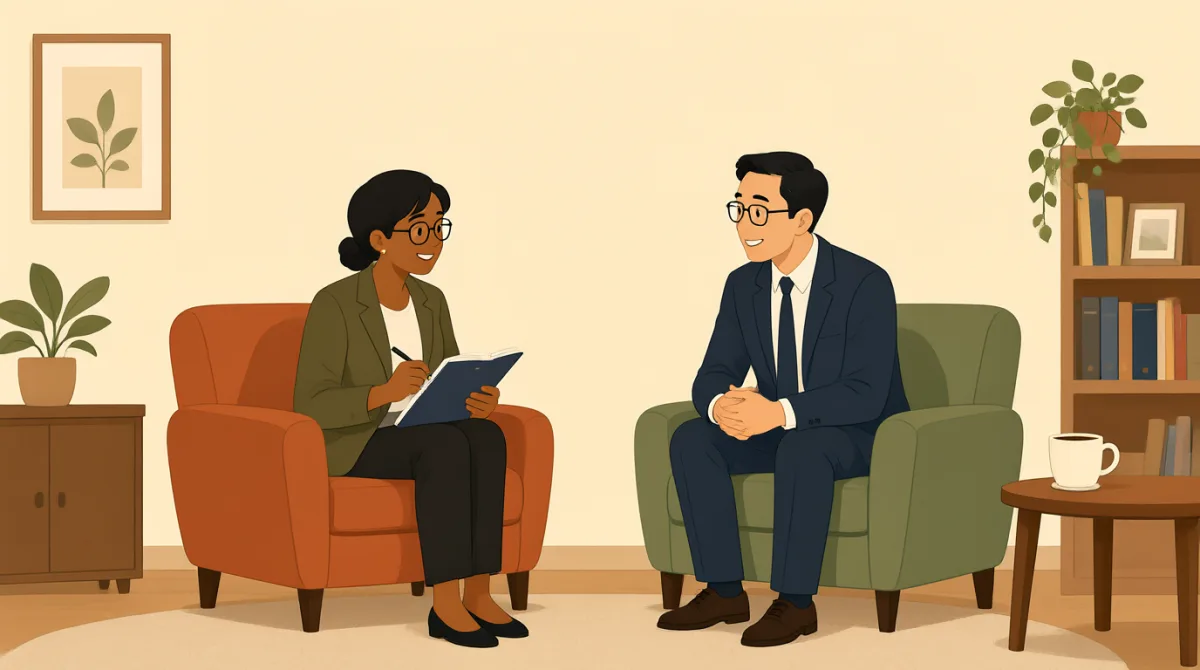

Before we meet with the family, I want to make sure I can explain the confirmed facts plainly and distinguish them from what we’re still investigating.
Antes de nos reunirmos com a família, quero ter certeza de que consigo explicar com clareza os fatos confirmados e diferenciá-los do que ainda estamos investigando.

That’s the right approach. The medication record confirms that the patient received a dose intended for a different schedule. We should not infer how the error occurred until the review establishes that.
Essa é a abordagem certa. O registro da medicação confirma que o paciente recebeu uma dose prevista para outro esquema. Não devemos deduzir como o erro aconteceu antes que a investigação esclareça isso.
We also know his condition worsened afterward, and the care team treated him. But we can’t yet say with confidence that the incorrect dose caused the change in his condition.
Também sabemos que o estado dele piorou depois, e que a equipe de assistência o tratou. Mas ainda não podemos afirmar com segurança que a dose incorreta causou a mudança no estado dele.
Exactly. Be transparent about the sequence, but don’t present timing as proof of causation. If his daughter asks whether the medication caused harm, tell her what’s known and what remains unresolved.
Exatamente. Seja transparente sobre a sequência dos acontecimentos, mas não apresente a ordem temporal como prova de causalidade. Se a filha dele perguntar se a medicação causou algum dano, diga o que se sabe e o que ainda não foi esclarecido.
I’m concerned that saying “we’re still investigating” may sound evasive. I want to be honest about the uncertainty without making it seem as though we’re withholding information.
Estou preocupada que dizer “ainda estamos investigando” possa parecer evasivo. Quero ser honesta sobre as incertezas sem dar a impressão de que estamos escondendo informações.
Then pair the uncertainty with specifics: say what the record confirms, what the team has done, and what the review is examining. Avoid vague reassurance or promises about the outcome.
Então, junto com as incertezas, apresente informações específicas: diga o que o registro confirma, o que a equipe fez e o que a investigação está analisando. Evite garantias vagas ou promessas sobre o resultado.
Should I explain that the dose was given incorrectly, even though we don’t yet know whether it affected his condition? I don’t want the family to hear a softened version of what happened.
Devo explicar que a dose foi administrada incorretamente, mesmo que ainda não saibamos se isso afetou o estado dele? Não quero que a família ouça uma versão amenizada do que aconteceu.
Yes. Name the error directly. You can say the patient received medication in a way that did not match the prescribed schedule, then explain that the clinical impact is still being assessed.
Sim. Identifique o erro diretamente. Você pode dizer que o paciente recebeu a medicação de uma forma que não correspondia ao esquema prescrito e, depois, explicar que o impacto clínico ainda está sendo avaliado.
And if I don’t know the answer to something, I should say so, rather than fill the silence. I can tell her we’ll follow up when we have reliable information.
E, se eu não souber a resposta a alguma pergunta, devo dizer isso, em vez de tentar preencher o silêncio. Posso dizer a ela que entraremos em contato quando tivermos informações confiáveis.
Right. Don’t speculate about who was responsible or why it happened. We can explain that the review will examine the circumstances and share its findings with the family as they become available.
Isso mesmo. Não especule sobre quem foi responsável nem por que aconteceu. Podemos explicar que a investigação analisará as circunstâncias e compartilhará as conclusões com a família à medida que estiverem disponíveis.
I’ll keep the conversation direct and leave room for their questions. I can’t undo the error, but I can make sure they hear an accurate account and know what we’re doing next.
Vou conduzir a conversa de forma direta e deixar espaço para as perguntas deles. Não posso desfazer o erro, mas posso garantir que ouçam um relato preciso e saibam o que faremos a seguir.
That’s what they need from us: candor, not certainty we don’t have. If the conversation becomes difficult, pause, listen, and answer only what we can support with facts.
É disso que eles precisam da nossa parte: franqueza, não uma certeza que não temos. Se a conversa ficar difícil, faça uma pausa, escute e responda apenas ao que pudermos afirmar com base nos fatos.
Vocabulário8
- confirmed factsfatos confirmados
Information that has been verified and is supported by evidence. Use this phrase to distinguish established details from assumptions.
Informações que foram verificadas e têm respaldo em evidências. Use essa expressão para diferenciar detalhes estabelecidos de suposições.
- inferdeduzir
To form a conclusion from available information, even when it has not been directly confirmed. Here, the speaker cautions against guessing how the error happened.
Chegar a uma conclusão com base nas informações disponíveis, mesmo que ela ainda não tenha sido confirmada diretamente. Aqui, a pessoa alerta para não adivinhar como o erro aconteceu.
- with confidencecom segurança
In a way that is sufficiently certain or well-supported. Use this phrase when explaining what can or cannot yet be stated as fact.
De uma forma suficientemente certa ou bem fundamentada. Use essa expressão para explicar o que ainda pode ou não ser apresentado como fato.
- causationcausalidade
A relationship in which one event or action directly produces another. The dialogue distinguishes a sequence of events from proof that one caused the other.
Relação em que um acontecimento ou uma ação produz diretamente outro. O diálogo diferencia uma sequência de acontecimentos da prova de que um causou o outro.
- evasiveevasivo
Seeming to avoid answering directly. This is useful when discussing how an honest but incomplete answer might be perceived.
Que parece evitar responder diretamente. Essa palavra é útil ao falar sobre como uma resposta honesta, mas incompleta, pode ser interpretada.
- pair the uncertainty with specificsapresentar informações específicas junto com as incertezas
Explain what is not yet known while also giving concrete information that is known. This helps make an uncertain answer transparent rather than vague.
Explique o que ainda não se sabe e, ao mesmo tempo, forneça informações concretas que já são conhecidas. Isso torna uma resposta incerta transparente, em vez de vaga.
- speculateespecular
To make a guess without enough reliable evidence. In this context, it means avoiding unsupported claims about responsibility or causes.
Fazer uma suposição sem evidências confiáveis suficientes. Neste contexto, significa evitar afirmações sem fundamento sobre responsabilidades ou causas.
- candorfranqueza
Honest, direct communication. The dialogue presents candor as more important than pretending to have certainty.
Comunicação honesta e direta. O diálogo apresenta a franqueza como mais importante do que fingir ter certeza.
Frases-chave8
- 1
Before we meet with the family, I want to make sure I can explain the confirmed facts plainly and distinguish them from what we’re still investigating.
Antes de nos reunirmos com a família, quero ter certeza de que consigo explicar com clareza os fatos confirmados e diferenciá-los do que ainda estamos investigando.
This sentence sets a careful, transparent goal for a difficult conversation. Reuse the structure “distinguish [known information] from [what remains uncertain]” when clarifying complex issues.
Esta frase estabelece um objetivo cuidadoso e transparente para uma conversa difícil. Reutilize a estrutura “distinguish [known information] from [what remains uncertain]” (diferenciar [informações conhecidas] de [o que ainda é incerto]) para esclarecer assuntos complexos.
- 2
We should not infer how the error occurred until the review establishes that.
Não devemos deduzir como o erro aconteceu antes que a investigação esclareça isso.
This is a concise way to avoid presenting an unverified explanation as fact. Reuse “We should not infer [claim] until [evidence or process] establishes that” in professional discussions.
Esta é uma forma concisa de evitar apresentar como fato uma explicação ainda não verificada. Reutilize “We should not infer [claim] until [evidence or process] establishes that” (Não devemos deduzir [afirmação] até que [evidências ou processo] confirmem isso) em conversas profissionais.
- 3
But we can’t yet say with confidence that the incorrect dose caused the change in his condition.
Mas ainda não podemos afirmar com segurança que a dose incorreta causou a mudança no estado dele.
This sentence communicates uncertainty about causation without denying the known sequence of events. Reuse “We can’t yet say with confidence that…” when evidence is incomplete.
Esta frase comunica incerteza sobre a causalidade sem negar a sequência de acontecimentos conhecida. Reutilize “We can’t yet say with confidence that…” (Ainda não podemos afirmar com segurança que…) quando as evidências forem incompletas.
- 4
Be transparent about the sequence, but don’t present timing as proof of causation.
Seja transparente sobre a sequência dos acontecimentos, mas não apresente a ordem temporal como prova de causalidade.
This sentence gives practical guidance for describing events accurately without overstating what they prove. The contrastive pattern “Be [quality], but don’t [risk]” is useful for setting clear limits.
Esta frase dá orientações práticas para descrever os acontecimentos com precisão, sem exagerar o que eles comprovam. O padrão de contraste “Be [quality], but don’t [risk]” (Seja [qualidade], mas não [risco]) é útil para estabelecer limites claros.
- 5
Then pair the uncertainty with specifics: say what the record confirms, what the team has done, and what the review is examining.
Então, junto com as incertezas, apresente informações específicas: diga o que o registro confirma, o que a equipe fez e o que a investigação está analisando.
This provides a concrete method for making an uncertain response informative rather than evasive. Reuse “pair [uncertainty or concern] with specifics” when explaining how to communicate clearly.
Esta frase oferece um método concreto para tornar uma resposta incerta informativa, em vez de evasiva. Reutilize “pair [uncertainty or concern] with specifics” (apresentar [incerteza ou preocupação] junto com informações específicas) para explicar como se comunicar com clareza.
- 6
Name the error directly.
Identifique o erro diretamente.
This short sentence emphasizes the importance of using plain, direct language instead of softening difficult facts. It can be reused as advice when accurate disclosure matters.
Esta frase curta destaca a importância de usar uma linguagem clara e direta, em vez de amenizar fatos difíceis. Você pode reutilizá-la como orientação quando for importante comunicar os fatos com precisão.
- 7
I can tell her we’ll follow up when we have reliable information.
Posso dizer a ela que entraremos em contato quando tivermos informações confiáveis.
This offers a clear next step without promising an answer before the facts are known. Reuse “We’ll follow up when we have reliable information” to set a realistic expectation.
Esta frase apresenta um próximo passo claro sem prometer uma resposta antes de conhecer os fatos. Reutilize “We’ll follow up when we have reliable information” (Entraremos em contato quando tivermos informações confiáveis) para estabelecer uma expectativa realista.
- 8
That’s what they need from us: candor, not certainty we don’t have.
É disso que eles precisam da nossa parte: franqueza, não uma certeza que não temos.
This sentence contrasts honesty with unsupported confidence and summarizes the approach to the conversation. The pattern “They need [quality], not [thing we cannot provide]” is useful for emphasizing priorities.
Esta frase contrapõe a honestidade à confiança sem fundamento e resume a abordagem para a conversa. O padrão “They need [quality], not [thing we cannot provide]” (Eles precisam de [qualidade], não de [algo que não podemos oferecer]) é útil para destacar prioridades.