Pressing Past Evasive Answers
evas evasiveな回答をさらに追及する
When Jack gives vague answers about who altered inspection records, Emma asks precise follow-up questions without overstating what he has witnessed. They negotiate whether parts of his account may be attributed on the record or only used as background.
ジャックが検査記録を改ざんした人物について曖昧な回答をすると、エマは、彼が実際に目撃したことを誇張せず、具体的な追加質問をします。2人は、彼の証言の一部を実名付きで公表できるのか、それとも背景情報としてのみ扱うのかを話し合います。
会話12
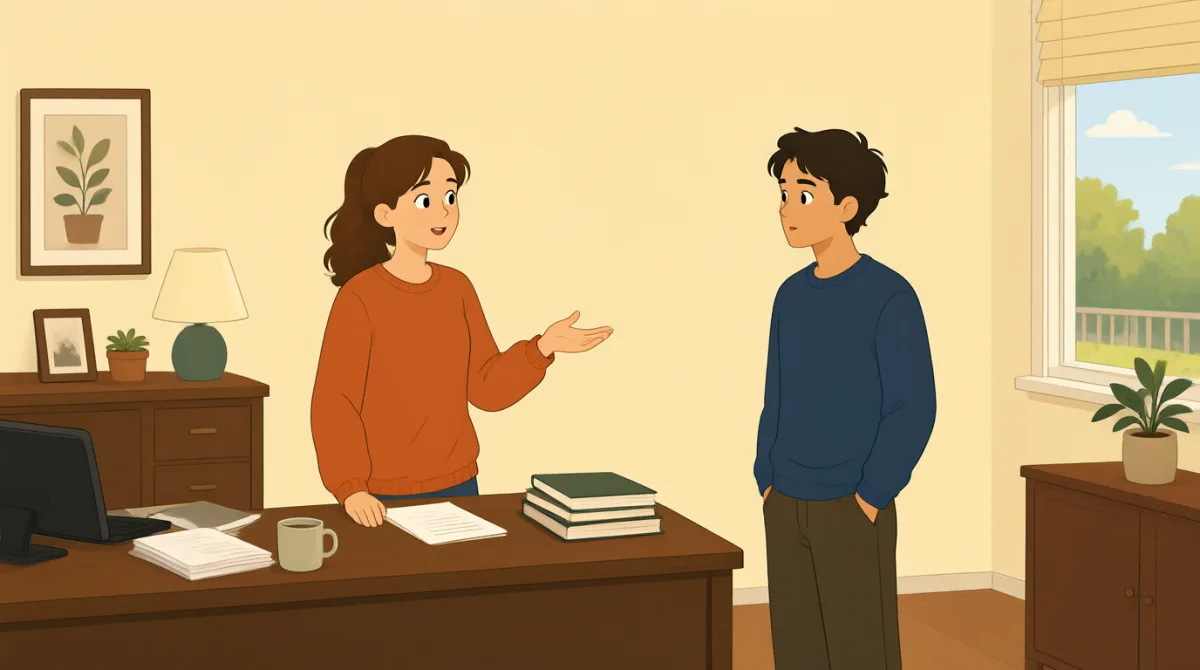

You said the inspection records were changed after the walkthrough. What did you see yourself, and what did someone else tell you? I want to keep those separate.
検査記録が現場確認の後に変更されたと言いましたよね。あなた自身が見たことと、誰かから聞いたことを、それぞれ教えてください。そこは分けて扱いたいです。

I saw the file on the shared drive later. The dates looked different from what I remembered, but I didn't watch anyone edit it.
後になって共有ドライブにあるファイルを見ました。日付が私の記憶と違っているように見えましたが、誰かが編集しているところを見たわけではありません。
When you say the dates looked different, do you mean the inspection date, the date the file was updated, or both? And how are you remembering the original dates?
日付が違っているように見えたというのは、検査日、ファイルが更新された日、それとも両方ですか? それと、元の日付をどうやって覚えているんですか?
The inspection date, I think. I remember because I was on shift that week. I can't swear to the exact day, and I don't want to make it sound more certain than it is.
検査日だったと思います。その週に勤務していたので覚えています。正確な日までは断言できませんし、実際以上に確かなことのように聞こえさせたくありません。
That's helpful. Did you compare the file with a paper copy, an email, or any other record from that week? If not, I'll describe this as a discrepancy you noticed, not proof of an alteration.
それは参考になります。その週の紙の控えやメール、その他の記録とファイルを照合しましたか? していないなら、改ざんの証拠ではなく、あなたが気づいた食い違いとして説明します。
There was an email attachment, but I can't access my old account now. I remember it listed a different date, though I realize memory isn't documentation.
メールの添付ファイルがありましたが、今は昔のアカウントにアクセスできません。ただ、別の日付が記載されていたのは覚えています。でも、記憶は記録資料ではないと分かっています。
Understood. About who changed the record: you said, 'people in the office knew.' Who specifically told you that, and what exactly did they say?
分かりました。記録を変更した人物についてですが、「オフィスの人たちは知っていた」と言いましたよね。具体的に誰がそう言ったんですか? そして、正確には何と言ったんですか?
I shouldn't have phrased it that way. A coworker said the supervisor wanted the paperwork cleaned up. I didn't hear the supervisor say that, and I don't know what 'cleaned up' meant.
そういう言い方をするべきではありませんでした。同僚が、上司は書類をきれいに整えたがっていると言いました。上司本人がそう言うのを聞いたわけではありませんし、「きれいに整える」が何を意味するのかも分かりません。
Then I won't present that as evidence the supervisor ordered falsification. Would you be comfortable with me quoting your account of what you personally saw, with your name attached?
では、それを上司が改ざんを命じた証拠として示すことはしません。あなたが自分で見たことについての話を、名前を出して引用しても構いませんか?
Not yet. You can use what I saw as background, but not quote me or identify me. I need to understand exactly what you mean by background before I agree.
まだだめです。私が見たことは背景情報として使っても構いませんが、私の発言を引用したり、身元を明かしたりはしないでください。納得する前に、あなたが言う「背景情報」が具体的に何を意味するのか理解したいです。
Fair. Nothing is off the record unless we explicitly agree on the terms beforehand. For now, I won't publish your name or quote these remarks; we can discuss whether any details may be used anonymously.
分かりました。事前に条件を明確に合意しない限り、オフレコにはなりません。今のところ、あなたの名前を公表したり、これらの発言を引用したりはしません。匿名で詳細の一部を使えるかどうかは、これから話し合いましょう。
All right. I can look for the old email and check whether the attachment is still on a backup. But please don't treat that coworker's comment as confirmation of who made the change.
分かりました。昔のメールを探して、添付ファイルがバックアップに残っているか確認してみます。ただ、その同僚の発言を、誰が変更したのかの裏付けとして扱わないでください。
語彙7
- keep those separatekeep those separate
To treat two kinds of information as distinct rather than mixing them together. Here, Emma wants to distinguish what Jack witnessed from what he heard from someone else.
2種類の情報を混同せず、別々のものとして扱うという意味です。ここでは、ジャックが自分で見たことと、他人から聞いたことを区別したいとエマは考えています。
- I can't swear to the exact dayI can't swear to the exact day
A careful way to say you cannot guarantee that a detail is accurate. Use it when you remember something generally but are unsure about the specifics.
ある細部が正確だと保証できないことを慎重に伝える表現です。大まかなことは覚えているものの、具体的な点に自信がないときに使います。
- make it sound more certain than it ismake it sound more certain than it is
To describe uncertain information as though it were definite. This phrase helps you be transparent about the limits of your knowledge.
不確かな情報を、確定した事実であるかのように伝えるという意味です。自分の知識の限界を正直に示すのに役立つ表現です。
- a discrepancy you noticeda discrepancy you noticed
A difference or inconsistency that you observed. It describes what someone saw without claiming to know what caused it.
自分が気づいた相違や食い違いという意味です。原因を知っているとは主張せず、見た事実だけを説明できます。
- I shouldn't have phrased it that wayI shouldn't have phrased it that way
A way to acknowledge that your previous wording was misleading or too broad. You can use it to correct yourself and clarify what you actually know.
前の言い方が誤解を招いた、または範囲を広げすぎていたと認める表現です。自分の発言を訂正し、実際に分かっていることを明確にするときに使えます。
- with your name attachedwith your name attached
Published or shared with your identity revealed. In journalism, a source may be asked whether a statement can be attributed to them by name.
本人だと分かる形で公表または共有するという意味です。ジャーナリズムでは、発言を実名で本人のものとして紹介してよいか、情報源に確認することがあります。
- as backgroundas background
Information shared to help a journalist understand a story, but not necessarily for direct quotation or public attribution. The exact conditions should be agreed on beforehand.
ジャーナリストが記事を理解するために共有される情報ですが、必ずしも直接引用や公の場での実名付き紹介に使われるとは限りません。具体的な条件は、あらかじめ合意しておく必要があります。
重要な文8
- 1
What did you see yourself, and what did someone else tell you?
What did you see yourself, and what did someone else tell you?
This precise question separates firsthand knowledge from secondhand information. Reuse it when you need to establish how someone knows each detail.
この具体的な質問は、本人が直接知っている情報と、他人から聞いた情報を分けます。それぞれの詳細を、どのように知ったのか確認したいときに使えます。
- 2
I want to keep those separate.
I want to keep those separate.
This explains the reason for distinguishing between different sources of information. You can use it to make clear that you are being careful, not dismissive.
異なる情報源を区別する理由を説明する文です。相手を退けているのではなく、慎重に扱っていることを明確にできます。
- 3
I can't swear to the exact day, and I don't want to make it sound more certain than it is.
I can't swear to the exact day, and I don't want to make it sound more certain than it is.
This sentence honestly states a limit on the speaker's memory and avoids overstating the evidence. Adapt it when you recall something but cannot verify every detail.
話し手の記憶の限界を正直に伝え、証拠を実際以上に確かなものとして扱わない文です。何かを覚えていても、細部をすべて確認できないときに応用できます。
- 4
If not, I'll describe this as a discrepancy you noticed, not proof of an alteration.
If not, I'll describe this as a discrepancy you noticed, not proof of an alteration.
This sentence sets a clear boundary between an observed difference and a conclusion about its cause. It is useful when reporting evidence cautiously.
観察した違いと、その原因についての結論との間に明確な線引きをする文です。証拠を慎重に報告したいときに役立ちます。
- 5
I didn't hear the supervisor say that, and I don't know what 'cleaned up' meant.
I didn't hear the supervisor say that, and I don't know what 'cleaned up' meant.
This makes clear both what the speaker did not witness and what remains unclear. Use this pattern to avoid turning vague remarks into firm accusations.
話し手が実際には見聞きしていないことと、まだ不明な点の両方を明確にします。曖昧な発言を確かな告発に変えてしまわないために、このパターンを使えます。
- 6
Would you be comfortable with me quoting your account of what you personally saw, with your name attached?
Would you be comfortable with me quoting your account of what you personally saw, with your name attached?
This asks for explicit permission to quote someone and identify them. It is a professional way to clarify attribution before using a source's comments.
相手の発言を引用し、身元を明らかにしてよいか、明確な許可を求める文です。情報源の発言を使う前に、どのように紹介できるか確認する、専門的な表現です。
- 7
Nothing is off the record unless we explicitly agree on the terms beforehand.
Nothing is off the record unless we explicitly agree on the terms beforehand.
This states that confidentiality conditions must be agreed upon in advance. It is useful for setting clear expectations before a sensitive conversation.
秘密扱いの条件は、事前に合意しなければ成立しないと伝える文です。慎重な会話を始める前に、双方の期待を明確にするのに役立ちます。
- 8
But please don't treat that coworker's comment as confirmation of who made the change.
But please don't treat that coworker's comment as confirmation of who made the change.
This warns the listener not to interpret secondhand information as proof. Reuse it when you need to distinguish a lead or allegation from confirmed evidence.
伝聞情報を証拠として解釈しないよう、相手に注意を促す文です。手がかりや主張と、確認済みの証拠を区別したいときに使えます。