Pressing Past Evasive Answers
Insistindo diante de respostas evasivas
When Jack gives vague answers about who altered inspection records, Emma asks precise follow-up questions without overstating what he has witnessed. They negotiate whether parts of his account may be attributed on the record or only used as background.
Quando Jack dá respostas vagas sobre quem alterou os registros de inspeção, Emma faz perguntas precisas para esclarecer os fatos, sem exagerar o que ele presenciou. Eles negociam se partes do relato dele podem ser atribuídas a ele oficialmente ou usadas apenas como informação de bastidores.
Diálogo12
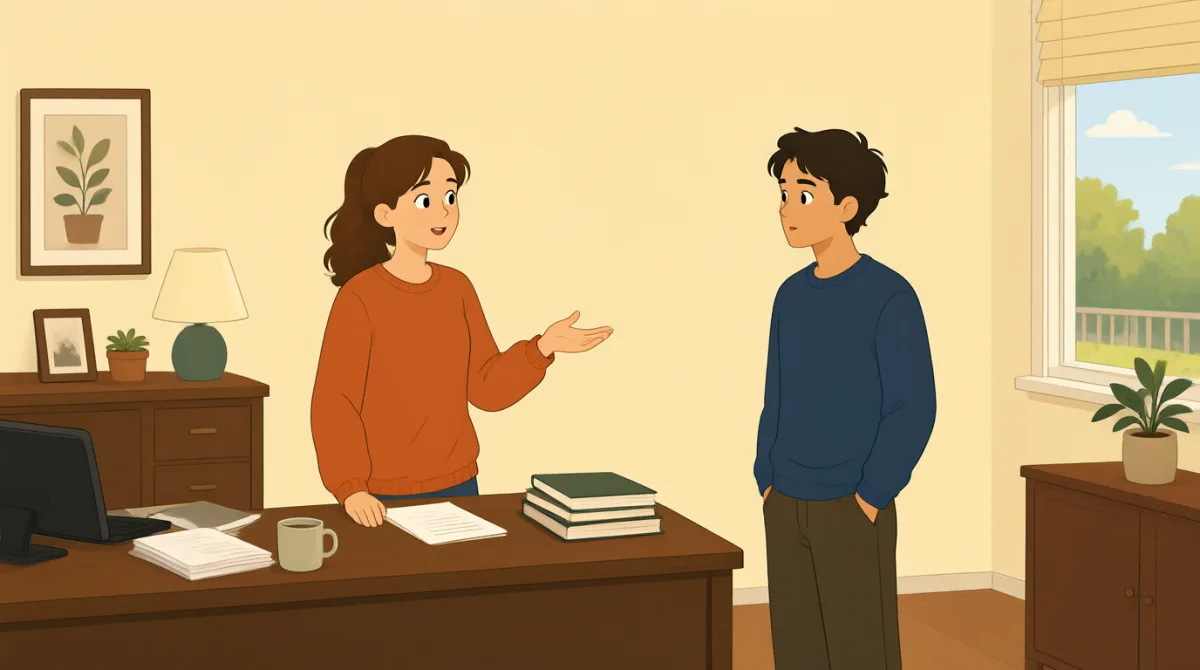

You said the inspection records were changed after the walkthrough. What did you see yourself, and what did someone else tell you? I want to keep those separate.
Você disse que os registros de inspeção foram alterados depois da vistoria. O que você viu pessoalmente e o que outra pessoa contou para você? Quero deixar essas coisas separadas.

I saw the file on the shared drive later. The dates looked different from what I remembered, but I didn't watch anyone edit it.
Mais tarde, vi o arquivo na unidade compartilhada. As datas pareciam diferentes das que eu lembrava, mas não vi ninguém editá-lo.
When you say the dates looked different, do you mean the inspection date, the date the file was updated, or both? And how are you remembering the original dates?
Quando você diz que as datas pareciam diferentes, quer dizer a data da inspeção, a data em que o arquivo foi atualizado ou ambas? E como você se lembra das datas originais?
The inspection date, I think. I remember because I was on shift that week. I can't swear to the exact day, and I don't want to make it sound more certain than it is.
Acho que a data da inspeção. Lembro porque estava de plantão naquela semana. Não posso garantir o dia exato e não quero dar a impressão de que tenho mais certeza do que realmente tenho.
That's helpful. Did you compare the file with a paper copy, an email, or any other record from that week? If not, I'll describe this as a discrepancy you noticed, not proof of an alteration.
Isso ajuda. Você comparou o arquivo com uma cópia em papel, um e-mail ou algum outro registro daquela semana? Se não, vou descrever isso como uma discrepância que você percebeu, não como prova de alteração.
There was an email attachment, but I can't access my old account now. I remember it listed a different date, though I realize memory isn't documentation.
Havia um anexo num e-mail, mas não consigo mais acessar minha conta antiga. Lembro que ele indicava outra data, embora saiba que memória não é documentação.
Understood. About who changed the record: you said, 'people in the office knew.' Who specifically told you that, and what exactly did they say?
Entendi. Sobre quem alterou o registro: você disse: 'o pessoal do escritório sabia'. Quem exatamente contou isso a você e o que disseram, exatamente?
I shouldn't have phrased it that way. A coworker said the supervisor wanted the paperwork cleaned up. I didn't hear the supervisor say that, and I don't know what 'cleaned up' meant.
Eu não devia ter colocado dessa forma. Um colega de trabalho disse que o supervisor queria que a papelada fosse ajustada. Não ouvi o supervisor dizer isso e não sei o que ele quis dizer com 'ajustada'.
Then I won't present that as evidence the supervisor ordered falsification. Would you be comfortable with me quoting your account of what you personally saw, with your name attached?
Então não vou apresentar isso como prova de que o supervisor ordenou a falsificação. Você se sentiria à vontade se eu citasse seu relato do que viu pessoalmente, identificando você pelo nome?
Not yet. You can use what I saw as background, but not quote me or identify me. I need to understand exactly what you mean by background before I agree.
Ainda não. Você pode usar o que eu vi como informação de bastidores, mas não me cite nem me identifique. Preciso entender exatamente o que você quer dizer com informação de bastidores antes de concordar.
Fair. Nothing is off the record unless we explicitly agree on the terms beforehand. For now, I won't publish your name or quote these remarks; we can discuss whether any details may be used anonymously.
Justo. Nada é extraoficial, a menos que concordemos explicitamente com os termos de antemão. Por enquanto, não vou publicar seu nome nem citar essas declarações; podemos conversar sobre a possibilidade de usar alguns detalhes sem identificar você.
All right. I can look for the old email and check whether the attachment is still on a backup. But please don't treat that coworker's comment as confirmation of who made the change.
Tudo bem. Posso procurar o e-mail antigo e ver se o anexo ainda está em algum backup. Mas, por favor, não trate o comentário daquele colega como confirmação de quem fez a alteração.
Vocabulário7
- keep those separatedeixar essas coisas separadas
To treat two kinds of information as distinct rather than mixing them together. Here, Emma wants to distinguish what Jack witnessed from what he heard from someone else.
Significa tratar dois tipos de informação como distintos, sem misturá-los. Aqui, Emma quer diferenciar o que Jack presenciou daquilo que ouviu de outra pessoa.
- I can't swear to the exact dayNão posso garantir o dia exato.
A careful way to say you cannot guarantee that a detail is accurate. Use it when you remember something generally but are unsure about the specifics.
Uma forma cuidadosa de dizer que você não pode garantir que um detalhe esteja correto. Use essa expressão quando se lembra de algo em linhas gerais, mas não tem certeza dos pormenores.
- make it sound more certain than it isdar a impressão de que tenho mais certeza do que realmente tenho
To describe uncertain information as though it were definite. This phrase helps you be transparent about the limits of your knowledge.
Descrever uma informação incerta como se fosse definitiva. Essa expressão ajuda você a ser transparente sobre os limites do que sabe.
- a discrepancy you noticeduma discrepância que você percebeu
A difference or inconsistency that you observed. It describes what someone saw without claiming to know what caused it.
Uma diferença ou inconsistência que você observou. A expressão descreve o que alguém viu sem afirmar que sabe o que causou a diferença.
- I shouldn't have phrased it that wayEu não devia ter colocado dessa forma.
A way to acknowledge that your previous wording was misleading or too broad. You can use it to correct yourself and clarify what you actually know.
Uma forma de reconhecer que o que você disse antes foi enganoso ou abrangente demais. Use-a para se corrigir e esclarecer o que realmente sabe.
- with your name attachedidentificando você pelo nome
Published or shared with your identity revealed. In journalism, a source may be asked whether a statement can be attributed to them by name.
Publicado ou compartilhado com sua identidade revelada. No jornalismo, uma fonte pode ser questionada se uma declaração pode ser atribuída a ela pelo nome.
- as backgroundcomo informação de bastidores
Information shared to help a journalist understand a story, but not necessarily for direct quotation or public attribution. The exact conditions should be agreed on beforehand.
Informação compartilhada para ajudar um jornalista a entender uma história, mas que não necessariamente pode ser citada diretamente ou atribuída publicamente. As condições exatas devem ser combinadas de antemão.
Frases-chave8
- 1
What did you see yourself, and what did someone else tell you?
O que você viu pessoalmente e o que outra pessoa contou para você?
This precise question separates firsthand knowledge from secondhand information. Reuse it when you need to establish how someone knows each detail.
Essa pergunta precisa separa o conhecimento direto da informação de segunda mão. Use-a quando precisar esclarecer como alguém sabe de cada detalhe.
- 2
I want to keep those separate.
Quero deixar essas coisas separadas.
This explains the reason for distinguishing between different sources of information. You can use it to make clear that you are being careful, not dismissive.
Essa frase explica por que é importante distinguir as diferentes fontes de informação. Você pode usá-la para deixar claro que está sendo cauteloso, não desdenhoso.
- 3
I can't swear to the exact day, and I don't want to make it sound more certain than it is.
Não posso garantir o dia exato e não quero dar a impressão de que tenho mais certeza do que realmente tenho.
This sentence honestly states a limit on the speaker's memory and avoids overstating the evidence. Adapt it when you recall something but cannot verify every detail.
Essa frase reconhece honestamente os limites da memória de quem fala e evita exagerar as evidências. Adapte-a quando você se lembra de algo, mas não consegue verificar todos os detalhes.
- 4
If not, I'll describe this as a discrepancy you noticed, not proof of an alteration.
Se não, vou descrever isso como uma discrepância que você percebeu, não como prova de alteração.
This sentence sets a clear boundary between an observed difference and a conclusion about its cause. It is useful when reporting evidence cautiously.
Essa frase estabelece uma distinção clara entre uma diferença observada e uma conclusão sobre sua causa. É útil ao relatar evidências com cautela.
- 5
I didn't hear the supervisor say that, and I don't know what 'cleaned up' meant.
Não ouvi o supervisor dizer isso e não sei o que 'cleaned up' queria dizer.
This makes clear both what the speaker did not witness and what remains unclear. Use this pattern to avoid turning vague remarks into firm accusations.
Com essa frase, fica claro tanto o que a pessoa não presenciou quanto o que continua sem esclarecimento. Use essa estrutura para evitar transformar comentários vagos em acusações categóricas.
- 6
Would you be comfortable with me quoting your account of what you personally saw, with your name attached?
Você se sentiria à vontade se eu citasse seu relato do que viu pessoalmente, identificando você pelo nome?
This asks for explicit permission to quote someone and identify them. It is a professional way to clarify attribution before using a source's comments.
Essa pergunta pede permissão explícita para citar alguém e identificá-lo. É uma forma profissional de esclarecer como a declaração será atribuída antes de usar os comentários de uma fonte.
- 7
Nothing is off the record unless we explicitly agree on the terms beforehand.
Nada é extraoficial, a menos que concordemos explicitamente com os termos de antemão.
This states that confidentiality conditions must be agreed upon in advance. It is useful for setting clear expectations before a sensitive conversation.
Essa frase diz que as condições de confidencialidade precisam ser combinadas previamente. É útil para estabelecer expectativas claras antes de uma conversa delicada.
- 8
But please don't treat that coworker's comment as confirmation of who made the change.
Mas, por favor, não trate o comentário daquele colega como confirmação de quem fez a alteração.
This warns the listener not to interpret secondhand information as proof. Reuse it when you need to distinguish a lead or allegation from confirmed evidence.
Essa frase alerta a outra pessoa para não interpretar informação de segunda mão como prova. Use-a quando precisar distinguir uma pista ou alegação de uma evidência confirmada.