Cross-Checking the Evidence
証拠を照合する
Emma consults David Chen, a veteran records specialist, to authenticate documents and compare their dates with public inspection logs. David cautions her that inconsistencies may point to clerical errors rather than deliberate tampering.
エマは、経験豊富な記録管理の専門家であるデイビッド・チェンに相談し、書類の真正性を確かめるとともに、日付を公開閲覧記録と照合します。デイビッドは、不一致があっても、意図的な改ざんではなく事務処理上の誤りを示している可能性があると注意を促します。
会話12
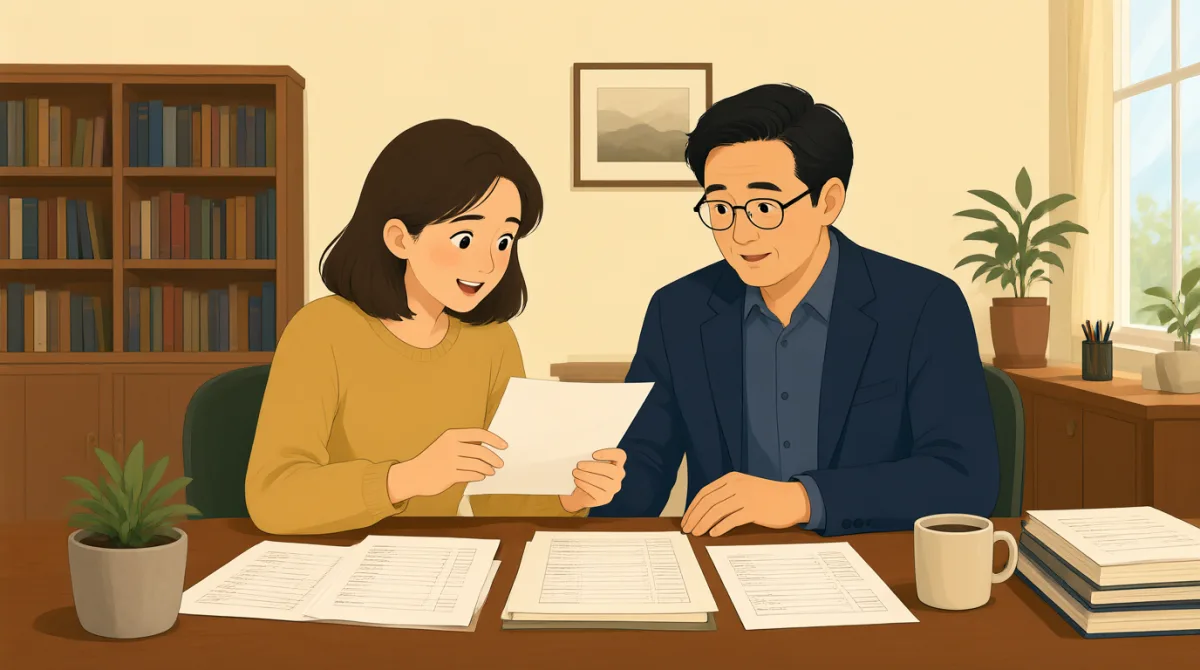

I’ve brought the inspection forms and the public logs. The dates don’t line up, but I don’t want to call that evidence of tampering before we know how these records were created.
検査票と公開記録を持ってきました。日付が一致しません。でも、これらの記録がどう作成されたのか分かるまでは、改ざんの証拠だとは言いたくありません。

Good instinct. A discrepancy is a question, not a conclusion. First, let’s establish whether these are original records, copies, or entries exported from a database that may have been updated later.
いい心がけです。不一致は疑問点であって、結論ではありません。まず、これが原本なのか、コピーなのか、それとも後から更新された可能性のあるデータベースから出力された記録なのかを確認しましょう。
The forms came from a former employee. They have handwritten dates and initials, but there’s no cover sheet, and I can’t tell whether the pages are complete or in their original order.
書類は元職員から受け取りました。手書きの日付とイニシャルはありますが、表紙がなく、ページがそろっているのか、元の順番どおりなのかも分かりません。
Then we should treat provenance as unresolved. Do you have the files as they were received, including the email or message that transmitted them? Metadata and transmission history may help establish what changed—and when.
では、出所と取り扱いの経緯は未確認としておくべきですね。受け取ったときのファイル一式、送付に使われたメールやメッセージもありますか?メタデータや送信履歴から、何がいつ変更されたのかを確認できるかもしれません。
I saved the original attachment and made a working copy. The attachment’s timestamp is two years later than the handwritten inspection date, though, so it could simply be a scan made after the fact.
元の添付ファイルを保存して、作業用のコピーも作りました。ただ、添付ファイルのタイムスタンプは手書きの検査日より2年後です。単に後からスキャンしただけかもしれません。
Exactly. A file timestamp usually tells you when that digital file was created or modified, not when the underlying inspection occurred. We’ll need to separate what the metadata proves from what it merely suggests.
そのとおりです。ファイルのタイムスタンプが示すのは、通常、そのデジタルファイルが作成または変更された日時であって、元になった検査が行われた日時ではありません。メタデータが証明することと、単に示唆するだけのことを分けて考える必要があります。
The public log lists an inspection on that date, but it describes a different section of the plant. Could that indicate the form was misdated, or are we comparing records that use different location codes?
公開記録にはその日に検査があったとありますが、工場の別の区画について書かれています。検査票の日付が間違っているのでしょうか。それとも、場所を示すコードが異なる記録を比べているのでしょうか。
Either is possible. Let’s compare the codes against the agency’s documentation, then check whether its log records the inspection date, the filing date, or the date an entry was entered into the system.
どちらもあり得ます。まず、コードを当局の資料と照合しましょう。それから、記録にある日付が検査日なのか、書類の提出日なのか、システムに入力された日なのかを確認しましょう。
If the log was entered later, a mismatch might be routine. But if the initials on the form match the inspector’s signature elsewhere, would that strengthen the document’s authenticity?
記録が後から入力されたのなら、食い違いはよくあることかもしれません。でも、検査票のイニシャルが別の記録にある検査官の署名と一致したら、その書類の真正性を裏付ける材料になりますか?
It would be one useful point of comparison, not proof by itself. We should verify the signature against an independent record and ask the agency how its forms were handled at the time.
照合に役立つ材料の一つにはなりますが、それだけで証明にはなりません。署名を独立した記録と照合し、当時、当局がその書類をどのように扱っていたのかも確認すべきです。
Understood. I’ll preserve the originals, document how I received them, and request the agency’s filing procedures and the relevant log history. I won’t describe the discrepancy as deliberate alteration unless the evidence supports that.
分かりました。原本を保全し、どのように受け取ったかを記録して、当局に書類の提出・保管手順と該当する記録の履歴を請求します。証拠が裏付けない限り、不一致を意図的な改ざんとは表現しません。
That’s the right standard. And keep a clear distinction in your notes between what the documents show, what someone told you, and what you’re still trying to establish. Readers deserve that precision.
それが正しい基準です。それに、記録に何が示されているのか、誰かから何を聞いたのか、そして何をまだ確認しようとしているのかを、メモではっきり区別してください。読者には、その正確さが必要です。
語彙7
- discrepancy不一致
A difference between two pieces of information that are expected to match. Here, it describes the dates or details that do not line up across records.
一致するはずの二つの情報に違いがあることです。ここでは、記録どうしで日付や詳細が食い違っていることを指します。
- provenance出所と取り扱いの経緯
The history of where a document came from and how it has been handled. Journalists use provenance to assess a record’s reliability.
書類がどこから来たのか、これまでどのように扱われてきたのかという履歴です。ジャーナリストは記録の信頼性を判断するために、出所と取り扱いの経緯を確認します。
- metadataメタデータ
Information about a digital file, such as when it was created or modified. It may help establish a file’s history, but not necessarily the date of the event described in it.
デジタルファイルについての情報で、作成日時や変更日時などが含まれます。ファイルの履歴を確認する手がかりになりますが、ファイルに記載された出来事の日付まで分かるとは限りません。
- underlying inspection元になった検査
The actual inspection that a document refers to, as distinct from the later creation of a digital copy. The phrase helps separate an event’s date from a file’s timestamp.
書類が示している実際の検査のことです。後からデジタルコピーが作成されたこととは区別します。この表現を使うと、出来事の日付とファイルのタイムスタンプを分けて考えられます。
- independent record独立した記録
A separate source that can be used to check a claim. Comparing a signature with an independent record can support authentication, though it does not prove it on its own.
ある主張を確かめるために使える、別個の情報源です。署名を独立した記録と照合すれば真正性を裏付けられることがありますが、それだけで証明になるわけではありません。
- filing procedures書類の提出・保管手順
The rules or routine steps an organization follows to submit and store records. Asking about them can help explain why dates or entries differ.
組織が記録を提出し、保管する際に従う規則や通常の手順です。これについて尋ねると、日付や記載内容が異なる理由を説明できることがあります。
- deliberate alteration意図的な改ざん
An intentional change made to a document or record. The phrase should be used only when evidence supports the conclusion that the change was intentional.
書類や記録に加えられた、意図的な変更です。変更が意図的だったという結論を証拠が裏付ける場合に限って使う表現です。
重要な文7
- 1
A discrepancy is a question, not a conclusion.
不一致は疑問点であって、結論ではありません。
This concise sentence cautions against treating an inconsistency as proof. Use it to emphasize that a finding needs further investigation before it supports a conclusion.
不一致を証拠と決めつけないよう注意を促す、簡潔な表現です。調査をさらに進めなければ結論の根拠にはならないことを強調するときに使えます。
- 2
Then we should treat provenance as unresolved.
では、出所と取り扱いの経緯は未確認としておくべきですね。
This is a careful way to say that a document’s origins and handling have not yet been established. Reuse the pattern “treat [issue] as unresolved” when evidence is incomplete.
書類の出所や取り扱いがまだ確認できていないことを、慎重に伝える表現です。証拠が不十分なときは、“treat [issue] as unresolved”([問題]は未解決として扱う)という形も使えます。
- 3
We’ll need to separate what the metadata proves from what it merely suggests.
メタデータが証明することと、単に示唆するだけのことを分けて考える必要があります。
This sentence distinguishes confirmed facts from possible interpretations. It is useful when explaining why digital information should be interpreted cautiously.
確認できた事実と、可能性にとどまる解釈を区別する文です。デジタル情報を慎重に読み取る必要がある理由を説明するときに役立ちます。
- 4
Either is possible.
どちらもあり得ます。
This brief response acknowledges multiple plausible explanations without choosing between them prematurely. Use it when the available evidence does not yet settle a question.
どちらかに早々に決めつけず、複数の説明が成り立つことを認める短い返答です。手元の証拠だけではまだ判断できないときに使えます。
- 5
It would be one useful point of comparison, not proof by itself.
照合に役立つ材料の一つにはなりますが、それだけで証明にはなりません。
This sentence explains that a piece of supporting evidence has limits. Reuse the structure “one useful point of comparison, not proof by itself” to describe evidence that needs corroboration.
裏付けとなる証拠にも限界があることを伝える文です。さらなる裏付けが必要な証拠について説明するときは、“one useful point of comparison, not proof by itself”(照合に役立つ材料の一つだが、それだけでは証明にならない)という形を使えます。
- 6
I’ll preserve the originals, document how I received them, and request the agency’s filing procedures and the relevant log history.
原本を保全し、どのように受け取ったかを記録して、当局に書類の提出・保管手順と該当する記録の履歴を請求します。
This sentence lays out practical steps for maintaining a clear record of evidence and seeking context. Its parallel verbs make it useful when describing a careful investigation plan.
証拠の記録を明確に保ち、背景情報を得るための具体的な手順を示す文です。動詞を並べた構成なので、慎重な調査計画を説明するときに使いやすい表現です。
- 7
Readers deserve that precision.
読者には、その正確さが必要です。
This short statement connects accurate reporting with responsibility to the audience. Use it to underscore why a journalist should distinguish facts, claims, and unanswered questions.
正確な報道が読者に対する責任につながることを示す短い表現です。事実、主張、未解決の疑問を区別するべき理由を強調するときに使えます。