Setting Ground Rules for Mediation
調停の基本ルールを決める
Mediator Mia establishes a respectful process, asking both parents to speak without interruption and keep the children’s needs at the center. She clarifies that the goal is a workable agreement, not deciding who was right in the separation.
調停人のミアは、双方が互いの話を遮らずに話し、子どもたちのニーズを最優先にするための、敬意ある話し合いの進め方を定めます。目的は、別居についてどちらが正しかったかを決めることではなく、双方が実行できる合意を作ることだと説明します。
会話12
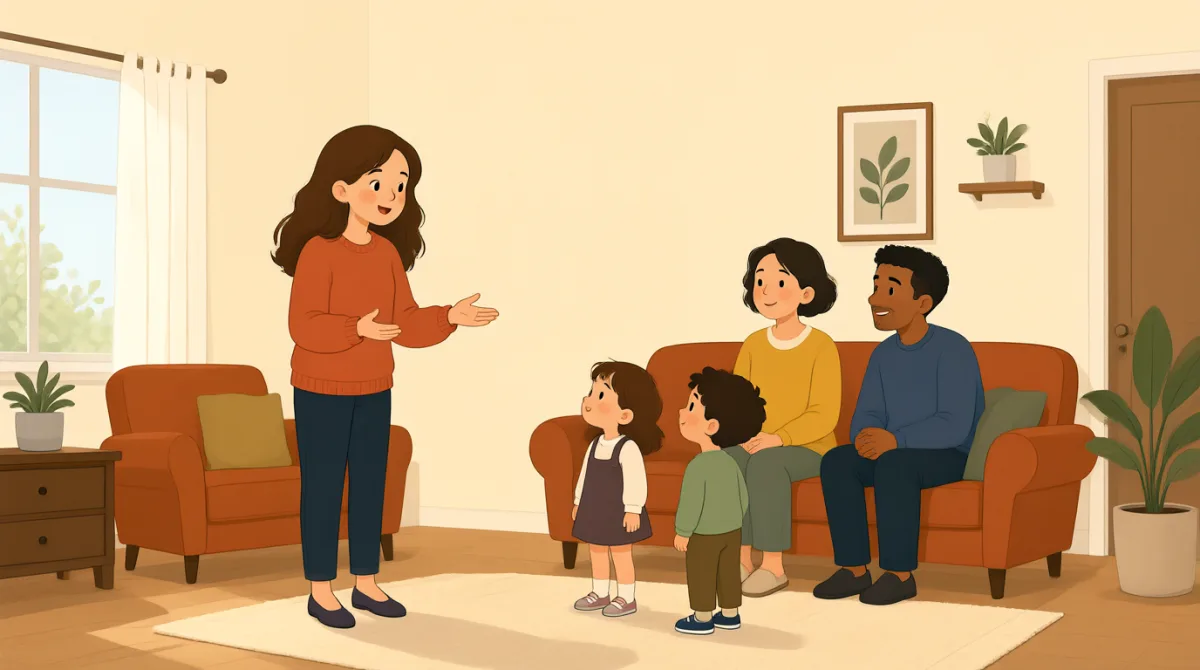

Thank you both for coming. Before we discuss schedules or expenses, I’d like to establish a few ground rules so this conversation stays constructive and focused.
お二人ともお越しいただき、ありがとうございます。スケジュールや費用について話し合う前に、この話し合いを建設的で、要点からそれないものにするため、いくつか基本ルールを決めたいと思います。

That sounds reasonable. I’ll admit I’m worried we’ll end up revisiting the separation itself, but I’m willing to try to keep this about the children.
それはもっともだと思う。正直、別居のことをまた話すことになるんじゃないかと心配だけど、子どもたちのことを中心に話すようにしてみるよ。

I agree in principle. I just don’t want “keeping it about the children” to mean that my concerns get dismissed whenever they’re inconvenient.
基本的には賛成だよ。ただ、「子どもたちのことを中心にする」というのが、都合が悪いときに僕の心配を取り合ってもらえないって意味になるのは困る。
That’s a fair concern, Jack. Each of you will have time to explain what matters to you. I’ll ask that you speak one at a time, without interrupting.
それはもっともな心配です、ジャック。お二人とも、ご自分にとって大切なことを説明する時間があります。一人ずつ話して、相手の話を遮らないようお願いします。
I can do that. I may need a moment if the conversation gets difficult, though. I don’t want a pause to be mistaken for refusing to cooperate.
それならできるよ。ただ、話し合いがつらくなったら、少し時間が必要になるかもしれない。その間、協力する気がないと思われたくはないんだ。
Of course. You can ask for a brief pause, and we’ll make sure both of you have a chance to finish your thoughts. Respectful disagreement is welcome; personal attacks are not.
もちろんです。少し休憩したいときはおっしゃってください。お二人とも、考えを最後まで話せるようにします。敬意を持った意見の違いは歓迎しますが、個人攻撃は認められません。
Understood. I’ll try to describe what I need without turning it into a list of everything Grace has done wrong. That hasn’t helped us before.
わかった。グレースが何を間違えたか並べ立てるんじゃなくて、自分が必要としていることを伝えるようにするよ。前はそれではうまくいかなかったからね。
And I’ll try to hear the concern beneath the frustration. I’d also like us to avoid making assumptions about each other’s motives.
私も、いら立ちの奥にある心配に耳を傾けるようにするね。それから、お互いの動機を決めつけないようにしたい。
That’s a useful commitment from both of you. Our purpose here isn’t to determine who was right in the separation; it’s to develop an agreement you can both follow.
お二人とも、すばらしい心がけです。ここでの目的は、別居についてどちらが正しかったかを決めることではありません。お二人がともに守れる合意を作ることです。
I can work with that, as long as the agreement is practical. The children shouldn’t have to manage our conflict or carry messages between us.
合意が現実的なものなら、僕もそれで進められるよ。子どもたちに、僕たちのもめごとを取り持たせたり、伝言役をさせたりするべきじゃない。
Agreed. Their routines and sense of security need to come first, even when that means either of us has to adjust an expectation.
賛成。どちらかが期待を調整しなければならないとしても、子どもたちの日課と安心感を最優先にする必要があるね。
Good. If either of you feels the discussion drifting toward blame, we can pause and return to the question: what arrangement would best support the children?
いいですね。話し合いがどちらのせいかという責め合いに向かっていると感じたら、いったん休憩して、「子どもたちを支えるには、どんな取り決めがいちばんいいでしょうか」という問いに戻りましょう。
語彙7
- establish a few ground rules基本ルールをいくつか決める
To agree on basic guidelines before starting a discussion. Here, it means setting expectations for how the mediation will work.
話し合いを始める前に、基本的な指針について合意することです。ここでは、調停をどのように進めるかについて、あらかじめ決めておくという意味です。
- constructive and focused建設的で、要点からそれない
A constructive conversation aims to solve problems, while a focused one stays on the main topic. The phrase helps describe the kind of discussion participants want.
建設的な話し合いは問題の解決を目指し、要点からそれない話し合いは中心となる話題に集中します。この表現は、参加者がどのような話し合いを望んでいるかを表すのに役立ちます。
- in principle基本的には
This means agreeing with an idea generally, though there may still be concerns about how it works in practice.
全般的には賛成しているものの、実際にどう進めるかについては、まだ心配があるかもしれないという意味です。
- dismissed取り合ってもらえない
To dismiss someone’s concerns is to treat them as unimportant or not worth considering. Jack worries that keeping the discussion child-focused could be used this way.
人の心配を dismiss するとは、その心配を大切でない、考慮する価値がないものとして扱うことです。ジャックは、子どもたちを中心に話し合うことが、心配を取り合ってもらえない理由に使われるのではないかと不安に思っています。
- Respectful disagreement is welcome; personal attacks are not.敬意を持った意見の違いは歓迎しますが、個人攻撃は認められません。
This sets a boundary while allowing people to express different opinions. You can reuse the contrast to make clear what behavior is acceptable in a discussion.
異なる意見を述べることは認めながら、守るべき一線を示す表現です。この対比を使うと、話し合いでどのような行動が許されるのか、はっきり伝えられます。
- the concern beneath the frustrationいら立ちの奥にある心配
This refers to the underlying need or worry that may be expressed through anger. The phrase encourages listening for meaning rather than reacting only to someone’s tone.
怒りを通して表れている、根本的なニーズや心配のことです。相手の口調に反応するだけでなく、言葉の奥にある意味に耳を傾けるよう促す表現です。
- drifting toward blame責め合いに向かっている
This describes a conversation gradually shifting into accusations about who is at fault. It can be used to suggest returning to the main issue before the discussion becomes unproductive.
話し合いが、誰に責任があるのかを責める方向へ少しずつ変わっていくことです。話し合いが実りのないものになる前に、本題へ戻ろうと提案するときに使えます。
重要な文8
- 1
Before we discuss schedules or expenses, I’d like to establish a few ground rules so this conversation stays constructive and focused.
スケジュールや費用について話し合う前に、この話し合いを建設的で、要点からそれないものにするため、いくつか基本ルールを決めたいと思います。
This politely sets the agenda and explains why guidelines are needed. Reuse the structure “Before we discuss X, I’d like to…” to introduce a process or priority.
この文は、丁寧に議題を示し、なぜルールが必要なのかを説明しています。「Before we discuss X, I’d like to…」(Xについて話し合う前に、〜したいと思います)という形は、進め方や優先事項を提示するときに使えます。
- 2
Each of you will have time to explain what matters to you.
お二人とも、ご自分にとって大切なことを説明する時間があります。
This reassures people that they will have a fair opportunity to speak. It is useful in meetings where participants may worry their concerns will be overlooked.
全員に公平に発言する機会があると伝えて、安心してもらう表現です。自分の心配が見過ごされるのではないかと、参加者が不安に感じている会議などで役立ちます。
- 3
I may need a moment if the conversation gets difficult, though.
ただ、話し合いがつらくなったら、少し時間が必要になるかもしれません。
This is a tactful way to ask for understanding if you need time to collect your thoughts. You can use “I may need a moment if…” to prepare others for a possible pause.
考えをまとめる時間が必要になったときに、理解を求めるための気遣いのある言い方です。「I may need a moment if…」(もし〜なら、少し時間が必要かもしれません)を使うと、途中で休憩する可能性を相手に伝えられます。
- 4
Respectful disagreement is welcome; personal attacks are not.
敬意を持った意見の違いは歓迎しますが、個人攻撃は認められません。
This sentence distinguishes between acceptable disagreement and unacceptable behavior. It can help establish clear boundaries in sensitive conversations.
この文は、認められる意見の違いと、許されない行動を区別しています。デリケートな話し合いで、明確な一線を引くのに役立ちます。
- 5
Our purpose here isn’t to determine who was right in the separation; it’s to develop an agreement you can both follow.
ここでの目的は、別居についてどちらが正しかったかを決めることではありません。お二人がともに守れる合意を作ることです。
This redirects attention from past conflict to a practical shared goal. The pattern “Our purpose isn’t to X; it’s to Y” is useful for reframing discussions.
過去の対立から、実現可能な共通の目標へと話題を切り替える表現です。「Our purpose isn’t to X; it’s to Y」(私たちの目的はXではなく、Yです)という形は、話し合いの方向を変えるときに便利です。
- 6
The children shouldn’t have to manage our conflict or carry messages between us.
子どもたちに、僕たちのもめごとを取り持たせたり、伝言役をさせたりするべきじゃない。
This clearly explains why children should not be placed in the middle of adult disagreements. The sentence can be adapted to name responsibilities that should not be given to others.
大人同士のもめごとに子どもを巻き込むべきでない理由を、はっきり説明しています。この文は、他の人に任せるべきではない責任を挙げる形に応用できます。
- 7
Their routines and sense of security need to come first, even when that means either of us has to adjust an expectation.
どちらかが期待を調整しなければならないとしても、子どもたちの日課と安心感を最優先にする必要がある。
This states a priority while acknowledging that both parents may need to compromise. Reuse “X needs to come first, even when…” to emphasize a principle and its practical consequences.
優先事項を示しながら、親の双方が譲歩する必要があるかもしれないことも認める表現です。「X needs to come first, even when…」(たとえ〜でも、Xを最優先にする必要があります)を使うと、大切な原則と、それに伴う現実的な結果を強調できます。
- 8
If either of you feels the discussion drifting toward blame, we can pause and return to the question: what arrangement would best support the children?
話し合いが責め合いに向かっていると感じたら、いったん休憩して、「子どもたちを支えるには、どんな取り決めがいちばんいいでしょうか」という問いに戻りましょう。
This offers a practical way to interrupt an unproductive pattern and refocus the conversation. The structure “If you feel the discussion drifting toward X, we can…” is useful for suggesting a calm reset.
実りのないやり取りをいったん止め、話し合いの焦点を戻すための具体的な方法を示しています。「If you feel the discussion drifting toward X, we can…」(話し合いがXに向かっていると感じたら、〜できます)という形は、落ち着いて話し合いを立て直す方法を提案するときに役立ちます。