Debriefing After a Hard Day
大変な一日を終えての振り返り
After the conversation, Dr. Patel debriefs with Dr. Chen about what went well and what still weighs on her. He reminds her that being honest and compassionate matters even when she cannot take away the patient’s uncertainty.
話を終えたあと、パテル医師はチェン医師と、うまくいったことや、今も心に重くのしかかっていることを振り返ります。患者さんの不安を取り除けなくても、正直で思いやりのある対応が大切だと、彼女に伝えます。
会話11
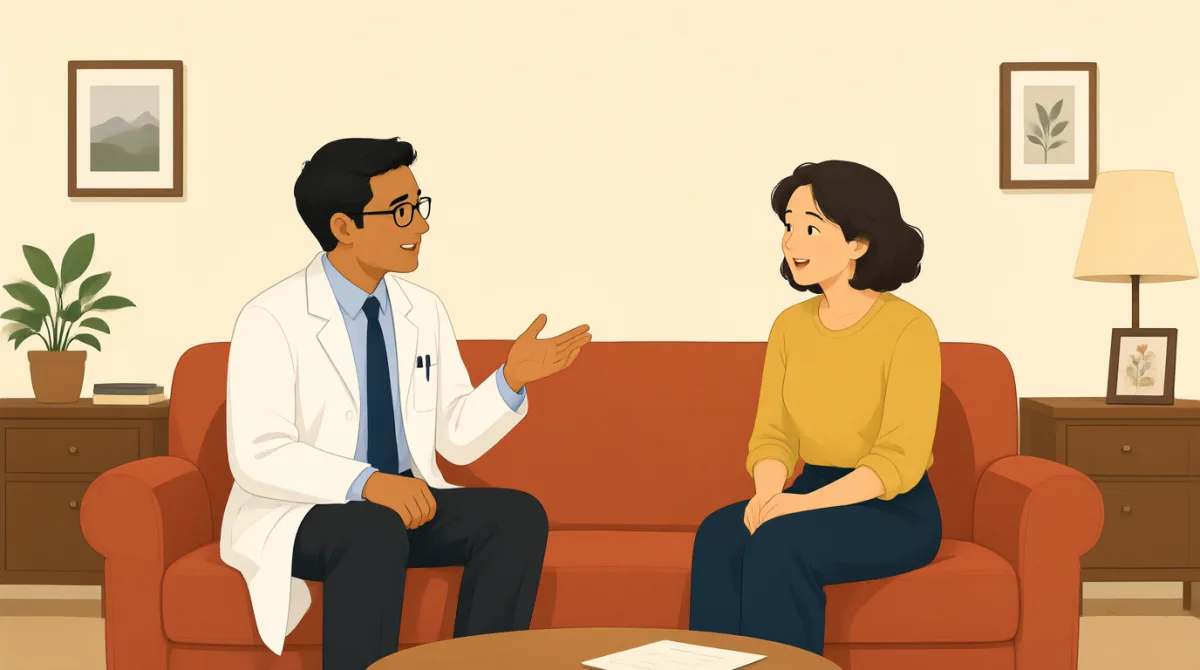

I keep replaying the moment I told him. I think I explained the results clearly, but when he went quiet, I wasn’t sure whether to say more or let the silence stand.
彼に伝えたときのことを、何度も思い返してる。結果はきちんと説明できたと思うんだけど、彼が黙り込んだとき、もっと話すべきなのか、それとも沈黙のままにしておくべきなのか、分からなかった。

You don’t have to fill every silence, Mia. Sometimes giving someone room to absorb the news is more respectful than offering another explanation they can’t take in yet.
沈黙を全部埋めなくていいんだよ、ミア。知らせを受け止める時間を相手に与えるほうが、まだ受け止めきれない説明をさらに重ねるより、思いやりのある対応になることもある。
I asked what felt most important to him right then. He said he needed to know whether he could still work, and I didn’t have a definite answer.
そのとき彼にとって何がいちばん大切かを聞いたの。彼は、これからも仕事を続けられるか知りたいと言っていたけど、はっきりした答えは出せなかった。
That uncertainty is difficult, but you were right not to manufacture certainty. You can acknowledge what you don’t know and explain how you’ll work toward an answer.
はっきりしないのはつらいけど、確かなことのように取り繕わなかったのは正しかったよ。分からないことは認めて、答えを出すためにどう取り組むか説明すればいい。
I told him we’d discuss the treatment plan together and that I’d follow up about the practical questions. Still, I worry that sounded procedural when he was frightened.
治療方針は一緒に話し合うことと、実際的な質問については改めて確認して伝えることを話したの。でも、彼が怖がっているときに、手続き的な説明に聞こえたんじゃないかって心配で。
Practical steps can be a form of care, provided they don’t crowd out the emotion. Did you make room for him to say what was frightening him most?
具体的な対応も、気遣いのひとつになり得るよ。相手の感情を置き去りにしなければね。彼が何をいちばん怖がっているのか、話せる時間は作れた?
I did, eventually. He said he was afraid of losing his independence. I told him that mattered, and we’d include it in our decisions rather than treat it as an afterthought.
最終的にはね。彼は自立した生活ができなくなるのが怖いと言ってた。それは大切なことだと伝えて、あとで付け足すのではなく、今後の判断にきちんと含めると話した。
That was thoughtful. Compassion doesn’t mean promising that everything will be all right; it means taking the person’s concerns seriously while being honest about what remains uncertain.
よく考えた対応だったね。思いやりがあるというのは、何もかもうまくいくと約束することじゃない。まだ分からないことがあると正直に伝えながら、その人の心配を真剣に受け止めることだよ。
I know that intellectually. Emotionally, I still want to take the uncertainty away for him, and I feel I’ve failed when I can’t.
頭では分かってるの。でも気持ちの上では、彼の不安を取り除いてあげたいと思ってしまうし、それができないと、自分は失敗したんだって感じる。
You can’t take away the uncertainty, but you can make sure he doesn’t have to face it without support. That’s not a small thing, even if it doesn’t feel like a solution.
不安を取り除くことはできなくても、彼が支えなしにそれと向き合わなくて済むようにはできるよ。解決策に感じられなくても、それは決して小さなことじゃない。
Thank you. I’ll document what he said about independence and make sure we return to it when we discuss options. I think I can leave the hospital a little lighter now.
ありがとう。彼が自立した生活について話したことを記録して、選択肢を話し合うときに必ず取り上げるね。これで少し気持ちが軽くなって、病院を出られそう。
語彙7
- let the silence stand沈黙をそのままにしておく
To leave a pause without speaking or trying to fill it. Here, it means giving the patient time to absorb difficult news.
話さずに間を置き、沈黙を埋めようとしないことです。ここでは、患者さんがつらい知らせを受け止める時間を与えるという意味です。
- absorb the news知らせを受け止める
To take in and begin to understand important or upsetting information. It can take time before someone is ready to discuss what they have heard.
大切な情報やつらい情報を聞いて、理解し始めることです。聞いたことについて話す準備ができるまで、時間がかかる場合もあります。
- manufacture certainty確かなことのように取り繕う
To claim something is certain when you do not actually know. In this context, it means avoiding false reassurance about the patient's future.
実際には分からないのに、確実だと言い切ることです。この場面では、患者さんの今後について、根拠のない安心を与えないという意味です。
- follow up後から連絡する・改めて対応する
To contact someone again or take further action after an initial conversation. You can use it for checking on a question, concern, or next step.
最初の話し合いのあと、もう一度連絡したり、さらに対応したりすることです。質問や心配事を確認するとき、次の段階に進むときなどに使えます。
- crowd out the emotion感情を置き去りにする
To leave too little room for someone’s feelings by focusing too much on other things. It is useful when balancing practical information with emotional support.
ほかのことに気を取られすぎて、相手の気持ちに向き合う余地がなくなることです。具体的な情報と心の支えの両方を大切にしたいときに役立つ表現です。
- take the uncertainty away不安を取り除く
To remove someone’s doubts or lack of certainty. The phrase can express a wish to protect someone, even when the situation cannot be made certain.
相手の疑いや不確かさをなくすことです。状況を確実なものにできなくても、相手を守りたいという気持ちを表すときに使えます。
- face it without support支えなしに向き合う
To deal with a difficult situation alone, without help from others. It highlights that support matters even when there is no immediate solution.
人の助けを借りず、一人で困難な状況に対処することです。すぐに解決策が見つからなくても、支えが大切だということを表します。
重要な文7
- 1
Sometimes giving someone room to absorb the news is more respectful than offering another explanation they can’t take in yet.
相手が知らせを受け止める時間を与えるほうが、まだ受け止めきれない説明をさらに重ねるより、思いやりのある対応になることもあります。
This sentence explains why a pause can be compassionate rather than awkward. Use the structure “giving someone room to [do something]” to describe allowing space or time.
この文は、間を置くことが気まずいのではなく、思いやりのある対応になる場合があると説明しています。“giving someone room to [do something]” は、相手に何かをするための余地や時間を与えることを表す形です。
- 2
You can acknowledge what you don’t know and explain how you’ll work toward an answer.
分からないことは認め、答えを出すためにどう取り組むか説明できます。
This is a useful way to be honest about uncertainty while still offering a plan. Reuse it when you need to distinguish what is known from what you will do next.
不確かなことについて正直に伝えながら、今後の対応も示せる便利な言い方です。分かっていることと、これから何をするかを区別して伝えたいときに使えます。
- 3
Practical steps can be a form of care, provided they don’t crowd out the emotion.
感情を置き去りにしない限り、具体的な対応も気遣いのひとつになり得ます。
This sentence balances concrete help with attention to feelings. “Provided” means “as long as,” and can introduce a condition or qualification.
この文は、具体的な助けと相手の気持ちへの配慮を両立させています。“Provided” は “as long as” と同じく「〜である限り」という意味で、条件や但し書きを示します。
- 4
I told him that mattered, and we’d include it in our decisions rather than treat it as an afterthought.
それは大切なことだと伝えて、あとで付け足すのではなく、今後の判断にきちんと含めると言いました。
This shows how to validate someone's concern and make it part of future decisions. Reuse “rather than treat it as an afterthought” when emphasizing that something deserves consideration from the beginning.
相手の心配を大切に受け止め、今後の判断に反映させる方法を示す文です。何かを最初から考慮すべきだと強調したいときは、“rather than treat it as an afterthought” を使えます。
- 5
Compassion doesn’t mean promising that everything will be all right; it means taking the person’s concerns seriously while being honest about what remains uncertain.
思いやりがあるというのは、何もかもうまくいくと約束することではありません。まだ分からないことについて正直に伝えながら、その人の心配を真剣に受け止めることです。
This sentence defines compassion without offering false reassurance. The “doesn’t mean ...; it means ...” structure is useful for clarifying a nuanced idea.
この文は、根拠のない安心を与えることなく、思いやりとは何かを説明しています。“doesn’t mean ...; it means ...” という形は、微妙な違いのある考えを分かりやすく説明するときに便利です。
- 6
Emotionally, I still want to take the uncertainty away for him, and I feel I’ve failed when I can’t.
気持ちの上では、今も彼の不安を取り除いてあげたいと思うし、それができないと自分は失敗したと感じます。
This sentence expresses the emotional tension between wanting to help and accepting one's limits. Reuse “I feel I’ve failed when I can’t” to describe self-doubt about something outside your control.
この文は、人を助けたいという気持ちと、自分にできることには限りがあるという事実の間で揺れる心を表しています。自分ではどうにもできないことについて自信をなくしたときは、“I feel I’ve failed when I can’t” を使えます。
- 7
You can’t take away the uncertainty, but you can make sure he doesn’t have to face it without support.
不安を取り除くことはできなくても、彼が支えなしにそれと向き合わなくて済むようにはできます。
This reassures someone by focusing on what they can provide, even when they cannot solve the whole problem. The “You can’t ..., but you can ...” pattern is useful for acknowledging limits while identifying meaningful action.
問題全体を解決できなくても、自分にできることに目を向けて相手を安心させる表現です。“You can’t ..., but you can ...” という形は、自分にできることの限界を認めながら、意味のある行動を示すのに役立ちます。