Staying Focused When Emotions Rise
感情的になっても話し合いに集中する
A disagreement about a missed handoff brings old grievances into the room, and both parents struggle to stay composed. Mia pauses the discussion and helps them separate their hurt from the immediate question of what arrangement would best support the children.
引き渡しが予定どおりに行われなかったことをめぐる意見の食い違いから、過去の不満まで持ち出され、両親は冷静さを保つのに苦労します。ミアは話し合いをいったん止め、傷ついた気持ちと、子どもたちにとって最善の取り決めは何かという目の前の問題を切り分ける手助けをします。
会話12
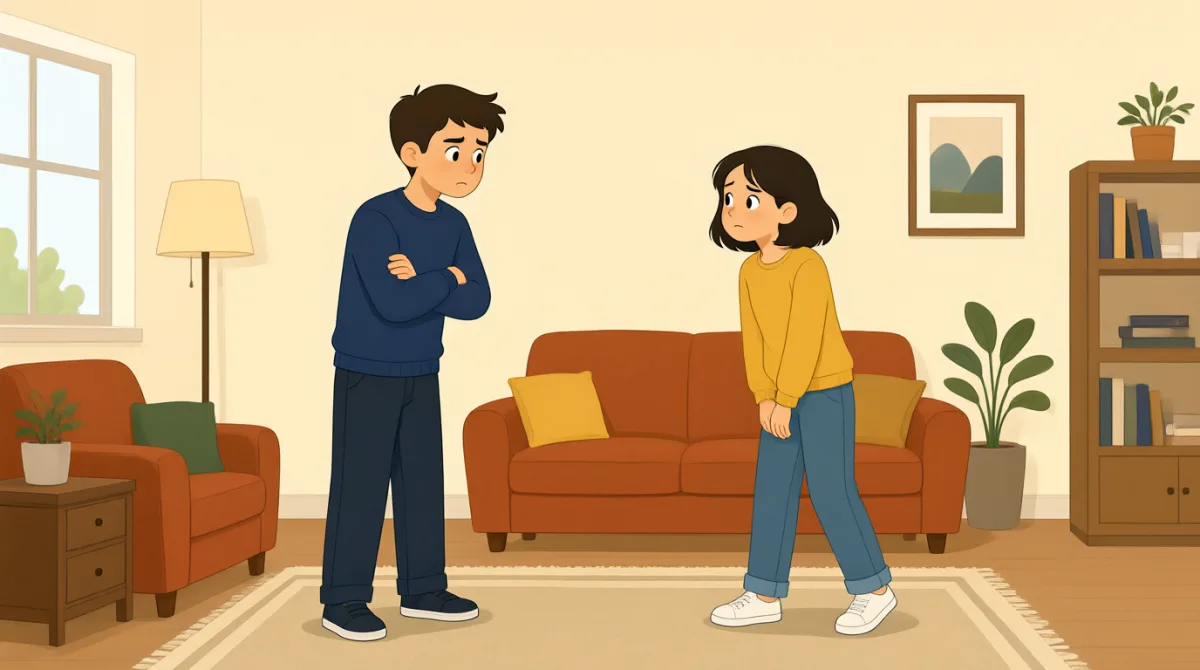

I want to address the missed handoff last Thursday. I waited outside the school for forty minutes, and the children were confused. This cannot keep happening.
先週の木曜日に引き渡しがうまくいかなかった件について話したい。学校の外で40分も待ったし、子どもたちも戸惑ってた。こんなことが続くわけにはいかないよ。

I know I was late, Jack, and I regret that the children had to wait. But your message made it sound as if I had deliberately abandoned them. That was unfair.
遅れたのはわかってるよ、ジャック。子どもたちを待たせてしまったのは悪かったと思ってる。でも、あなたのメッセージだと、私がわざと子どもたちを置き去りにしたみたいだった。それは不公平だよ。
I was angry because you did not tell me what was happening. And this is not the first time I have had to rearrange my afternoon at the last minute.
何が起きてるのか教えてくれなかったから腹が立ったんだ。それに、直前になって午後の予定を組み直さなきゃいけなかったのは、これが初めてじゃない。
You are turning one late pickup into a verdict on my parenting. I have covered for you plenty of times, but I do not bring every mistake into mediation.
たった一度の迎えの遅れを、私の親としての資質を決めつける材料にしてるよね。私だって何度もあなたのフォローをしてきたけど、調停の場にあなたの失敗をいちいち持ち出したりはしないよ。

Let me pause you both. I hear a practical concern about reliability, and I also hear hurt about feeling judged. For a moment, let us separate those issues from the older grievances.
二人とも、いったん話を止めさせて。予定どおりに来てもらえるかという現実的な心配と、判断されたと感じて傷ついた気持ちの両方が伝わってくる。少しの間、その問題を昔からの不満とは切り分けよう。
I can own that my message was sharper than it needed to be. What I need, though, is a way to know promptly if a handoff is going to be delayed.
メッセージの言い方が必要以上にきつかったのは認めるよ。ただ、引き渡しが遅れそうなときは、すぐに知らせてもらいたいんだ。
That is reasonable. My phone was on silent during a meeting, but I should have sent an update as soon as I could. I do not want the children caught between us.
それはもっともだね。会議中で携帯がサイレントになってたけど、できるだけ早く状況を知らせるべきだった。子どもたちを私たちの板挟みにしたくない。
Then let us focus on what would help the children feel secure. Could you agree to notify each other as soon as a delay becomes likely, and give an estimated arrival time?
それなら、子どもたちが安心できるように何ができるかに集中しよう。遅れそうだとわかった時点ですぐにお互いに知らせて、到着予定時刻も伝えることにできる?
Yes. If there is no response after fifteen minutes, I would like us to have a backup contact method—not to escalate things, just to confirm the children are accounted for.
うん。15分たっても返事がなければ、別の連絡手段を使うことにしたい。話を大きくするためじゃなくて、子どもたちの無事を確認するためにね。
I can agree to that, provided the backup is used only for logistics and not as a way to reopen the argument. We should also tell the children the plan calmly, without assigning blame.
それならいいよ。ただし、別の連絡手段は予定の確認だけに使って、口論を蒸し返すためには使わないことが条件ね。それから、誰かを責めることなく、落ち着いて子どもたちにもこの決まりを伝えよう。
That sounds workable. Before we move on, is there anything either of you needs to acknowledge so this agreement is not simply covering over what happened?
それなら実行できそうだね。次に進む前に、この合意が起きたことにふたをするだけにならないように、どちらかが認めておくべきことはある?
I am sorry I made you feel accused rather than addressing the problem. I still need dependable communication, but I can raise that without making the children’s handoff a referendum on our past.
問題そのものに向き合う代わりに、責められたと感じさせてしまってごめん。確実に連絡を取り合う必要はあるけど、子どもたちの引き渡しを、私たちの過去を裁く話にせずに伝えることはできる。
語彙8
- missed handoff引き渡しの不成立
A missed handoff is when a parent does not arrive as planned to transfer the children to the other parent. Here, it refers to the delayed pickup outside the school.
“missed handoff”は、親が予定どおりに来ず、子どもをもう一方の親に引き渡せなかったことです。ここでは、学校の外での迎えが遅れたことを指しています。
- at the last minute直前になって
This means with very little notice, just before something needs to happen. It describes how the schedule changes affect Jack's afternoon.
“at the last minute”は、何かが起きる直前に、ほとんど前もって知らせる時間がない状態を表します。ここでは、予定の変更がジャックの午後に与える影響について話しています。
- a verdict on my parenting私の親としての資質を決めつける
A verdict is a judgment or decision about someone. Grace uses this phrase to say Jack is treating one mistake as proof that she is a bad parent.
“verdict”は、誰かについての判断や決定を指します。グレースはこの表現を使い、ジャックが一度の失敗を、彼女が悪い親だという証拠のように扱っていると言っています。
- I can own thatその点は認められる
This means “I can accept responsibility for that.” It is a useful way to acknowledge your part in a disagreement without giving up your other concerns.
“I can own that”は「そのことについては自分の責任を認められる」という意味です。意見の食い違いで、自分の懸念を取り下げずに自分の非を認めたいときに便利な表現です。
- as soon as a delay becomes likely遅れそうだとわかった時点で
This means to give notice when it seems probable that someone will be late, rather than waiting until the delay is certain. It can help people make practical plans.
“as soon as a delay becomes likely”は、遅れることが確実になるまで待たず、遅れそうだとわかった時点で知らせるという意味です。そうすれば、現実的な予定を立てやすくなります。
- a backup contact method別の連絡手段
This is an alternative way to get in touch if the usual method does not work. In this conversation, it is intended to confirm that the children are accounted for.
“a backup contact method”は、いつもの連絡方法が使えないときの代わりの連絡手段です。この会話では、子どもたちの無事を確認するために使うことを想定しています。
- covering over what happened起きたことにふたをする
This means hiding or ignoring a problem instead of addressing it. Mia asks whether anything needs to be acknowledged so the agreement does not avoid the hurt caused by the incident.
“covering over what happened”は、問題に向き合わず、隠したり無視したりすることです。ミアは、出来事で生じた傷つきを避けてしまわないよう、合意に進む前に認めておくべきことがあるか尋ねています。
- a referendum on our past私たちの過去を裁く話
A referendum is usually a vote on an important issue; here, Jack uses it figuratively to mean a judgment on the history of their relationship. He says he can raise a current concern without turning it into a judgment about their past.
“referendum”は通常、重要な問題についての投票を指しますが、ここではジャックが比喩的に使い、二人の関係の歴史に対する判断という意味を表しています。今の懸念を伝えるときに、過去まで裁く話にしなくてもよいと言っています。
重要な文8
- 1
I hear a practical concern about reliability, and I also hear hurt about feeling judged.
予定どおりに来てもらえるかという現実的な心配と、判断されたと感じて傷ついた気持ちの両方が伝わってくる。
This sentence acknowledges two sides of a disagreement without taking sides. You can reuse the structure “I hear [concern], and I also hear [feeling]” to show that you understand both the practical issue and its emotional impact.
この文は、どちらかの味方をせずに、意見の食い違いにある二つの側面を受け止めています。“I hear [concern], and I also hear [feeling]”という形を使えば、現実的な問題と、それが感情に与える影響の両方を理解していると伝えられます。
- 2
For a moment, let us separate those issues from the older grievances.
少しの間、その問題を昔からの不満とは切り分けよう。
This is a calm way to redirect a conversation that is becoming overwhelmed by past conflicts. “Let us separate [current issue] from [other concern]” helps people return to the matter they can address now.
過去の対立に話が飲み込まれそうなときに、落ち着いて話題を戻す表現です。“Let us separate [current issue] from [other concern]”を使うと、今対処できる問題に話を戻しやすくなります。
- 3
I can own that my message was sharper than it needed to be.
メッセージの言い方が必要以上にきつかったのは認めるよ。
This sentence takes responsibility for a specific action while leaving room to discuss the underlying problem. Reuse “I can own that…” to make a direct, measured acknowledgment.
この文は、根本の問題について話し合う余地を残しながら、具体的な行動について責任を認めています。“I can own that…”を使うと、率直に、落ち着いて自分の非を認められます。
- 4
What I need, though, is a way to know promptly if a handoff is going to be delayed.
ただ、引き渡しが遅れそうなときは、すぐに知らせてもらいたいんだ。
This sentence shifts from an apology to a clear request about future communication. “What I need is a way to…” is useful for stating a practical need without making a personal accusation.
この文は、謝罪から今後の連絡についての明確な要望へと話を移しています。“What I need is a way to…”は、相手を責めずに現実的な必要を伝えるのに便利です。
- 5
Could you agree to notify each other as soon as a delay becomes likely, and give an estimated arrival time?
遅れそうだとわかった時点ですぐにお互いに知らせて、到着予定時刻も伝えることにできる?
This is a collaborative question that proposes specific actions rather than assigning blame. You can use “Could you agree to…” when seeking a clear, mutual commitment.
これは、誰かを責めるのではなく、具体的な行動を提案する協力的な質問です。お互いの明確な約束を求めるときに、“Could you agree to…”を使えます。
- 6
I can agree to that, provided the backup is used only for logistics and not as a way to reopen the argument.
それならいいよ。ただし、別の連絡手段は予定の確認だけに使って、口論を蒸し返すためには使わないことが条件ね。
This sentence accepts a proposal while setting a reasonable condition. “I can agree to that, provided…” is useful when you want to cooperate but clarify the limits of an agreement.
この文は、妥当な条件を示しながら提案を受け入れています。協力する意思を示しつつ、合意の範囲を明確にしたいときに“I can agree to that, provided…”が便利です。
- 7
We should also tell the children the plan calmly, without assigning blame.
それから、誰かを責めることなく、落ち着いて子どもたちにもこの決まりを伝えよう。
This sentence keeps the children’s needs central and recommends a neutral way to communicate. The phrase “without assigning blame” can help frame a discussion around solutions rather than fault.
この文は子どもたちの必要を中心に据え、中立的な伝え方を勧めています。“without assigning blame”は、誰が悪いかではなく、解決策に焦点を当てた話し合いにするのに役立つ表現です。
- 8
I still need dependable communication, but I can raise that without making the children’s handoff a referendum on our past.
確実に連絡を取り合う必要はあるけど、子どもたちの引き渡しを、私たちの過去を裁く話にせずに伝えることはできる。
This sentence expresses an ongoing need while showing a commitment to address it constructively. “I still need…, but I can…” is a useful way to balance firmness with accountability.
この文は、引き続き必要なことを伝えながら、建設的に対処する姿勢も示しています。“I still need…, but I can…”は、はっきり要望を伝えつつ、自分の責任も認めるのに便利な形です。