Asking About the Rules
ルールについて聞く
Emma asks Grace simple questions about baseball. Grace explains strikes, outs, and innings in an easy way.
エマがグレースに野球について簡単な質問をします。グレースはストライク、アウト、イニングについてわかりやすく説明します。
会話9
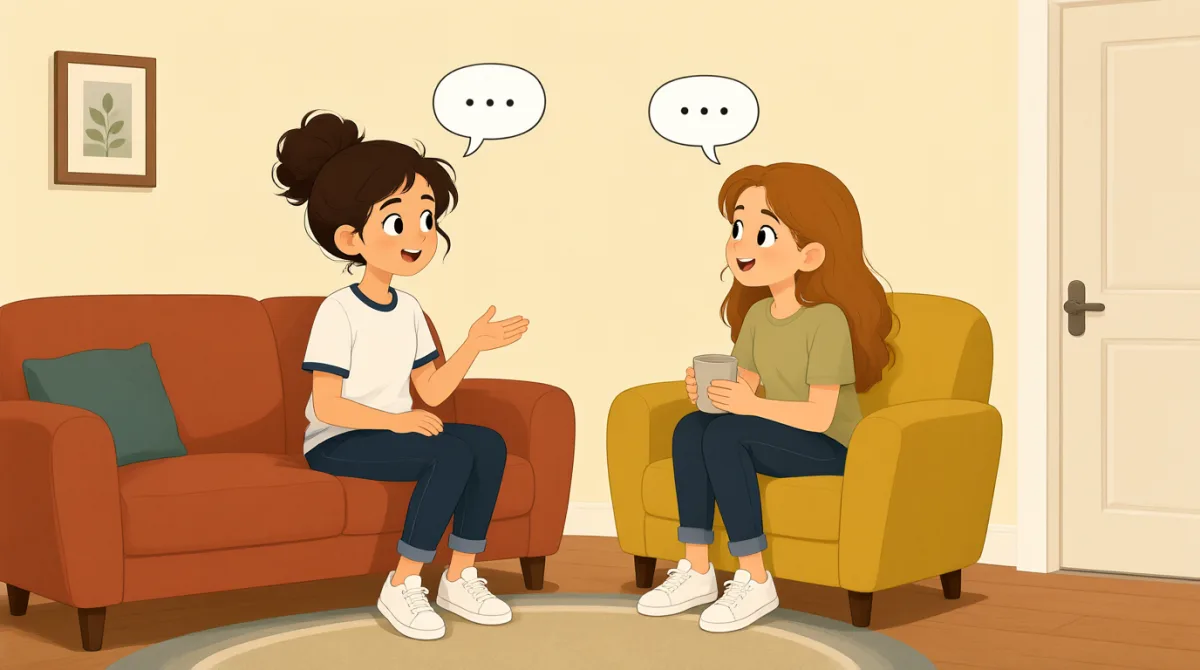

Grace, what does an inning mean?
グレース、イニングってどういう意味?

An inning has two halves. Each team gets a turn to bat.
イニングは前半と後半に分かれてるんだ。それぞれのチームに攻撃する番が回ってくるよ。

And what happens when the batter gets three strikes?
それで、バッターが3ストライクになったらどうなるの?
The batter is out after three strikes. Then another player comes up.
3ストライクでバッターはアウトになるよ。そしたら次の選手が打席に入るんだ。
What is a strike? Is it when the batter misses?
ストライクって何?バッターが空振りしたときのこと?
Yes, a miss is a strike. A pitch through the strike zone can be one, too.
そう、空振りはストライクだよ。ストライクゾーンを通った投球もストライクになることがあるよ。
How many outs does a team get in each half?
前半と後半、それぞれチームは何アウトまで取られるの?
Three outs. Then the teams switch, and the other team bats.
3アウトだよ。そしたら攻守が入れ替わって、もう一方のチームが打つんだ。
Oh, I get it now. Thanks, Grace!
ああ、今わかった。ありがとう、グレース!
語彙8
- inningイニング
An inning is a part of a baseball game. Each team gets a turn to bat in each inning.
イニングは野球の試合の一区切りです。1イニングごとに、それぞれのチームに攻撃する番が回ってきます。
- half半分、前半・後半
An inning has two halves, one for each team to bat. Use “half” to talk about one of these parts.
1イニングは前半と後半に分かれていて、それぞれのチームが攻撃します。このような区切りの一方を表すときに“half”を使います。
- turn to bat攻撃する番
This means it is a team's time to hit the ball. You can use “take a turn” when people do something one after another.
チームがボールを打つ番だという意味です。人が順番に何かをするときは、“take a turn”も使えます。
- batterバッター
The batter is the player who tries to hit the ball. This word is useful when talking about baseball.
バッターは、ボールを打とうとする選手のことです。野球について話すときによく使う言葉です。
- strikeストライク
A strike is counted when the batter misses or when a pitch goes through the strike zone. The batter is out after three strikes.
バッターが空振りしたときや、投球がストライクゾーンを通ったときにストライクが数えられます。3ストライクでバッターはアウトになります。
- comes up打席に入る、次の番になる
“Comes up” means it is the next player's turn to bat. It is a common way to say someone is next.
“Comes up”は、次の選手が打つ番だという意味です。誰かが次だと伝えるときによく使う表現です。
- outアウト
A player is out when they can no longer bat during that turn. In this game, three outs end a team's half.
その打席でこれ以上プレーを続けられなくなると、選手はアウトになります。このルールでは、3アウトになるとチームの攻撃が終わります。
- switch入れ替わる
“Switch” means to change places or roles. Here, the teams switch so the other team can bat.
“Switch”は、場所や役割を入れ替えるという意味です。ここではチームが攻守を入れ替え、もう一方のチームが打ちます。
重要な文8
- 1
Grace, what does an inning mean?
グレース、イニングってどういう意味?
Use “What does [word] mean?” to ask about a word you do not understand. Replace “inning” with another word.
わからない単語の意味を聞くときは、“What does [word] mean?”を使います。“inning”を別の単語に置き換えて使えます。
- 2
Each team gets a turn to bat.
それぞれのチームに攻撃する番が回ってくる。
This sentence explains that teams take turns batting. You can reuse “gets a turn to” for other activities, such as “Each person gets a turn to speak.”
チームが順番に攻撃することを説明する文です。“gets a turn to”は、ほかの活動にも使えます。たとえば、“Each person gets a turn to speak.”(一人ひとりに話す番が回ってきます)のように言えます。
- 3
The batter is out after three strikes.
3ストライクでバッターはアウトになる。
This sentence explains a simple baseball rule. Use “is out after” to say when someone is no longer allowed to continue.
野球の簡単なルールを説明する文です。“is out after”を使うと、いつプレーを続けられなくなるかを伝えられます。
- 4
What is a strike?
ストライクって何?
This is a short, natural way to ask what something means. You can replace “a strike” with another unfamiliar thing.
何かの意味を尋ねる、短くて自然な表現です。“a strike”を、意味のわからない別のものに置き換えて使えます。
- 5
Is it when the batter misses?
バッターが空振りしたときのこと?
Use “Is it when...?” to check your understanding of a rule or idea. Replace the action with another simple explanation.
ルールや考え方の理解を確かめるときは、“Is it when...?”を使います。後ろの動作を、別の簡単な説明に置き換えられます。
- 6
How many outs does a team get in each half?
前半と後半、それぞれチームは何アウトまで取られるの?
Use “How many...?” to ask about a number of things. You can replace “outs” with another countable item.
数を尋ねるときは“How many...?”を使います。“outs”を、数えられる別のものに置き換えて使えます。
- 7
Then the teams switch, and the other team bats.
そしたら攻守が入れ替わって、もう一方のチームが打つ。
This sentence describes what happens next. Use “Then...” to explain the next step in a process.
この文は、次に起こることを説明しています。手順の次の段階を伝えるときは、“Then...”を使います。
- 8
Oh, I get it now.
ああ、今わかった。
This is a friendly way to say that you understand. You can use it after someone explains something to you.
理解できたことを伝える、親しみやすい表現です。誰かに何かを説明してもらったあとに使えます。