Asking About the Rules
Preguntar por las reglas
Emma asks Grace simple questions about baseball. Grace explains strikes, outs, and innings in an easy way.
Emma le hace preguntas sencillas a Grace sobre el béisbol. Grace explica de forma fácil qué son los strikes, los outs y las entradas.
Diálogo9
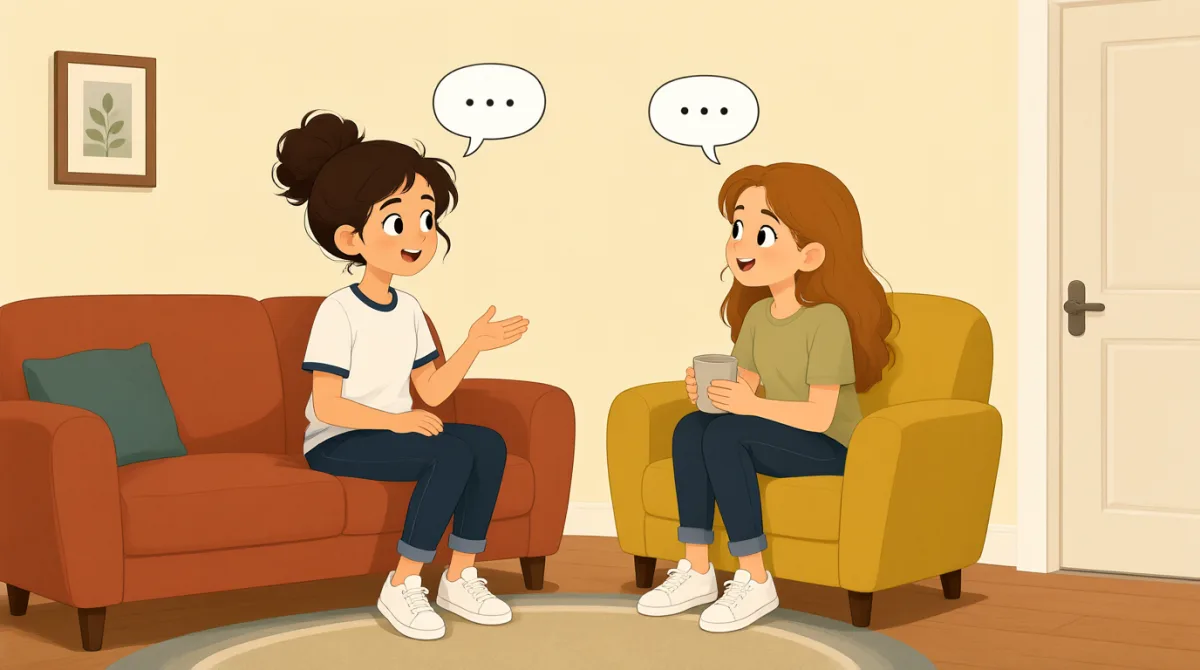

Grace, what does an inning mean?
Grace, ¿qué significa una entrada?

An inning has two halves. Each team gets a turn to bat.
Una entrada tiene dos mitades. Cada equipo tiene su turno al bate.

And what happens when the batter gets three strikes?
¿Y qué pasa cuando el bateador recibe tres strikes?
The batter is out after three strikes. Then another player comes up.
El bateador queda eliminado después de tres strikes. Luego le toca a otro jugador.
What is a strike? Is it when the batter misses?
¿Qué es un strike? ¿Es cuando el bateador no le pega a la pelota?
Yes, a miss is a strike. A pitch through the strike zone can be one, too.
Sí, no pegarle a la pelota cuenta como strike. Un lanzamiento que pasa por la zona de strike también puede contar.
How many outs does a team get in each half?
¿Cuántos outs tiene cada equipo en cada mitad?
Three outs. Then the teams switch, and the other team bats.
Tres outs. Luego los equipos cambian de turno y batea el otro equipo.
Oh, I get it now. Thanks, Grace!
Ah, ya lo entiendo. ¡Gracias, Grace!
Vocabulario8
- inningentrada
An inning is a part of a baseball game. Each team gets a turn to bat in each inning.
Una entrada es una parte de un partido de béisbol. En cada entrada, cada equipo tiene su turno al bate.
- halfmitad
An inning has two halves, one for each team to bat. Use “half” to talk about one of these parts.
Una entrada tiene dos mitades, una para que batee cada equipo. Usa “half” para hablar de una de estas partes.
- turn to batturno al bate
This means it is a team's time to hit the ball. You can use “take a turn” when people do something one after another.
Significa que es el momento de un equipo de golpear la pelota. Puedes usar “take a turn” cuando las personas hacen algo por turnos.
- batterbateador
The batter is the player who tries to hit the ball. This word is useful when talking about baseball.
El bateador es el jugador que intenta golpear la pelota. Esta palabra es útil cuando hablas de béisbol.
- strikestrike
A strike is counted when the batter misses or when a pitch goes through the strike zone. The batter is out after three strikes.
Se cuenta un strike cuando el bateador no le pega a la pelota o cuando un lanzamiento pasa por la zona de strike. El bateador queda eliminado después de tres strikes.
- comes uple toca a
“Comes up” means it is the next player's turn to bat. It is a common way to say someone is next.
“Comes up” significa que es el turno del siguiente jugador de batear. Es una forma común de decir que alguien sigue.
- outeliminado (out)
A player is out when they can no longer bat during that turn. In this game, three outs end a team's half.
Un jugador queda eliminado cuando ya no puede batear durante ese turno. En este juego, tres outs terminan la mitad del equipo.
- switchcambiar
“Switch” means to change places or roles. Here, the teams switch so the other team can bat.
“Switch” significa cambiar de lugar o de papel. Aquí, los equipos cambian para que el otro equipo pueda batear.
Frases clave8
- 1
Grace, what does an inning mean?
Grace, ¿qué significa una entrada?
Use “What does [word] mean?” to ask about a word you do not understand. Replace “inning” with another word.
Usa “What does [word] mean?” para preguntar por una palabra que no entiendes. Sustituye “inning” por otra palabra.
- 2
Each team gets a turn to bat.
Cada equipo tiene su turno al bate.
This sentence explains that teams take turns batting. You can reuse “gets a turn to” for other activities, such as “Each person gets a turn to speak.”
Esta oración explica que los equipos se turnan para batear. Puedes volver a usar “gets a turn to” para otras actividades, como en “Each person gets a turn to speak.”
- 3
The batter is out after three strikes.
El bateador queda eliminado después de tres strikes.
This sentence explains a simple baseball rule. Use “is out after” to say when someone is no longer allowed to continue.
Esta oración explica una regla sencilla del béisbol. Usa “is out after” para decir cuándo alguien ya no puede continuar.
- 4
What is a strike?
¿Qué es un strike?
This is a short, natural way to ask what something means. You can replace “a strike” with another unfamiliar thing.
Esta es una forma breve y natural de preguntar qué significa algo. Puedes sustituir “a strike” por otra cosa que no conozcas.
- 5
Is it when the batter misses?
¿Es cuando el bateador no le pega a la pelota?
Use “Is it when...?” to check your understanding of a rule or idea. Replace the action with another simple explanation.
Usa “Is it when...?” para comprobar si entendiste una regla o una idea. Sustituye la acción por otra explicación sencilla.
- 6
How many outs does a team get in each half?
¿Cuántos outs tiene cada equipo en cada mitad?
Use “How many...?” to ask about a number of things. You can replace “outs” with another countable item.
Usa “How many...?” para preguntar por una cantidad. Puedes sustituir “outs” por otro elemento que se pueda contar.
- 7
Then the teams switch, and the other team bats.
Luego los equipos cambian de turno y batea el otro equipo.
This sentence describes what happens next. Use “Then...” to explain the next step in a process.
Esta oración describe lo que pasa después. Usa “Then...” para explicar el siguiente paso de un proceso.
- 8
Oh, I get it now.
Ah, ya lo entiendo.
This is a friendly way to say that you understand. You can use it after someone explains something to you.
Esta es una forma amable de decir que ya entendiste. Puedes usarla después de que alguien te explique algo.