Signing the Card
カードに名前を書く
Jack brings a birthday card to work, and the coworkers write short messages inside. They make sure everyone has signed it.
ジャックが誕生日カードを職場に持ってきて、同僚たちが中に短いメッセージを書きます。全員が名前を書いたか確認します。
会話8
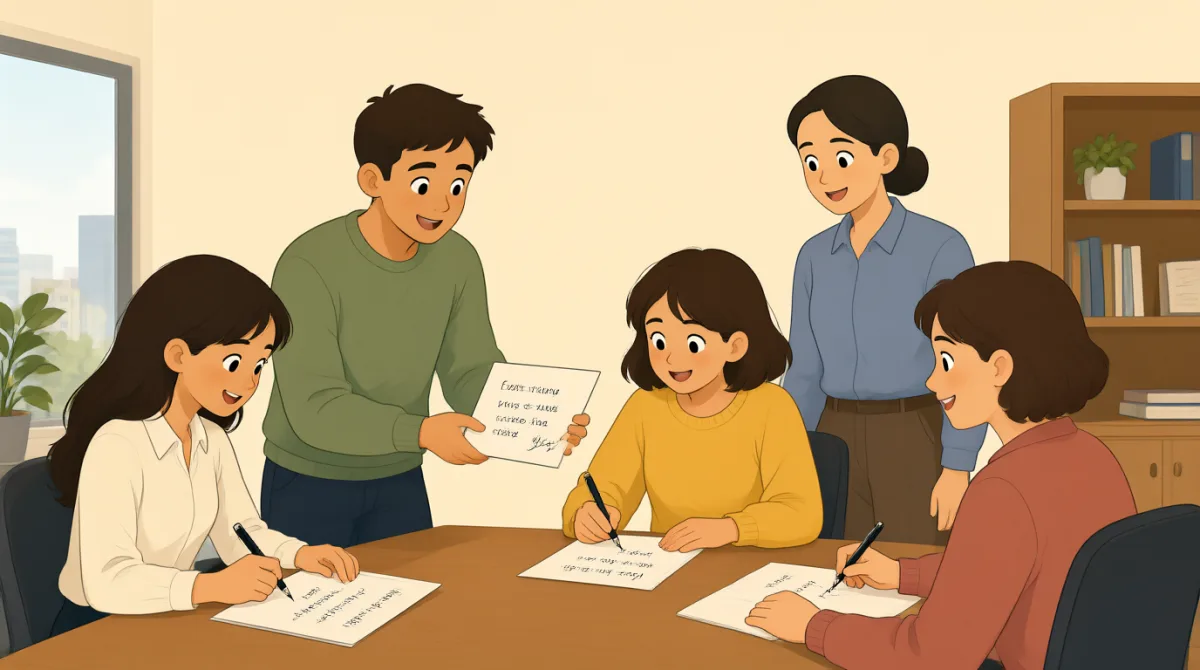

I brought the birthday card. Let’s sign it before the meeting starts.
誕生日カードを持ってきたよ。会議が始まる前に、みんなで名前を書こう。

Good idea! Who should write the first message?
いいね!最初のメッセージは誰が書く?

Jack, you brought the card, so why don’t you start?
ジャック、カードを持ってきてくれたんだから、最初に書いたら?
Sure. I’ll write, “Happy birthday! Hope you have a wonderful day.”
いいよ。「お誕生日おめでとう!すてきな一日になりますように」って書くね。
That sounds nice. I’ll add a message about the travel mug.
いいね。旅行用マグカップのこともメッセージに書こうかな。
I’ll sign underneath. Have you both signed your names?
私はその下に名前を書くね。二人とも名前を書いた?
Yes, I signed here. Jack, did you sign too?
うん、ここに書いたよ。ジャックも書いた?
Yes, right here. Great, everyone has signed the card.
うん、ここだよ。よし、みんなカードに名前を書いたね。
語彙7
- birthday card誕生日カード
A card you give someone to celebrate their birthday. You can write a personal message inside it.
誕生日を祝うために誰かに贈るカードです。中に自分の言葉でメッセージを書くことができます。
- before the meeting starts会議が始まる前に
This means before the meeting begins. Use “before” to say that one thing happens earlier than another.
「会議が始まる前に」という意味です。「before」は、あることが別のことより先に起こると言うときに使います。
- write the first message最初のメッセージを書く
To be the first person to write something inside the card. You can use this phrase when people are taking turns.
カードの中に最初に何かを書くことです。順番に書いていくときに使える表現です。
- why don’t you start?最初にやったら?
A friendly way to suggest that someone begin. You can use it when inviting someone to do something first.
相手に何かを始めるよう、親しみを込めて提案する表現です。誰かに最初にやってもらいたいときに使えます。
- add a messageメッセージを添える
To write an extra note. You can use “add” when putting more words or information into something.
追加のメモを書くことです。「add」は、何かに言葉や情報を付け加えるときに使います。
- sign underneathその下に名前を書く
To write your name below another message or signature. “Underneath” tells you where to write.
ほかのメッセージや署名の下に自分の名前を書くことです。「underneath」は、書く場所を示しています。
- signed your names名前を書いた
This means each person wrote their name on the card. Use “Have you signed…?” to check whether something is done.
それぞれがカードに自分の名前を書いた、という意味です。「Have you signed…?」は、何かが済んだかどうかを確認するときに使います。
重要な文8
- 1
I brought the birthday card.
誕生日カードを持ってきたよ。
Use this simple past sentence to say that you brought something. You can replace “the birthday card” with another item, such as “the tickets” or “the snacks.”
何かを持ってきたことを伝える、シンプルな過去形の文です。「the birthday card」の代わりに、「the tickets(チケット)」や「the snacks(おやつ)」などを使えます。
- 2
Let’s sign it before the meeting starts.
会議が始まる前に、みんなで名前を書こう。
“Let’s” is a friendly way to suggest doing something together. Use “before” to say when you want to do it.
「Let’s」は、何かを一緒にしようと親しみを込めて提案するときに使います。「before」は、それをいつしたいかを伝える表現です。
- 3
Who should write the first message?
最初のメッセージは誰が書く?
Use this question to ask who ought to do something first. You can replace “write the first message” with another action.
誰が最初に何かをするべきか尋ねるときに使う質問です。「write the first message」を、別の行動に置き換えることもできます。
- 4
I’ll write, “Happy birthday! Hope you have a wonderful day.”
「お誕生日おめでとう!すてきな一日になりますように」って書くね。
Use “I’ll” to say what you plan to do now or in the near future. This sentence also gives a short, friendly birthday message.
「I’ll」は、今または近いうちに何をするつもりか伝える表現です。この文には、短くて親しみやすい誕生日のメッセージも含まれています。
- 5
I’ll add a message about the travel mug.
旅行用マグカップのこともメッセージに書こうかな。
This is a useful way to say you will include an extra note about something. Replace “the travel mug” with the topic you want to mention.
何かについてのメモを追加すると伝えるときに便利な表現です。「the travel mug」を、書きたい話題に置き換えて使えます。
- 6
Have you both signed your names?
二人とも名前を書いた?
Use this question to check whether two people have finished signing. Change “both” to “all” when asking a larger group.
二人が署名を終えたか確認するときに使う質問です。もっと大勢に尋ねるときは、「both」を「all」に変えます。
- 7
Jack, did you sign too?
ジャックも書いた?
Use this simple past question to check whether someone did something. “Too” means that you are asking if they did it as well.
誰かが何かをしたか確認する、シンプルな過去形の質問です。「too」は、その人も同じことをしたか尋ねていることを表します。
- 8
Great, everyone has signed the card.
よし、みんなカードに名前を書いたね。
Use this sentence to say that all the people have finished signing. “Everyone has” is followed by a singular verb.
全員が署名を終えたことを伝える文です。「Everyone has」の後には、単数形の動詞が続きます。