Signing the Card
Firmar la tarjeta
Jack brings a birthday card to work, and the coworkers write short messages inside. They make sure everyone has signed it.
Jack trae una tarjeta de cumpleaños al trabajo y sus compañeros escriben mensajes cortos dentro. Se aseguran de que todos la hayan firmado.
Diálogo8
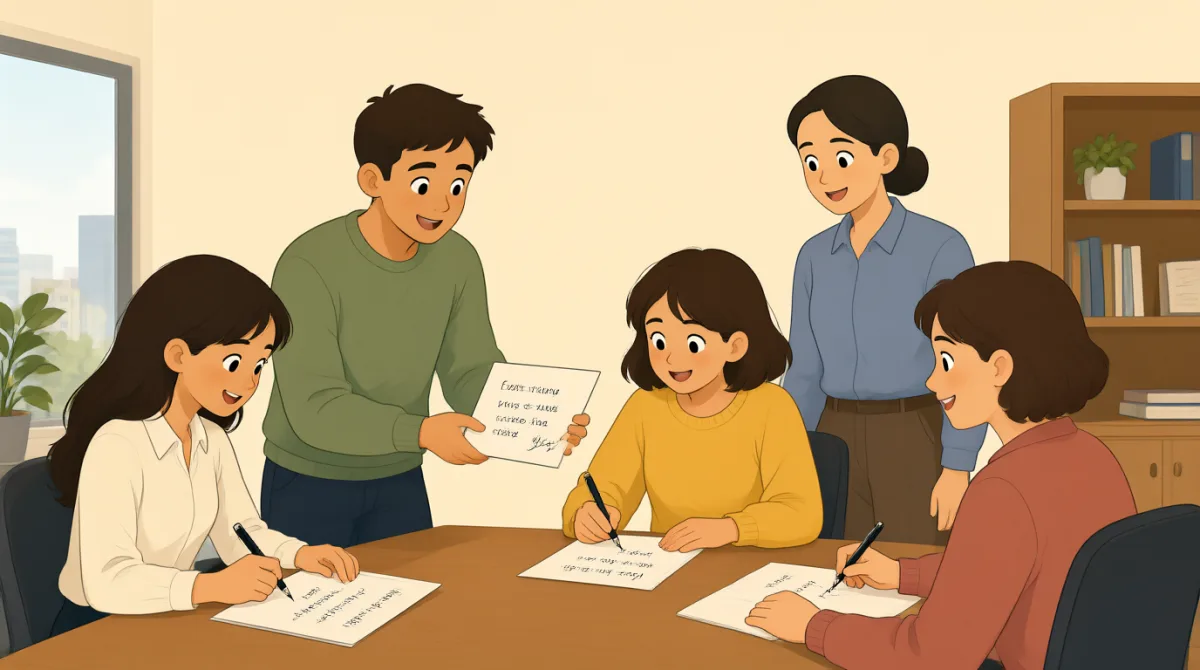

I brought the birthday card. Let’s sign it before the meeting starts.
Traje la tarjeta de cumpleaños. Firmémosla antes de que empiece la reunión.

Good idea! Who should write the first message?
¡Buena idea! ¿Quién debería escribir el primer mensaje?

Jack, you brought the card, so why don’t you start?
Jack, tú trajiste la tarjeta, así que ¿por qué no empiezas tú?
Sure. I’ll write, “Happy birthday! Hope you have a wonderful day.”
Claro. Voy a escribir: «¡Feliz cumpleaños! Espero que tengas un día maravilloso».
That sounds nice. I’ll add a message about the travel mug.
Qué lindo. Voy a agregar un mensaje sobre la taza térmica.
I’ll sign underneath. Have you both signed your names?
Yo firmo debajo. ¿Ya firmaron los dos?
Yes, I signed here. Jack, did you sign too?
Sí, firmé aquí. Jack, ¿tú también firmaste?
Yes, right here. Great, everyone has signed the card.
Sí, aquí mismo. Genial, todos firmaron la tarjeta.
Vocabulario7
- birthday cardtarjeta de cumpleaños
A card you give someone to celebrate their birthday. You can write a personal message inside it.
Una tarjeta que le das a alguien para celebrar su cumpleaños. Puedes escribir un mensaje personal adentro.
- before the meeting startsantes de que empiece la reunión
This means before the meeting begins. Use “before” to say that one thing happens earlier than another.
Significa antes de que comience la reunión. Usa “before” para decir que algo sucede antes que otra cosa.
- write the first messageescribir el primer mensaje
To be the first person to write something inside the card. You can use this phrase when people are taking turns.
Ser la primera persona en escribir algo dentro de la tarjeta. Puedes usar esta expresión cuando varias personas se turnan.
- why don’t you start?¿por qué no empiezas tú?
A friendly way to suggest that someone begin. You can use it when inviting someone to do something first.
Una manera amable de sugerir que alguien empiece. Puedes usarla para invitar a alguien a hacer algo primero.
- add a messageagregar un mensaje
To write an extra note. You can use “add” when putting more words or information into something.
Escribir una nota adicional. Puedes usar “add” cuando añades más palabras o información a algo.
- sign underneathfirmar debajo
To write your name below another message or signature. “Underneath” tells you where to write.
Escribir tu nombre debajo de otro mensaje o firma. “Underneath” indica dónde escribir.
- signed your namesfirmaron sus nombres
This means each person wrote their name on the card. Use “Have you signed…?” to check whether something is done.
Significa que cada persona escribió su nombre en la tarjeta. Usa “Have you signed…?” para comprobar si algo ya está hecho.
Frases clave8
- 1
I brought the birthday card.
Traje la tarjeta de cumpleaños.
Use this simple past sentence to say that you brought something. You can replace “the birthday card” with another item, such as “the tickets” or “the snacks.”
Usa esta oración en pasado simple para decir que trajiste algo. Puedes reemplazar “the birthday card” por otro objeto, como “the tickets” o “the snacks”.
- 2
Let’s sign it before the meeting starts.
Firmémosla antes de que empiece la reunión.
“Let’s” is a friendly way to suggest doing something together. Use “before” to say when you want to do it.
“Let’s” es una forma amistosa de proponer hacer algo juntos. Usa “before” para indicar cuándo quieres hacerlo.
- 3
Who should write the first message?
¿Quién debería escribir el primer mensaje?
Use this question to ask who ought to do something first. You can replace “write the first message” with another action.
Usa esta pregunta para preguntar quién debería hacer algo primero. Puedes reemplazar “write the first message” por otra acción.
- 4
I’ll write, “Happy birthday! Hope you have a wonderful day.”
Voy a escribir: «¡Feliz cumpleaños! Espero que tengas un día maravilloso».
Use “I’ll” to say what you plan to do now or in the near future. This sentence also gives a short, friendly birthday message.
Usa “I’ll” para decir lo que planeas hacer ahora o dentro de poco. Esta oración también ofrece un mensaje breve y amistoso de cumpleaños.
- 5
I’ll add a message about the travel mug.
Voy a agregar un mensaje sobre la taza térmica.
This is a useful way to say you will include an extra note about something. Replace “the travel mug” with the topic you want to mention.
Esta es una forma útil de decir que incluirás una nota adicional sobre algo. Reemplaza “the travel mug” por el tema que quieras mencionar.
- 6
Have you both signed your names?
¿Ya firmaron los dos?
Use this question to check whether two people have finished signing. Change “both” to “all” when asking a larger group.
Usa esta pregunta para comprobar si dos personas ya terminaron de firmar. Cambia “both” por “all” cuando le preguntes a un grupo más grande.
- 7
Jack, did you sign too?
Jack, ¿tú también firmaste?
Use this simple past question to check whether someone did something. “Too” means that you are asking if they did it as well.
Usa esta pregunta en pasado simple para comprobar si alguien hizo algo. “Too” significa que preguntas si también lo hizo.
- 8
Great, everyone has signed the card.
Genial, todos firmaron la tarjeta.
Use this sentence to say that all the people have finished signing. “Everyone has” is followed by a singular verb.
Usa esta oración para decir que todas las personas terminaron de firmar. En inglés, “Everyone has” va seguido de un verbo en singular.