Signing the Card
कार्ड पर हस्ताक्षर करना
Jack brings a birthday card to work, and the coworkers write short messages inside. They make sure everyone has signed it.
जैक जन्मदिन का कार्ड काम पर लाता है और सहकर्मी उसके अंदर छोटे-छोटे संदेश लिखते हैं। वे पक्का करते हैं कि सबने उस पर हस्ताक्षर कर दिए हैं।
संवाद8
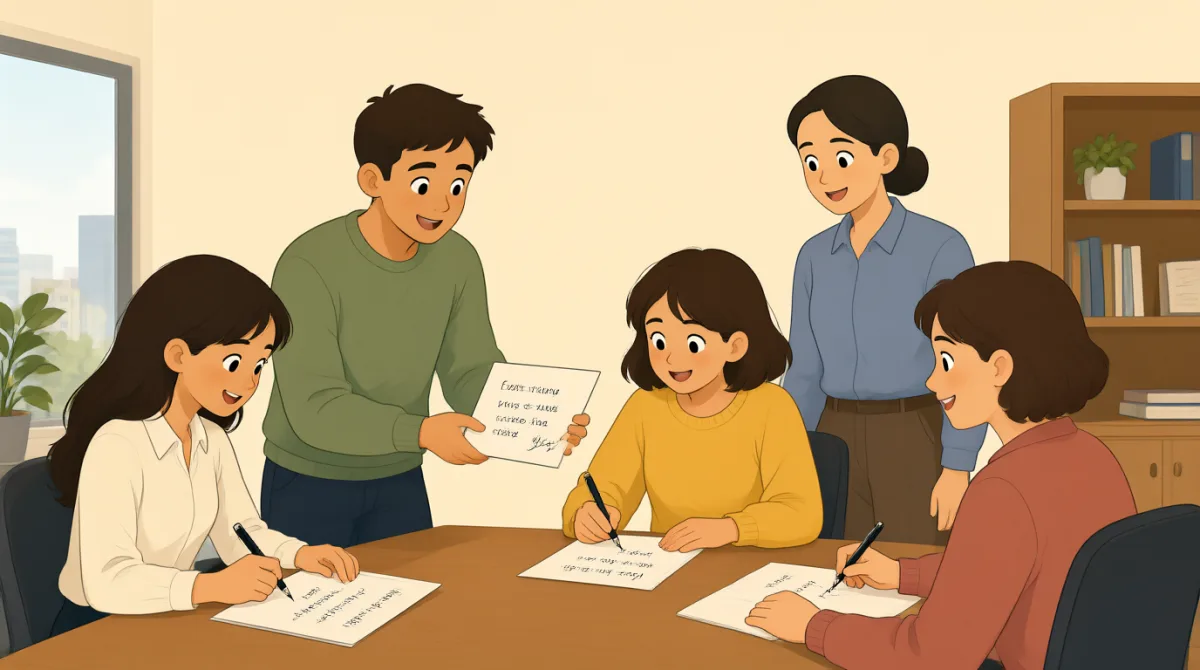

I brought the birthday card. Let’s sign it before the meeting starts.
मैं जन्मदिन का कार्ड लाया हूँ। मीटिंग शुरू होने से पहले इस पर हस्ताक्षर कर लेते हैं।

Good idea! Who should write the first message?
अच्छा विचार है! पहला संदेश किसे लिखना चाहिए?

Jack, you brought the card, so why don’t you start?
जैक, कार्ड तुम लाए हो, तो शुरुआत तुम क्यों नहीं करते?
Sure. I’ll write, “Happy birthday! Hope you have a wonderful day.”
ज़रूर। मैं लिखूँगा, “जन्मदिन मुबारक! उम्मीद है तुम्हारा दिन बहुत अच्छा बीतेगा।”
That sounds nice. I’ll add a message about the travel mug.
अच्छा लग रहा है। मैं ट्रैवल मग के बारे में एक संदेश जोड़ दूँगी।
I’ll sign underneath. Have you both signed your names?
मैं नीचे हस्ताक्षर कर दूँगी। क्या तुम दोनों ने अपने नाम लिख दिए हैं?
Yes, I signed here. Jack, did you sign too?
हाँ, मैंने यहाँ हस्ताक्षर कर दिए हैं। जैक, क्या तुमने भी कर दिए?
Yes, right here. Great, everyone has signed the card.
हाँ, यहीं। बढ़िया, सबने कार्ड पर हस्ताक्षर कर दिए हैं।
शब्दावली7
- birthday cardजन्मदिन का कार्ड
A card you give someone to celebrate their birthday. You can write a personal message inside it.
यह वह कार्ड है जो आप किसी को उसके जन्मदिन की खुशी में देते हैं। आप इसके अंदर अपनी ओर से एक संदेश लिख सकते हैं।
- before the meeting startsमीटिंग शुरू होने से पहले
This means before the meeting begins. Use “before” to say that one thing happens earlier than another.
इसका मतलब है मीटिंग शुरू होने से पहले। “before” का इस्तेमाल यह बताने के लिए करें कि एक काम दूसरे काम से पहले होता है।
- write the first messageपहला संदेश लिखना
To be the first person to write something inside the card. You can use this phrase when people are taking turns.
कार्ड के अंदर सबसे पहले कुछ लिखने वाला व्यक्ति होना। लोग जब बारी-बारी से लिख रहे हों, तब आप इस वाक्यांश का इस्तेमाल कर सकते हैं।
- why don’t you start?तुम शुरुआत क्यों नहीं करते?
A friendly way to suggest that someone begin. You can use it when inviting someone to do something first.
किसी को काम शुरू करने का सुझाव देने का यह एक दोस्ताना तरीका है। किसी को सबसे पहले कुछ करने के लिए कहने के लिए इसका इस्तेमाल कर सकते हैं।
- add a messageएक संदेश जोड़ना
To write an extra note. You can use “add” when putting more words or information into something.
एक अतिरिक्त नोट लिखना। किसी चीज़ में और शब्द या जानकारी शामिल करने के लिए “add” का इस्तेमाल कर सकते हैं।
- sign underneathनीचे हस्ताक्षर करना
To write your name below another message or signature. “Underneath” tells you where to write.
किसी दूसरे संदेश या हस्ताक्षर के नीचे अपना नाम लिखना। “Underneath” बताता है कि कहाँ लिखना है।
- signed your namesअपने नामों पर हस्ताक्षर किए
This means each person wrote their name on the card. Use “Have you signed…?” to check whether something is done.
इसका मतलब है कि हर व्यक्ति ने कार्ड पर अपना नाम लिखा। यह पूछने के लिए “Have you signed…?” का इस्तेमाल करें कि कोई काम पूरा हुआ है या नहीं।
मुख्य वाक्य8
- 1
I brought the birthday card.
मैं जन्मदिन का कार्ड लाया हूँ।
Use this simple past sentence to say that you brought something. You can replace “the birthday card” with another item, such as “the tickets” or “the snacks.”
कुछ लाने की बात बताने के लिए इस सरल भूतकाल वाले वाक्य का इस्तेमाल करें। “the birthday card” की जगह आप कोई दूसरी चीज़ रख सकते हैं, जैसे “the tickets” या “the snacks।”
- 2
Let’s sign it before the meeting starts.
मीटिंग शुरू होने से पहले इस पर हस्ताक्षर कर लेते हैं।
“Let’s” is a friendly way to suggest doing something together. Use “before” to say when you want to do it.
“Let’s” साथ मिलकर कुछ करने का सुझाव देने का दोस्ताना तरीका है। काम कब करना है, यह बताने के लिए “before” का इस्तेमाल करें।
- 3
Who should write the first message?
पहला संदेश किसे लिखना चाहिए?
Use this question to ask who ought to do something first. You can replace “write the first message” with another action.
कौन-सा व्यक्ति कोई काम सबसे पहले करे, यह पूछने के लिए इस सवाल का इस्तेमाल करें। “write the first message” की जगह कोई दूसरी गतिविधि रख सकते हैं।
- 4
I’ll write, “Happy birthday! Hope you have a wonderful day.”
मैं लिखूँगा, “जन्मदिन मुबारक! उम्मीद है तुम्हारा दिन बहुत अच्छा बीतेगा।”
Use “I’ll” to say what you plan to do now or in the near future. This sentence also gives a short, friendly birthday message.
अभी या निकट भविष्य में आप क्या करने वाले हैं, यह बताने के लिए “I’ll” का इस्तेमाल करें। इस वाक्य में जन्मदिन की एक छोटी और दोस्ताना शुभकामना भी है।
- 5
I’ll add a message about the travel mug.
मैं ट्रैवल मग के बारे में एक संदेश जोड़ दूँगी।
This is a useful way to say you will include an extra note about something. Replace “the travel mug” with the topic you want to mention.
किसी चीज़ के बारे में एक अतिरिक्त नोट शामिल करने की बात कहने का यह उपयोगी तरीका है। “the travel mug” की जगह उस विषय का नाम रखें जिसका आप ज़िक्र करना चाहते हैं।
- 6
Have you both signed your names?
क्या तुम दोनों ने अपने नाम लिख दिए हैं?
Use this question to check whether two people have finished signing. Change “both” to “all” when asking a larger group.
दो लोगों से यह पूछने के लिए इस सवाल का इस्तेमाल करें कि क्या उन्होंने हस्ताक्षर करना पूरा कर लिया है। बड़े समूह से पूछते समय “both” की जगह “all” कहें।
- 7
Jack, did you sign too?
जैक, क्या तुमने भी हस्ताक्षर कर दिए?
Use this simple past question to check whether someone did something. “Too” means that you are asking if they did it as well.
यह जानने के लिए कि किसी ने कोई काम किया या नहीं, इस सरल भूतकाल वाले सवाल का इस्तेमाल करें। “Too” का मतलब है कि आप पूछ रहे हैं कि क्या उसने भी यह काम किया।
- 8
Great, everyone has signed the card.
बढ़िया, सबने कार्ड पर हस्ताक्षर कर दिए हैं।
Use this sentence to say that all the people have finished signing. “Everyone has” is followed by a singular verb.
यह बताने के लिए इस वाक्य का इस्तेमाल करें कि सभी लोगों ने हस्ताक्षर करना पूरा कर लिया है। “Everyone has” के बाद एकवचन क्रिया आती है।