Signing the Card
التوقيع على البطاقة
Jack brings a birthday card to work, and the coworkers write short messages inside. They make sure everyone has signed it.
أحضر جاك بطاقة عيد ميلاد إلى العمل، وكتب زملاؤه رسائل قصيرة داخلها. وتأكدوا من أن الجميع وقّعوا عليها.
حوار8
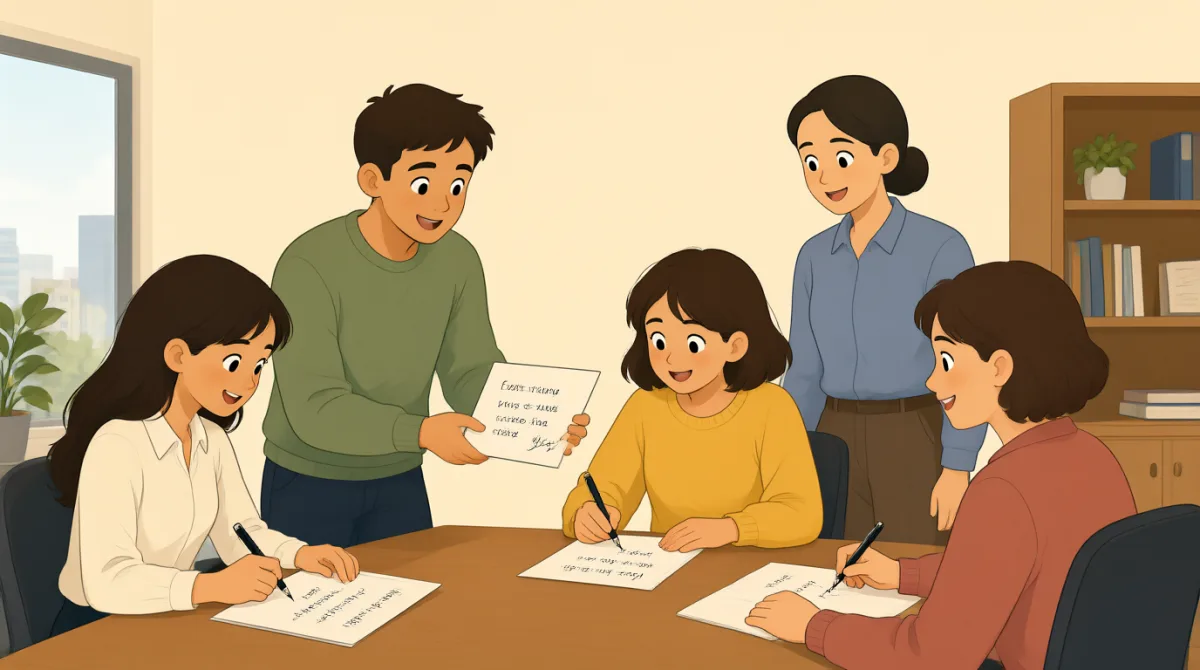

I brought the birthday card. Let’s sign it before the meeting starts.
أحضرت بطاقة عيد الميلاد. لِنوقّعها قبل أن يبدأ الاجتماع.

Good idea! Who should write the first message?
فكرة رائعة! من يكتب الرسالة الأولى؟

Jack, you brought the card, so why don’t you start?
يا جاك، بما أنك أحضرت البطاقة، فلماذا لا تبدأ؟
Sure. I’ll write, “Happy birthday! Hope you have a wonderful day.”
بالتأكيد. سأكتب: «عيد ميلاد سعيدًا! أتمنى لك يومًا رائعًا».
That sounds nice. I’ll add a message about the travel mug.
تبدو جميلة. سأضيف رسالة عن كوب السفر.
I’ll sign underneath. Have you both signed your names?
سأوقّع في الأسفل. هل وقّعتما كلاكما باسميكما؟
Yes, I signed here. Jack, did you sign too?
نعم، وقّعت هنا. يا جاك، هل وقّعت أنت أيضًا؟
Yes, right here. Great, everyone has signed the card.
نعم، هنا تمامًا. رائع، لقد وقّع الجميع على البطاقة.
المفردات7
- birthday cardبطاقة عيد ميلاد
A card you give someone to celebrate their birthday. You can write a personal message inside it.
بطاقة تهديها لشخص احتفالًا بعيد ميلاده. يمكنك كتابة رسالة شخصية داخلها.
- before the meeting startsقبل أن يبدأ الاجتماع
This means before the meeting begins. Use “before” to say that one thing happens earlier than another.
تعني قبل بدء الاجتماع. تُستخدم “before” (قبل) للتعبير عن حدوث شيء في وقت أسبق من شيء آخر.
- write the first messageكتابة الرسالة الأولى
To be the first person to write something inside the card. You can use this phrase when people are taking turns.
أن تكون أول شخص يكتب شيئًا داخل البطاقة. يمكنك استخدام هذه العبارة عندما يتناوب الأشخاص على الكتابة.
- why don’t you start?لماذا لا تبدأ؟
A friendly way to suggest that someone begin. You can use it when inviting someone to do something first.
طريقة ودّية لاقتراح أن يبدأ شخص ما. يمكنك استخدام هذه العبارة لدعوة شخص إلى القيام بشيء أولًا.
- add a messageإضافة رسالة
To write an extra note. You can use “add” when putting more words or information into something.
كتابة ملاحظة إضافية. يمكنك استخدام “add” (يضيف) عند إضافة كلمات أو معلومات إلى شيء ما.
- sign underneathالتوقيع في الأسفل
To write your name below another message or signature. “Underneath” tells you where to write.
كتابة اسمك أسفل رسالة أو توقيع آخر. توضح “underneath” (في الأسفل) المكان الذي تكتب فيه.
- signed your namesوقّعتم بأسمائكم
This means each person wrote their name on the card. Use “Have you signed…?” to check whether something is done.
تعني أن كل شخص كتب اسمه على البطاقة. استخدم “Have you signed…?” (هل وقّعت…؟) للتحقق مما إذا كان شيء ما قد أُنجز.
الجمل الأساسية8
- 1
I brought the birthday card.
أحضرت بطاقة عيد الميلاد.
Use this simple past sentence to say that you brought something. You can replace “the birthday card” with another item, such as “the tickets” or “the snacks.”
استخدم هذه الجملة في الماضي البسيط لتقول إنك أحضرت شيئًا. يمكنك استبدال “the birthday card” (بطاقة عيد الميلاد) بشيء آخر، مثل “the tickets” (التذاكر) أو “the snacks” (الوجبات الخفيفة).
- 2
Let’s sign it before the meeting starts.
لِنوقّعها قبل أن يبدأ الاجتماع.
“Let’s” is a friendly way to suggest doing something together. Use “before” to say when you want to do it.
“Let’s” طريقة ودّية لاقتراح القيام بشيء معًا. استخدم “before” للتعبير عن الوقت الذي تريد القيام فيه بذلك.
- 3
Who should write the first message?
من يكتب الرسالة الأولى؟
Use this question to ask who ought to do something first. You can replace “write the first message” with another action.
استخدم هذا السؤال لتسأل من ينبغي له القيام بشيء أولًا. يمكنك استبدال “write the first message” (يكتب الرسالة الأولى) بفعل آخر.
- 4
I’ll write, “Happy birthday! Hope you have a wonderful day.”
سأكتب: «عيد ميلاد سعيدًا! أتمنى لك يومًا رائعًا».
Use “I’ll” to say what you plan to do now or in the near future. This sentence also gives a short, friendly birthday message.
استخدم “I’ll” للتعبير عما تخطط للقيام به الآن أو في المستقبل القريب. تتضمن هذه الجملة أيضًا تهنئة قصيرة وودّية بعيد الميلاد.
- 5
I’ll add a message about the travel mug.
سأضيف رسالة عن كوب السفر.
This is a useful way to say you will include an extra note about something. Replace “the travel mug” with the topic you want to mention.
هذه طريقة مفيدة للقول إنك ستضيف ملاحظة عن شيء ما. استبدل “the travel mug” (كوب السفر) بالموضوع الذي تريد ذكره.
- 6
Have you both signed your names?
هل وقّعتما كلاكما باسميكما؟
Use this question to check whether two people have finished signing. Change “both” to “all” when asking a larger group.
استخدم هذا السؤال للتحقق مما إذا كان شخصان قد أتما التوقيع. غيّر “both” إلى “all” عند سؤال مجموعة أكبر.
- 7
Jack, did you sign too?
يا جاك، هل وقّعت أنت أيضًا؟
Use this simple past question to check whether someone did something. “Too” means that you are asking if they did it as well.
استخدم هذا السؤال في الماضي البسيط للتحقق مما إذا كان شخص ما قد فعل شيئًا. تعني “too” (أيضًا) أنك تسأل عما إذا كان قد فعله هو كذلك.
- 8
Great, everyone has signed the card.
رائع، لقد وقّع الجميع على البطاقة.
Use this sentence to say that all the people have finished signing. “Everyone has” is followed by a singular verb.
استخدم هذه الجملة للقول إن جميع الأشخاص قد أتموا التوقيع. يأتي بعد “Everyone has” فعل مفرد.