Asking About Museum Rules
संग्रहालय के नियमों के बारे में पूछना
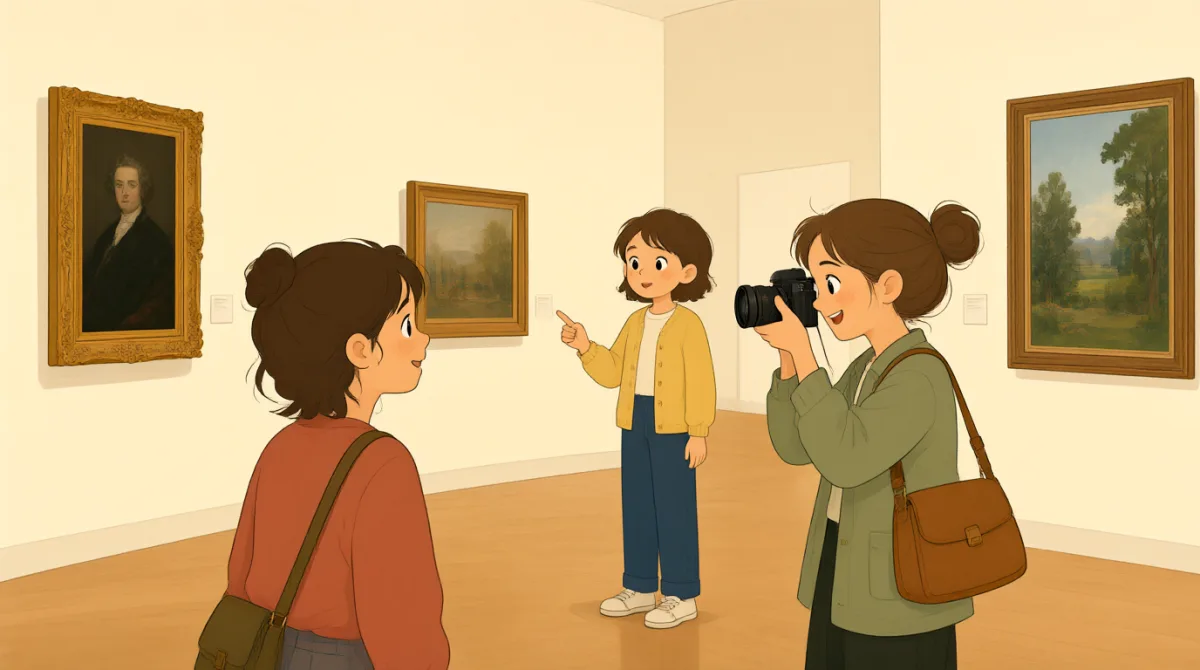
Emma asks Grace if she can take photos in the gallery. Grace explains the rules and points out a sign.
एमा ग्रेस से पूछती है कि क्या वह कला दीर्घा में तस्वीरें ले सकती है। ग्रेस नियम समझाती है और एक सूचना-पट्ट की ओर इशारा करती है।
संवाद8

Excuse me, can I take photos in this gallery?
माफ़ कीजिए, क्या मैं इस कला दीर्घा में तस्वीरें ले सकती हूँ?

You can take photos, but please don’t use the flash.
आप तस्वीरें ले सकती हैं, लेकिन कृपया फ़्लैश का इस्तेमाल न करें।
Okay. Can I take a picture of this painting?
ठीक है। क्या मैं इस पेंटिंग की तस्वीर ले सकती हूँ?
Yes, that’s fine. Just stay behind the line, please.
हाँ, ज़रूर। बस कृपया रेखा के पीछे ही रहिए।
I see a sign over there. Does it say no flash?
मुझे वहाँ एक सूचना-पट्ट दिख रहा है। क्या उस पर फ़्लैश इस्तेमाल न करने के बारे में लिखा है?
Yes, and it also says not to touch the paintings.
हाँ, और उस पर यह भी लिखा है कि पेंटिंग्स को न छुएँ।
Got it. I’ll turn off my flash and keep my distance.
समझ गई। मैं अपना फ़्लैश बंद कर दूँगी और उनसे दूरी बनाए रखूँगी।
Thank you. Enjoy looking around, and let me know if you need help.
धन्यवाद। आराम से देखिए, और अगर आपको मदद चाहिए तो मुझे बताइएगा।
शब्दावली7
- take photosतस्वीरें लेना
To use a camera to make pictures. You can ask, “Can I take photos here?”
कैमरे से तस्वीरें खींचना। आप पूछ सकते हैं, “Can I take photos here?” (क्या मैं यहाँ तस्वीरें ले सकता/सकती हूँ?)
- use the flashफ़्लैश का इस्तेमाल करना
To use the bright light on a camera when taking a photo. In this gallery, visitors can take photos but must not use the flash.
तस्वीर लेते समय कैमरे की तेज़ रोशनी का इस्तेमाल करना। इस कला दीर्घा में आगंतुक तस्वीरें ले सकते हैं, लेकिन फ़्लैश का इस्तेमाल नहीं कर सकते।
- stay behind the lineरेखा के पीछे रहना
To remain on the side of a line that is farther from an object. Museums use lines to keep visitors at a safe distance from artworks.
रेखा के उस तरफ़ रहना जो किसी चीज़ से दूर हो। संग्रहालयों में कलाकृतियों से सुरक्षित दूरी बनाए रखने के लिए रेखाएँ बनाई जाती हैं।
- signसूचना-पट्ट
A notice that gives information or instructions. You can ask what a sign says if you are unsure about a rule.
जानकारी या निर्देश देने वाला बोर्ड। अगर आपको किसी नियम के बारे में पक्का न हो, तो आप पूछ सकते हैं कि सूचना-पट्ट पर क्या लिखा है।
- not to touchन छूना
A way to say that someone must not put their hands on something. Signs often say not to touch museum paintings or displays.
यह कहने का तरीका कि किसी चीज़ पर हाथ नहीं लगाना चाहिए। सूचना-पट्टों पर अक्सर लिखा होता है कि संग्रहालय की पेंटिंग्स या प्रदर्शित चीज़ों को न छुएँ।
- turn offबंद करना
To stop a device or feature from working. You can say, “I’ll turn off my flash,” when you want to follow a no-flash rule.
किसी उपकरण या सुविधा को काम करना बंद कर देना। फ़्लैश का इस्तेमाल न करने के नियम का पालन करते हुए आप कह सकते हैं, “I’ll turn off my flash,” (मैं अपना फ़्लैश बंद कर दूँगा/दूँगी)।
- keep my distanceदूरी बनाए रखना
To stay far enough away from a person or object. In a gallery, keeping your distance can help protect the paintings.
किसी व्यक्ति या चीज़ से काफ़ी दूर रहना। कला दीर्घा में दूरी बनाए रखने से पेंटिंग्स को सुरक्षित रखने में मदद मिल सकती है।
मुख्य वाक्य8
- 1
Excuse me, can I take photos in this gallery?
माफ़ कीजिए, क्या मैं इस कला दीर्घा में तस्वीरें ले सकती हूँ?
Use this polite question to ask if an activity is allowed. Replace “take photos” or “this gallery” to ask about other rules or places.
किसी काम की अनुमति है या नहीं, यह पूछने के लिए इस विनम्र सवाल का इस्तेमाल करें। दूसरे नियमों या जगहों के बारे में पूछने के लिए “take photos” या “this gallery” की जगह दूसरे शब्द रख सकते हैं।
- 2
You can take photos, but please don’t use the flash.
आप तस्वीरें ले सकती हैं, लेकिन कृपया फ़्लैश का इस्तेमाल न करें।
This sentence gives permission and then explains a restriction. Use “You can…, but please don’t…” to describe what is allowed and what is not.
इस वाक्य में पहले अनुमति दी जाती है और फिर एक पाबंदी बताई जाती है। क्या करने की अनुमति है और क्या नहीं, यह बताने के लिए “You can…, but please don’t…” का इस्तेमाल करें।
- 3
Can I take a picture of this painting?
क्या मैं इस पेंटिंग की तस्वीर ले सकती हूँ?
Use this question to ask permission before taking a photo of a specific thing. Replace “this painting” with another object or place.
किसी ख़ास चीज़ की तस्वीर लेने से पहले अनुमति माँगने के लिए यह सवाल पूछें। “this painting” की जगह किसी दूसरी चीज़ या जगह का नाम रख सकते हैं।
- 4
Just stay behind the line, please.
बस कृपया रेखा के पीछे ही रहिए।
This is a polite way to give a simple instruction. You can use “stay behind…” to tell someone where to stand.
निर्देश देने का यह एक विनम्र और आसान तरीका है। किसी को यह बताने के लिए कि कहाँ खड़ा होना है, “stay behind…” का इस्तेमाल कर सकते हैं।
- 5
Does it say no flash?
क्या उस पर फ़्लैश इस्तेमाल न करने के बारे में लिखा है?
Use this question to check what a sign says. Replace “no flash” with another rule you want to confirm.
सूचना-पट्ट पर क्या लिखा है, यह जाँचने के लिए यह सवाल पूछें। जिस नियम की पुष्टि करनी हो, उसके अनुसार “no flash” की जगह कोई दूसरा नियम रख सकते हैं।
- 6
Yes, and it also says not to touch the paintings.
हाँ, और उस पर यह भी लिखा है कि पेंटिंग्स को न छुएँ।
This sentence confirms one rule and adds another. Use “It also says…” to mention extra information on a sign or notice.
इस वाक्य में एक नियम की पुष्टि करके दूसरा नियम जोड़ा गया है। सूचना-पट्ट या नोटिस पर दी गई अतिरिक्त जानकारी बताने के लिए “It also says…” का इस्तेमाल करें।
- 7
I’ll turn off my flash and keep my distance.
मैं अपना फ़्लैश बंद कर दूँगी और दूरी बनाए रखूँगी।
Use “I’ll” to say what you will do next. This sentence is useful for showing that you understand and will follow instructions.
आगे आप क्या करेंगे, यह बताने के लिए “I’ll” का इस्तेमाल करें। यह वाक्य यह दिखाने के लिए उपयोगी है कि आप निर्देश समझ गए हैं और उनका पालन करेंगे।
- 8
Enjoy looking around, and let me know if you need help.
आराम से देखिए, और अगर आपको मदद चाहिए तो मुझे बताइएगा।
This is a friendly way to welcome someone and offer help. Use “Let me know if you need help” in places such as museums, shops, or hotels.
किसी का स्वागत करने और मदद की पेशकश करने का यह एक दोस्ताना तरीका है। संग्रहालयों, दुकानों या होटलों जैसी जगहों पर “Let me know if you need help” का इस्तेमाल करें।