Talking About a Favorite Painting
पसंदीदा पेंटिंग के बारे में बात करना
After seeing the exhibits, Emma and Jack talk about their favorite painting. They share what they liked about it.
प्रदर्शनी देखने के बाद, एम्मा और जैक अपनी पसंदीदा पेंटिंग के बारे में बात करते हैं। वे बताते हैं कि उन्हें उसमें क्या पसंद आया।
संवाद8
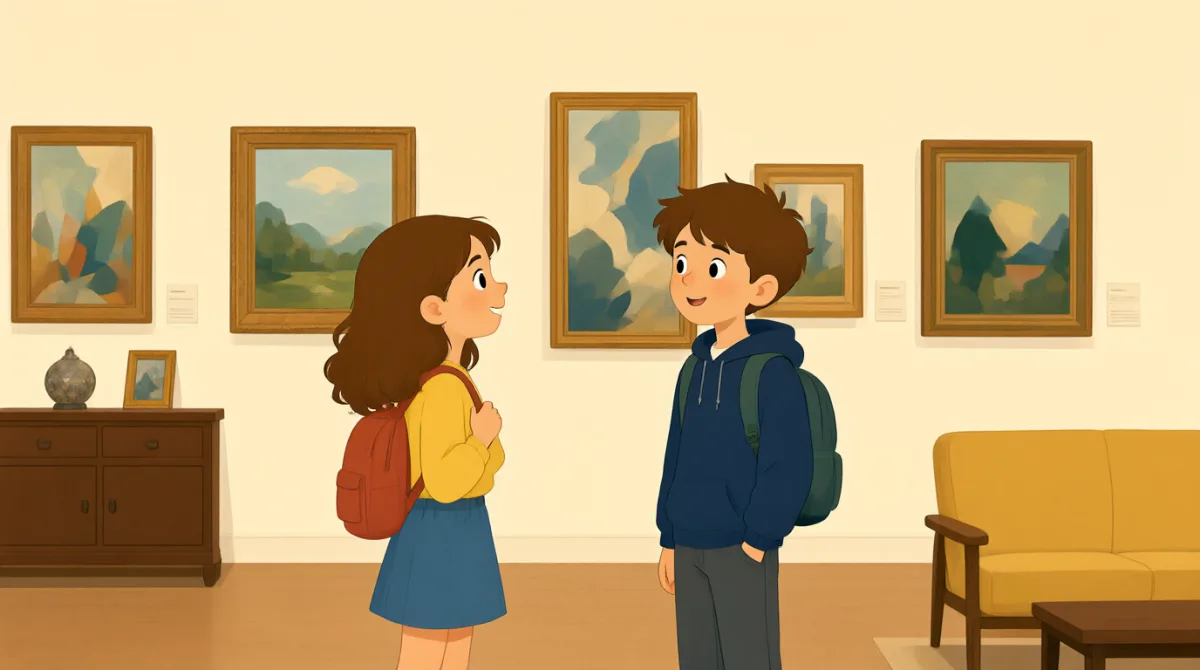

That blue painting was my favorite. The little boat looked so real.
वह नीली पेंटिंग मेरी पसंदीदा थी। उसमें छोटी-सी नाव बिल्कुल असली लग रही थी।

I liked it too. The colors were bright, but the scene felt peaceful.
मुझे भी वह पसंद आई। रंग चमकीले थे, लेकिन दृश्य शांत लग रहा था।
Yes, and I noticed the waves near the boat. They looked like they were moving.
हाँ, और मैंने नाव के पास लहरें देखीं। वे ऐसी लग रही थीं जैसे हिल रही हों।
The artist did a great job. I wanted to look at it for a long time.
कलाकार ने बहुत अच्छा काम किया था। मेरा मन उसे देर तक देखते रहने का था।
Did you see the small house on the hill? I almost missed it.
क्या तुमने पहाड़ी पर बना छोटा-सा घर देखा? मेरी नज़र लगभग उस पर नहीं पड़ी थी।
I saw it. It made me wonder who lived there.
मैंने देखा था। उसे देखकर मेरे मन में आया कि वहाँ कौन रहता होगा।
I wish we knew the story behind the painting. Maybe the sign said more.
काश, हमें इस पेंटिंग के पीछे की कहानी पता होती। शायद सूचना-पट्ट पर और जानकारी थी।
Maybe. We can read about it online later. I took a photo of the sign.
शायद। हम बाद में इसके बारे में ऑनलाइन पढ़ सकते हैं। मैंने सूचना-पट्ट की फ़ोटो ली थी।
शब्दावली8
- my favoriteमेरी पसंदीदा
This means the one you like best. Use it to say which painting or other thing you enjoyed most.
इसका मतलब है वह चीज़ जो आपको सबसे ज़्यादा पसंद हो। इसका इस्तेमाल यह बताने के लिए करें कि कौन-सी पेंटिंग या दूसरी चीज़ आपको सबसे अच्छी लगी।
- looked so realबिल्कुल असली लग रही थी
This means something seemed very lifelike. Use it to describe a picture or object that looks true to life.
इसका मतलब है कि कोई चीज़ बहुत जीवंत और वास्तविक दिखाई दे रही थी। ऐसी तस्वीर या वस्तु का वर्णन करने के लिए इसका इस्तेमाल करें जो बिलकुल असली जैसी लगे।
- felt peacefulशांत लग रहा था
This means it gave you a calm feeling. Use it to describe a place, picture, or moment.
इसका मतलब है कि उससे आपको सुकून महसूस हुआ। किसी जगह, तस्वीर या पल का वर्णन करने के लिए इसका इस्तेमाल करें।
- did a great jobबहुत अच्छा काम किया
This means someone did something very well. Use it to praise an artist or another person's work.
इसका मतलब है कि किसी ने कोई काम बहुत अच्छी तरह किया। किसी कलाकार या दूसरे व्यक्ति के काम की तारीफ़ करने के लिए इसका इस्तेमाल करें।
- for a long timeकाफ़ी देर तक
This means for a long period. Use it to say how long you looked at or did something.
इसका मतलब है लंबे समय तक। कोई चीज़ देखने या कोई काम करने में कितना समय लगा, यह बताने के लिए इसका इस्तेमाल करें।
- almost missed itलगभग नज़र नहीं पड़ी
This means you nearly did not notice or see something. Use it when a detail is easy to overlook.
इसका मतलब है कि आप किसी चीज़ को देखने या उस पर ध्यान देने से बस चूक ही गए थे। जब कोई बारीक बात आसानी से नज़रअंदाज़ हो सकती हो, तब इसका इस्तेमाल करें।
- the story behindके पीछे की कहानी
This means the background or events connected to something. Use it to ask about the meaning or history of a painting.
इसका मतलब है किसी चीज़ से जुड़ी पृष्ठभूमि या घटनाएँ। किसी पेंटिंग का मतलब या इतिहास जानने के लिए पूछते समय इसका इस्तेमाल करें।
- read about itइसके बारे में पढ़ना
This means to find information about something by reading. Use it when you want to learn more about a place, person, or artwork.
इसका मतलब है पढ़कर किसी चीज़ के बारे में जानकारी हासिल करना। किसी जगह, व्यक्ति या कलाकृति के बारे में और जानना चाहें, तो इसका इस्तेमाल करें।
मुख्य वाक्य8
- 1
That blue painting was my favorite.
वह नीली पेंटिंग मेरी पसंदीदा थी।
Use this sentence to say which artwork you liked best. You can replace “blue painting” with another thing, such as “that sculpture” or “the landscape.”
किस कलाकृति को आपने सबसे ज़्यादा पसंद किया, यह बताने के लिए इस वाक्य का इस्तेमाल करें। आप “blue painting” की जगह किसी दूसरी चीज़ का नाम रख सकते हैं, जैसे “that sculpture” या “the landscape।”
- 2
The colors were bright, but the scene felt peaceful.
रंग चमकीले थे, लेकिन दृश्य शांत लग रहा था।
This sentence describes two different qualities of a painting. Use “but” to connect a contrast, such as bright colors and a calm feeling.
इस वाक्य में पेंटिंग की दो अलग-अलग खूबियों का वर्णन है। चमकीले रंगों और शांत एहसास जैसी विपरीत बातों को जोड़ने के लिए “but” का इस्तेमाल करें।
- 3
I noticed the waves near the boat.
मैंने नाव के पास लहरें देखीं।
Use this sentence to point out a detail you saw. Replace “the waves near the boat” with another feature or object.
आपने जो बारीकी देखी, उसकी ओर ध्यान दिलाने के लिए इस वाक्य का इस्तेमाल करें। “the waves near the boat” की जगह किसी दूसरी विशेषता या वस्तु का नाम रख सकते हैं।
- 4
The artist did a great job.
कलाकार ने बहुत अच्छा काम किया।
This is a simple way to praise an artist's work. You can also use it to praise someone who did something well.
कलाकार के काम की तारीफ़ करने का यह एक आसान तरीका है। किसी अच्छा काम करने वाले व्यक्ति की तारीफ़ के लिए भी इसका इस्तेमाल कर सकते हैं।
- 5
I almost missed it.
मेरी नज़र लगभग उस पर नहीं पड़ी थी।
Use this sentence when you nearly failed to see or notice something. It is useful for talking about small or hidden details.
जब आप किसी चीज़ को देखने या उस पर ध्यान देने से बस चूकने वाले हों, तब इस वाक्य का इस्तेमाल करें। छोटी या छिपी हुई बारीकियों के बारे में बात करते समय यह काम आता है।
- 6
It made me wonder who lived there.
उसे देखकर मेरे मन में आया कि वहाँ कौन रहता होगा।
Use this sentence to say that something made you curious. You can change “who lived there” to another question, such as “what happened there.”
किसी चीज़ से आपके मन में जिज्ञासा पैदा हुई, यह बताने के लिए इस वाक्य का इस्तेमाल करें। “who lived there” की जगह कोई दूसरा सवाल रख सकते हैं, जैसे “what happened there।”
- 7
I wish we knew the story behind the painting.
काश, हमें इस पेंटिंग के पीछे की कहानी पता होती।
Use “I wish we knew” to express that you would like to have information you do not have. You can replace “the story behind the painting” with another unknown detail.
जो जानकारी आपके पास नहीं है, उसे जानने की इच्छा जताने के लिए “I wish we knew” का इस्तेमाल करें। “the story behind the painting” की जगह किसी दूसरी अनजान बात का ज़िक्र कर सकते हैं।
- 8
We can read about it online later.
हम बाद में इसके बारे में ऑनलाइन पढ़ सकते हैं।
Use this sentence to suggest finding information on the internet at a later time. Replace “it” with the subject you want to learn about.
बाद में इंटरनेट पर जानकारी खोजने का सुझाव देने के लिए इस वाक्य का इस्तेमाल करें। “it” की जगह उस विषय का नाम रख सकते हैं जिसके बारे में आप जानना चाहते हैं।