Renting a Mat
मैट किराए पर लेना
Before class, Emma asks Grace if she can rent a mat. Grace tells her the price and where to leave her shoes.
क्लास से पहले, एमा ग्रेस से पूछती है कि क्या वह मैट किराए पर ले सकती है। ग्रेस उसे कीमत बताती है और यह भी कि जूते कहाँ रखने हैं।
संवाद8
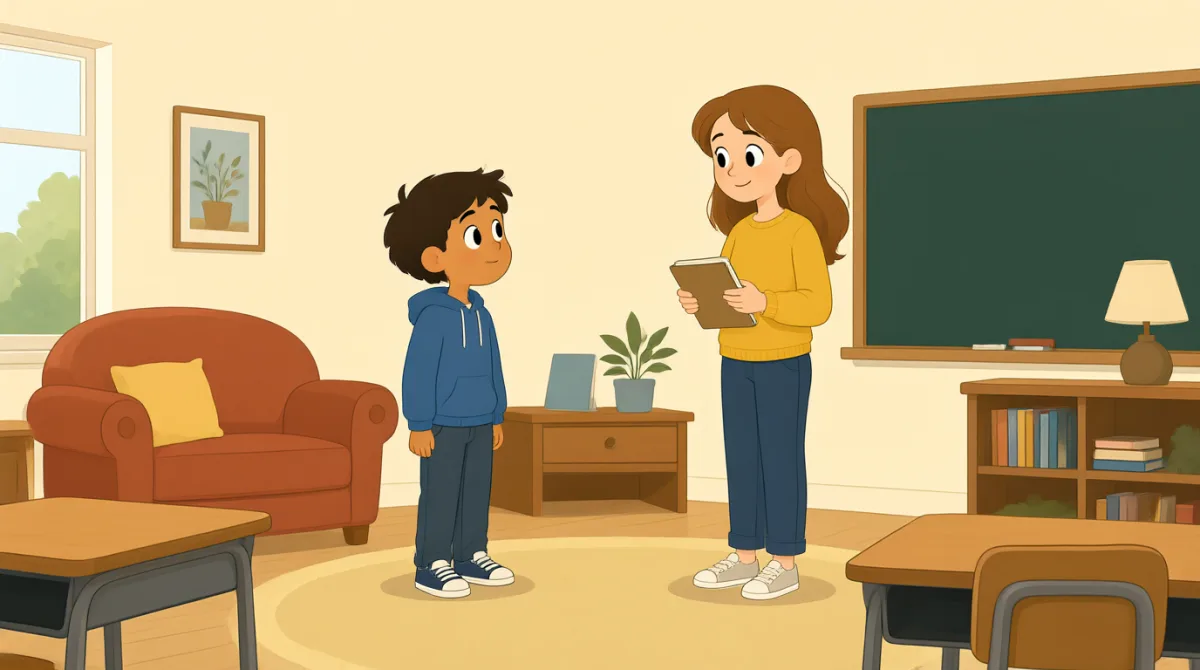

Hi, Grace. Can I rent a yoga mat for class today?
हाय, ग्रेस। क्या मैं आज की क्लास के लिए योगा मैट किराए पर ले सकती हूँ?

Of course. It’s three dollars for the class.
ज़रूर। पूरी क्लास के लिए तीन डॉलर लगेंगे।
Great. Where can I get one?
बढ़िया। मैं एक कहाँ से ले सकती हूँ?
Take one from the shelf by the front desk.
फ्रंट डेस्क के पास वाली शेल्फ़ से एक ले लो।
Thanks. Should I leave my shoes here?
धन्यवाद। क्या मैं अपने जूते यहीं छोड़ दूँ?
Yes, please leave them in the cubbies by the door.
हाँ, कृपया उन्हें दरवाज़े के पास बने छोटे खानों में रख दीजिए।
Okay. Do I pay you now?
ठीक है। क्या मैं अभी आपको पैसे दूँ?
Yes, you can pay at the front desk before class starts.
हाँ, क्लास शुरू होने से पहले आप फ्रंट डेस्क पर पैसे दे सकती हैं।
शब्दावली7
- rent a yoga matयोगा मैट किराए पर लेना
To pay to use a yoga mat for a short time. You can use this phrase to ask about borrowing equipment for a fee.
थोड़े समय के लिए योगा मैट इस्तेमाल करने के पैसे देना। किसी उपकरण को शुल्क देकर उधार लेने के बारे में पूछने के लिए आप इस वाक्यांश का इस्तेमाल कर सकती हैं।
- for the classक्लास के लिए
This tells you how long or for what activity the price applies. You can also say “for the day” or “for the lesson.”
इससे पता चलता है कि कीमत कितने समय के लिए या किस गतिविधि के लिए है। आप “for the day” या “for the lesson” भी कह सकती हैं।
- front deskफ्रंट डेस्क
The place where staff welcome visitors and answer questions. You can ask for help or pay there.
वह जगह जहाँ कर्मचारी आने वालों का स्वागत करते हैं और उनके सवालों के जवाब देते हैं। आप वहाँ मदद माँग सकती हैं या पैसे दे सकती हैं।
- shelfशेल्फ़
A flat place used to store things. You can say where something is by using “on the shelf” or “by the shelf.”
चीज़ें रखने की सपाट जगह। कोई चीज़ कहाँ है, यह बताने के लिए आप “on the shelf” या “by the shelf” कह सकती हैं।
- cubbiesछोटे खुले खाने
Small open spaces used to store personal items. In this conversation, students leave their shoes in them.
व्यक्तिगत सामान रखने के लिए बने छोटे खुले खाने। इस बातचीत में छात्र इनमें अपने जूते रखते हैं।
- leave my shoes hereअपने जूते यहाँ छोड़ना
A way to ask where you should put your shoes. You can replace “shoes” with another item, such as “bag.”
यह पूछने का एक तरीका है कि आपको अपने जूते कहाँ रखने चाहिए। आप “shoes” की जगह “bag” जैसी किसी दूसरी चीज़ का नाम ले सकती हैं।
- pay at the front deskफ्रंट डेस्क पर पैसे देना
To give money to the staff at the reception area. You can use this phrase to explain where you will pay.
रिसेप्शन की जगह पर कर्मचारियों को पैसे देना। आप कहाँ पैसे देंगी, यह बताने के लिए इस वाक्यांश का इस्तेमाल कर सकती हैं।
मुख्य वाक्य8
- 1
Can I rent a yoga mat for class today?
क्या मैं आज की क्लास के लिए योगा मैट किराए पर ले सकती हूँ?
Use this polite question to ask if you can rent something. Replace “a yoga mat” with another item you need.
किसी चीज़ को किराए पर लेने की अनुमति पूछने के लिए इस विनम्र सवाल का इस्तेमाल करें। “a yoga mat” की जगह अपनी ज़रूरत की किसी दूसरी चीज़ का नाम रख सकती हैं।
- 2
It’s three dollars for the class.
पूरी क्लास के लिए तीन डॉलर लगेंगे।
This is a simple way to tell someone the price. You can change the amount and say what the price covers.
किसी को कीमत बताने का यह एक आसान तरीका है। आप रकम बदल सकती हैं और बता सकती हैं कि कीमत किस चीज़ के लिए है।
- 3
Where can I get one?
मैं एक कहाँ से ले सकती हूँ?
Use this question to ask where you can find or pick up something. “One” refers to an item already mentioned.
किसी चीज़ को कहाँ ढूँढ़ना या लेना है, यह पूछने के लिए इस सवाल का इस्तेमाल करें। “One” का मतलब पहले बताई गई चीज़ है।
- 4
Take one from the shelf by the front desk.
फ्रंट डेस्क के पास वाली शेल्फ़ से एक ले लो।
This gives a clear instruction about where to get something. You can use “Take one from…” to tell someone where an item is.
यह बताता है कि कोई चीज़ कहाँ से लेनी है। किसी को किसी चीज़ की जगह बताने के लिए “Take one from…” का इस्तेमाल कर सकती हैं।
- 5
Should I leave my shoes here?
क्या मैं अपने जूते यहीं छोड़ दूँ?
Use this question to ask if you should put something in a certain place. Replace “my shoes” with another item.
यह पूछने के लिए इस सवाल का इस्तेमाल करें कि क्या आपको कोई चीज़ किसी खास जगह पर रखनी चाहिए। “my shoes” की जगह किसी दूसरी चीज़ का नाम रख सकती हैं।
- 6
Yes, please leave them in the cubbies by the door.
हाँ, कृपया उन्हें दरवाज़े के पास बने छोटे खानों में रख दीजिए।
This is a polite instruction about where to put something. “Them” refers to items mentioned earlier, such as shoes.
यह किसी चीज़ को कहाँ रखना है, इसकी विनम्र हिदायत है। “Them” का मतलब पहले बताई गई चीज़ें हैं, जैसे जूते।
- 7
Do I pay you now?
क्या मैं आपको अभी पैसे दूँ?
Use this question to check when or how to pay. You can replace “now” with a time, such as “after class.”
पैसे कब या कैसे देने हैं, यह पूछने के लिए इस सवाल का इस्तेमाल करें। “now” की जगह कोई समय रख सकती हैं, जैसे “after class।”
- 8
Yes, you can pay at the front desk before class starts.
हाँ, क्लास शुरू होने से पहले आप फ्रंट डेस्क पर पैसे दे सकती हैं।
This explains where and when someone can pay. You can reuse “before [event] starts” to give a deadline.
यह बताता है कि कोई कहाँ और कब पैसे दे सकता है। समय-सीमा बताने के लिए “before [event] starts” का दोबारा इस्तेमाल कर सकती हैं।