Favorite Childhood Food
बचपन का पसंदीदा खाना
Mia asks Emma and Leo what food they loved as children. They talk about family meals and treats they still remember.
मिया एमा और लियो से पूछती है कि बचपन में उन्हें कौन-सा खाना बहुत पसंद था। वे परिवार के साथ खाए जाने वाले खाने और उन खास चीज़ों के बारे में बात करते हैं जिन्हें वे आज भी याद करते हैं।
संवाद9
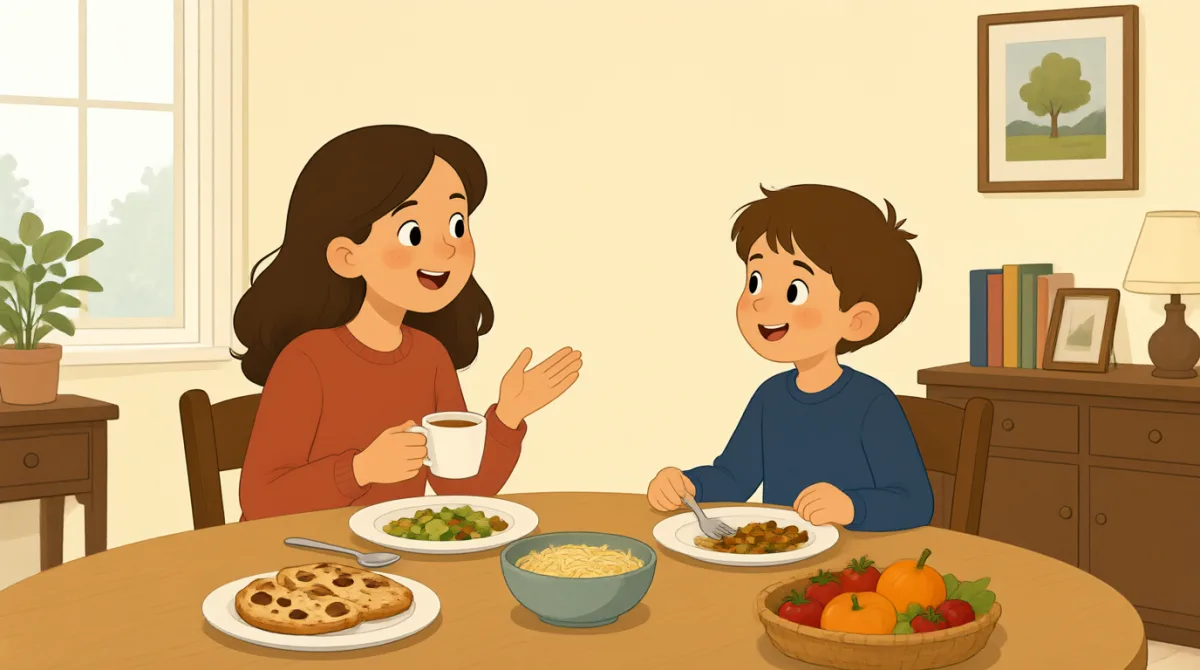

What food did you love as a child, Emma?
एमा, बचपन में तुम्हें कौन-सा खाना बहुत पसंद था?

I loved my mother's tomato soup and grilled cheese sandwiches.
मुझे माँ का टमाटर का सूप और चीज़ वाले ग्रिल्ड सैंडविच बहुत पसंद थे।

I always asked for my grandmother's noodles when I visited her.
जब भी मैं अपनी दादी से मिलने जाता था, मैं हमेशा उनसे नूडल्स बनाने को कहता था।
That sounds good! Did you eat them for lunch or dinner?
वाह, सुनने में तो अच्छा लग रहा है! तुम उन्हें दोपहर के खाने में खाती थीं या रात के खाने में?
Usually dinner. She made a big pot, and we all ate together.
ज़्यादातर रात के खाने में। वह एक बड़ा बर्तन भरकर बनाती थीं और हम सब साथ बैठकर खाते थे।
My family had soup on cold days. I still remember its smell.
ठंड के दिनों में हमारा परिवार सूप खाता था। मुझे आज भी उसकी खुशबू याद है।
Did you have a favorite treat, too?
क्या तुम्हें कोई खास मिठाई या ट्रीट भी पसंद थी?
Yes! My dad bought me strawberry ice cream after school sometimes.
हाँ! कभी-कभी स्कूल के बाद पापा मेरे लिए स्ट्रॉबेरी आइसक्रीम लाते थे।
Those little treats made childhood special, didn't they?
बचपन की उन छोटी-छोटी खुशियों ने उसे खास बना दिया था, है ना?
शब्दावली7
- as a childबचपन में
This means when someone was young. Use it to talk about things you liked or did in the past.
इसका मतलब है, जब कोई छोटा था। अतीत में अपनी पसंद या किए गए कामों के बारे में बताने के लिए इसका इस्तेमाल करो।
- grilled cheese sandwichesचीज़ वाले ग्रिल्ड सैंडविच
These are sandwiches with melted cheese, often cooked in a pan. Emma remembers eating them with tomato soup.
ये ऐसे सैंडविच होते हैं जिनमें पिघली हुई चीज़ होती है और जिन्हें अक्सर तवे पर सेंका जाता है। एमा को टमाटर के सूप के साथ इन्हें खाना याद है।
- asked forमाँगा
This means requested or wanted something. You can say, “I asked for my favorite dessert.”
इसका मतलब है किसी चीज़ की माँग करना या उसे चाहना। तुम कह सकते हो, “I asked for my favorite dessert.” (मैंने अपनी पसंदीदा मिठाई माँगी।)
- visited herउससे मिलने गया
This means went to see her. Use “visited” to talk about going to someone’s home or another place.
इसका मतलब है उससे मिलने के लिए जाना। किसी के घर या किसी दूसरी जगह पर मिलने जाने की बात करते समय “visited” का इस्तेमाल करो।
- a big potएक बड़ा बर्तन
A pot is a deep cooking container, and “a big pot” means a large one. You can use this phrase when talking about cooking food for many people.
बर्तन खाना पकाने का एक गहरा पात्र होता है, और “a big pot” का मतलब है बड़ा बर्तन। कई लोगों के लिए खाना बनाने की बात करते समय तुम इस वाक्यांश का इस्तेमाल कर सकते हो।
- ate togetherसाथ बैठकर खाना खाया
This means shared a meal with other people. You can use it to describe a family meal.
इसका मतलब है दूसरों के साथ मिलकर खाना खाना। परिवार के साथ भोजन करने का वर्णन करने के लिए इसका इस्तेमाल कर सकते हो।
- after schoolस्कूल के बाद
This means when school has finished for the day. Use it to talk about activities or treats that happen then.
इसका मतलब है जब दिन के लिए स्कूल खत्म हो जाता है। उस समय होने वाली गतिविधियों या मिलने वाली ट्रीट के बारे में बताने के लिए इसका इस्तेमाल करो।
मुख्य वाक्य8
- 1
What food did you love as a child, Emma?
एमा, बचपन में तुम्हें कौन-सा खाना बहुत पसंद था?
This is a friendly way to ask about someone’s childhood favorites. You can replace “food” with another topic, such as “What game did you love as a child?”
किसी से बचपन की पसंद के बारे में पूछने का यह एक दोस्ताना तरीका है। “food” की जगह कोई दूसरा विषय रख सकते हो, जैसे “What game did you love as a child?” (बचपन में तुम्हें कौन-सा खेल बहुत पसंद था?)
- 2
I loved my mother's tomato soup and grilled cheese sandwiches.
मुझे माँ का टमाटर का सूप और चीज़ वाले ग्रिल्ड सैंडविच बहुत पसंद थे।
This sentence describes favorite foods from the past. Use “I loved” to talk about something you enjoyed when you were younger.
इस वाक्य में अतीत के पसंदीदा खाने बताए गए हैं। जब तुम छोटे थे और किसी चीज़ का आनंद लेते थे, तो उसके बारे में बताने के लिए “I loved” का इस्तेमाल करो।
- 3
I always asked for my grandmother's noodles when I visited her.
जब भी मैं अपनी दादी से मिलने जाता था, मैं हमेशा उनसे नूडल्स बनाने को कहता था।
This sentence connects a repeated request with a past visit. You can use “I always asked for...” to describe something you often wanted.
इस वाक्य में बार-बार की गई एक माँग को अतीत की मुलाकात से जोड़ा गया है। जिस चीज़ को तुम अक्सर चाहते थे, उसके बारे में बताने के लिए “I always asked for...” का इस्तेमाल कर सकते हो।
- 4
Did you eat them for lunch or dinner?
तुम उन्हें दोपहर के खाने में खाती थीं या रात के खाने में?
This is a simple way to ask when someone ate a food. Use “Did you eat it for lunch or dinner?” when asking about one food.
किसी से यह पूछने का आसान तरीका है कि उसने कोई खाना कब खाया। एक ही खाने के बारे में पूछते समय “Did you eat it for lunch or dinner?” का इस्तेमाल करो।
- 5
She made a big pot, and we all ate together.
वह एक बड़ा बर्तन भरकर बनाती थीं और हम सब साथ बैठकर खाते थे।
This sentence describes preparing food and sharing a meal. You can use “we all ate together” when talking about a group meal.
इस वाक्य में खाना बनाने और साथ बैठकर खाने का वर्णन है। समूह में साथ भोजन करने की बात करते समय “we all ate together” का इस्तेमाल कर सकते हो।
- 6
My family had soup on cold days.
ठंड के दिनों में हमारा परिवार सूप खाता था।
This sentence explains when a family usually ate a certain food. Use “on [kind of] days” to talk about a regular routine, such as “on rainy days.”
इस वाक्य में बताया गया है कि परिवार आम तौर पर कोई खास खाना कब खाता था। नियमित आदत बताने के लिए “on [kind of] days” का इस्तेमाल करो, जैसे “on rainy days” (बारिश के दिनों में)।
- 7
My dad bought me strawberry ice cream after school sometimes.
कभी-कभी स्कूल के बाद पापा मेरे लिए स्ट्रॉबेरी आइसक्रीम लाते थे।
This sentence tells what someone bought and when. You can reuse “bought me [something] after school” to talk about a treat or gift.
इस वाक्य में बताया गया है कि किसी ने क्या खरीदा और कब। किसी ट्रीट या तोहफ़े के बारे में बताने के लिए “bought me [something] after school” का दोबारा इस्तेमाल कर सकते हो।
- 8
Those little treats made childhood special, didn't they?
बचपन की उन छोटी-छोटी खुशियों ने उसे खास बना दिया था, है ना?
This is a warm way to share a thought and invite someone to agree. You can use “..., didn't they?” after a positive statement.
अपनी भावना साझा करने और सामने वाले को सहमति जताने का मौका देने का यह एक अपनापन भरा तरीका है। किसी सकारात्मक बात के बाद “..., didn't they?” का इस्तेमाल कर सकते हो।