Reading the Letters
अक्षर पढ़ना
At the eye test, Grace asks Emma to read letters on a chart. Emma answers and asks if her eyesight has changed.
आँखों की जाँच के दौरान ग्रेस, एमा से चार्ट पर लिखे अक्षर पढ़ने को कहती है। एमा जवाब देती है और पूछती है कि क्या उसकी नज़र में बदलाव आया है।
संवाद9
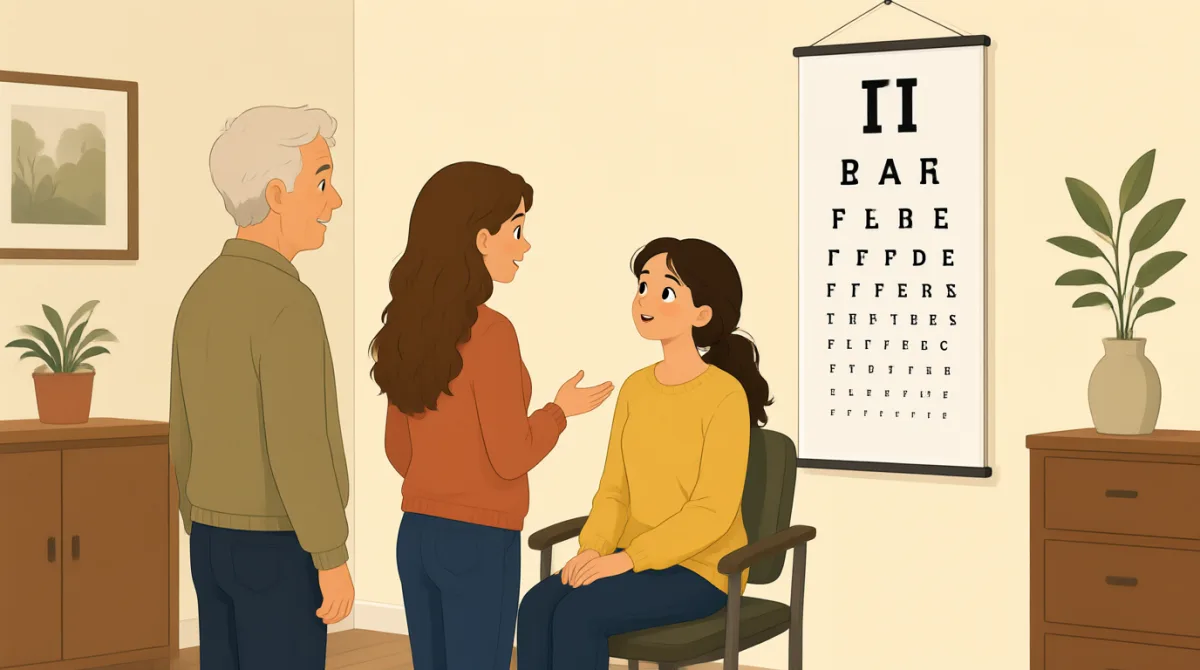

Please cover one eye and read the letters on the top line.
कृपया एक आँख ढककर ऊपर वाली पंक्ति के अक्षर पढ़िए।

Okay, I see a big E and a few smaller letters.
ठीक है, मुझे एक बड़ा E और कुछ छोटे अक्षर दिख रहे हैं।
Good. Now cover your other eye and read the next line.
अच्छा। अब दूसरी आँख ढककर अगली पंक्ति पढ़िए।
I can read most of them, but the last two look blurry.
मैं उनमें से ज़्यादातर पढ़ सकती हूँ, लेकिन आख़िरी दो धुँधले दिख रहे हैं।
That’s fine. Look through these lenses. Is it clearer now?
कोई बात नहीं। इन लेंसों से देखिए। क्या अब ज़्यादा साफ़ दिख रहा है?
Yes, much clearer. Has my eyesight changed since my last test?
हाँ, अब काफ़ी साफ़ दिख रहा है। पिछली जाँच के बाद से क्या मेरी नज़र में बदलाव आया है?
A little. You need a slightly stronger prescription for distance.
थोड़ा-सा। दूर देखने के लिए आपको थोड़ा ज़्यादा नंबर का चश्मा चाहिए।
I see. Could that be why road signs look blurry?
अच्छा। क्या इसी वजह से सड़क के संकेत धुँधले दिखते हैं?
Yes, that’s likely. We’ll write down your new prescription today.
हाँ, शायद। आज हम आपके नए चश्मे का नंबर लिख देंगे।
शब्दावली6
- cover one eyeएक आँख ढकना
Put something over one eye so you cannot see through it. It is a simple instruction during an eye test.
एक आँख पर कोई चीज़ रखकर उसे ढक लें, ताकि उस आँख से दिखाई न दे। आँखों की जाँच के दौरान यह एक आसान निर्देश है।
- top lineऊपर वाली पंक्ति
The first line at the top of the eye chart. You can use “top line” to talk about the highest row of words or letters.
आँखों की जाँच वाले चार्ट की सबसे ऊपर की पहली पंक्ति। सबसे ऊँची पंक्ति में लिखे शब्दों या अक्षरों की बात करने के लिए “top line” कहा जाता है।
- blurryधुँधला
Not clear or easy to see. You can say something looks blurry when you cannot see its details well.
जो साफ़ न दिखे या जिसे देखना मुश्किल हो। जब किसी चीज़ की बारीकियाँ ठीक से दिखाई न दें, तो आप कह सकते हैं कि वह धुँधली दिख रही है।
- look through these lensesइन लेंसों से देखिए
Look through these pieces of glass or plastic to test how well you can see. It is a useful phrase at an eye test.
यह जाँचने के लिए काँच या प्लास्टिक के इन टुकड़ों से देखें कि आपको कितना साफ़ दिखाई देता है। आँखों की जाँच के दौरान यह एक काम का वाक्यांश है।
- prescriptionचश्मे का नंबर
Instructions for the glasses you need, including the strength of the lenses. A stronger prescription means the lenses need to correct your vision more.
आपको जिस चश्मे की ज़रूरत है, उसके बारे में लिखे निर्देश, जिनमें लेंस का नंबर भी शामिल होता है। ज़्यादा नंबर का मतलब है कि लेंस को आपकी नज़र को और अधिक ठीक करने की ज़रूरत है।
- road signsसड़क के संकेत
Signs beside roads that give drivers information or directions. You might mention them when explaining what is hard to see.
सड़कों के किनारे लगे वे संकेत जो वाहन चालकों को जानकारी या रास्ता बताते हैं। यह बताते समय इनका ज़िक्र किया जा सकता है कि क्या देखना मुश्किल है।
मुख्य वाक्य8
- 1
Please cover one eye and read the letters on the top line.
कृपया एक आँख ढककर ऊपर वाली पंक्ति के अक्षर पढ़िए।
This is a polite, clear instruction. You can reuse “Please [action] and [action]” to give someone two simple steps.
यह एक विनम्र और स्पष्ट निर्देश है। किसी को दो आसान काम बताने के लिए आप “Please [action] and [action]” का इस्तेमाल कर सकते हैं।
- 2
I can read most of them, but the last two look blurry.
मैं उनमें से ज़्यादातर पढ़ सकती हूँ, लेकिन आख़िरी दो धुँधले दिख रहे हैं।
This sentence explains what you can see and what you cannot see clearly. Use “I can…, but…” to compare two things.
इस वाक्य में बताया गया है कि आपको क्या दिखाई दे रहा है और क्या साफ़ नहीं दिख रहा। दो बातों की तुलना करने के लिए “I can…, but…” का इस्तेमाल करें।
- 3
Look through these lenses.
इन लेंसों से देखिए।
This is a short instruction for trying glasses or lenses. You can use “Look through these…” when asking someone to test their vision.
चश्मा या लेंस आज़माने के लिए यह एक छोटा-सा निर्देश है। किसी से उसकी नज़र जाँचने के लिए कहने के लिए आप “Look through these…” का इस्तेमाल कर सकते हैं।
- 4
Is it clearer now?
क्या अब ज़्यादा साफ़ दिख रहा है?
This question checks whether something is easier to see after a change. You can reuse “Is it [adjective] now?” to ask about a result.
यह सवाल पूछकर पता किया जाता है कि किसी बदलाव के बाद कोई चीज़ देखना आसान हुआ या नहीं। किसी नतीजे के बारे में पूछने के लिए आप “Is it [adjective] now?” का इस्तेमाल कर सकते हैं।
- 5
Has my eyesight changed since my last test?
पिछली जाँच के बाद से क्या मेरी नज़र में बदलाव आया है?
This is a useful question when comparing your vision with an earlier test. Use “Has my [noun] changed since…?” to ask about a change over time.
पहले की जाँच से अपनी नज़र की तुलना करते समय यह एक काम का सवाल है। समय के साथ हुए बदलाव के बारे में पूछने के लिए “Has my [noun] changed since…?” का इस्तेमाल करें।
- 6
You need a slightly stronger prescription for distance.
दूर देखने के लिए आपको थोड़ा ज़्यादा नंबर का चश्मा चाहिए।
This tells someone what kind of glasses they need. “Slightly stronger” means a little stronger, and “for distance” means for seeing things far away.
इसमें किसी को बताया जाता है कि उसे किस तरह के चश्मे की ज़रूरत है। “Slightly stronger” का मतलब है थोड़ा ज़्यादा नंबर का, और “for distance” का मतलब है दूर की चीज़ें देखने के लिए।
- 7
Could that be why road signs look blurry?
क्या इसी वजह से सड़क के संकेत धुँधले दिखते हैं?
This is a polite way to ask if one thing may explain another. You can reuse “Could that be why…?” when checking a possible reason.
यह विनम्रता से पूछने का तरीका है कि क्या एक बात दूसरी बात की वजह हो सकती है। किसी संभावित कारण की पुष्टि करने के लिए आप “Could that be why…?” का इस्तेमाल कर सकते हैं।
- 8
We’ll write down your new prescription today.
आज हम आपके नए चश्मे का नंबर लिख देंगे।
This explains what will happen next. Use “We’ll [action] today” to tell someone about a planned action.
इसमें बताया गया है कि आगे क्या होगा। किसी को किसी तय काम के बारे में बताने के लिए “We’ll [action] today” का इस्तेमाल करें।