Identifying Emergency Exits
आपातकालीन निकासों की पहचान करना
Someone at a new location (e.g., a building, a mall) is looking for and asking about the location of emergency exits and safety procedures.
किसी नई जगह (जैसे किसी इमारत या मॉल) में मौजूद व्यक्ति आपातकालीन निकासों और सुरक्षा प्रक्रियाओं की जगह के बारे में पूछ रहा है।
संवाद8
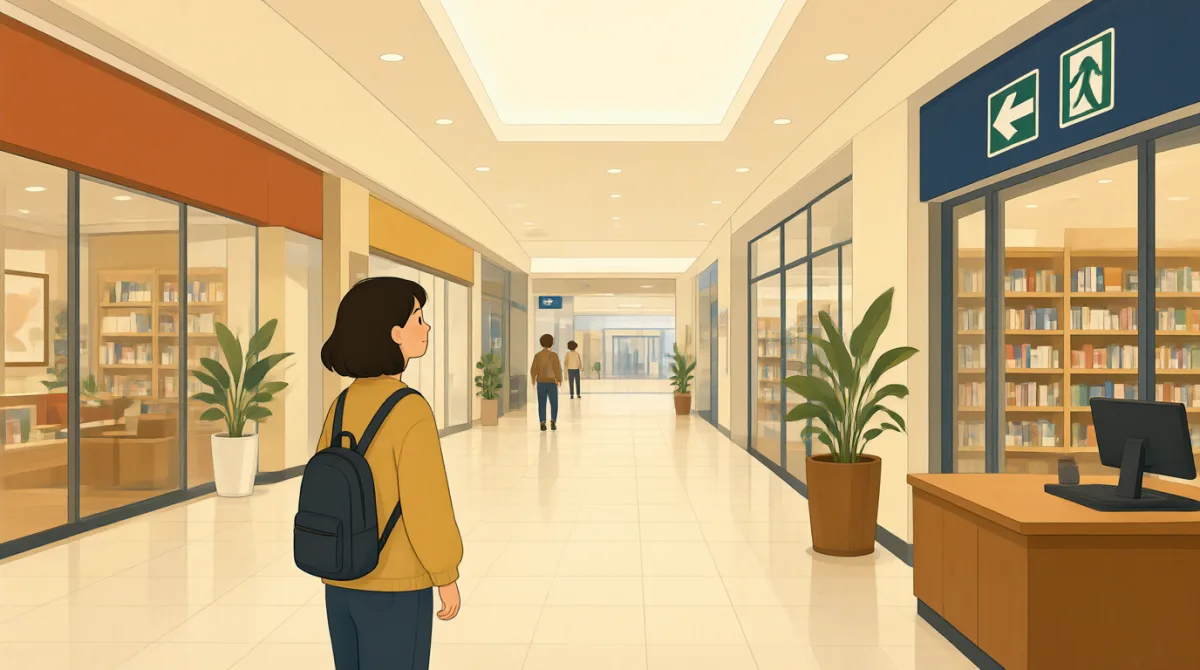

Excuse me, I'm new to this building. Could you point me towards the nearest emergency exit?
माफ़ कीजिए, मैं इस इमारत में नया हूँ। क्या आप मुझे सबसे नज़दीकी आपातकालीन निकास का रास्ता बता सकते हैं?

Certainly! If you go straight down this hallway and turn right, you'll see a green 'EXIT' sign. That's one of them.
ज़रूर! इस गलियारे में सीधे जाइए और दाएँ मुड़िए। आपको हरे रंग का 'EXIT' का निशान दिखेगा। वह उनमें से एक है।
Thanks! And are there any other emergency exits on this floor, just in case?
धन्यवाद! और एहतियात के तौर पर, क्या इस मंज़िल पर कोई और आपातकालीन निकास भी हैं?
Yes, there's another one at the far end of the building, near the main staircase. All exits are clearly marked.
हाँ, इमारत के दूसरे छोर पर, मुख्य सीढ़ियों के पास एक और है। सभी निकासों पर साफ़-साफ़ निशान लगे हैं।
Good to know. Are there any specific safety procedures I should be aware of, like evacuation routes or muster points?
यह जानकर अच्छा लगा। क्या सुरक्षा से जुड़ी कोई खास प्रक्रिया है जिसके बारे में मुझे पता होना चाहिए, जैसे बाहर निकलने के रास्ते या एकत्र होने की जगहें?
Absolutely. There's a safety information board by the main elevator bank on each floor. It shows the evacuation routes and the primary muster point in the parking lot.
बिल्कुल। हर मंज़िल पर मुख्य लिफ़्टों के पास सुरक्षा जानकारी का एक बोर्ड है। उस पर बाहर निकलने के रास्ते और पार्किंग में इकट्ठा होने की मुख्य जगह दिखाई गई है।
Perfect. I'll check that out. Thanks for your help!
बहुत बढ़िया। मैं जाकर देखता हूँ। मदद के लिए धन्यवाद!
You're welcome! Stay safe.
कोई बात नहीं! सुरक्षित रहिए।
शब्दावली7
- emergency exitआपातकालीन निकास
A special door or path used to leave a building quickly and safely during an emergency like a fire. It's important to know where these are in public places.
ऐसा खास दरवाज़ा या रास्ता जिससे आग जैसी आपात स्थिति में किसी इमारत से जल्दी और सुरक्षित बाहर निकला जा सके। सार्वजनिक जगहों पर यह जानना ज़रूरी है कि ऐसे निकास कहाँ हैं।
- hallwayगलियारा
A long, narrow passage inside a building that connects rooms or areas. Use this word when giving or asking for directions indoors.
इमारत के अंदर का लंबा, सँकरा रास्ता जो कमरों या अलग-अलग हिस्सों को जोड़ता है। अंदर रास्ता बताने या पूछने के लिए इस शब्द का इस्तेमाल करें।
- evacuation routesबाहर निकलने के रास्ते
The planned paths people follow to leave a building safely during an emergency. These are often shown on maps or signs for quick escape.
वे तय रास्ते जिनसे लोग आपात स्थिति में सुरक्षित रूप से किसी इमारत से बाहर निकलते हैं। जल्दी बाहर निकलने के लिए इन्हें अक्सर नक्शों या संकेतों पर दिखाया जाता है।
- muster pointएकत्र होने की जगह
A safe gathering spot outside a building where people go after evacuating. It's where officials check if everyone is safe.
इमारत से बाहर की वह सुरक्षित जगह जहाँ लोग बाहर निकलने के बाद इकट्ठा होते हैं। अधिकारी वहाँ जाँचते हैं कि सभी लोग सुरक्षित हैं या नहीं।
- just in caseएहतियात के तौर पर
A phrase meaning 'to be prepared for a possible problem.' It's useful for asking extra information to feel more secure.
इसका अर्थ है, 'किसी संभावित समस्या के लिए पहले से तैयार रहना।' ज़्यादा जानकारी पूछकर आश्वस्त होने के लिए यह वाक्यांश उपयोगी है।
- clearly markedसाफ़-साफ़ निशान लगे हुए
Something that is easy to see and understand, like signs with bright colors or big letters. In safety contexts, it means exits are easy to find.
किसी ऐसी चीज़ के लिए, जिसे देखना और समझना आसान हो—जैसे चमकीले रंगों या बड़े अक्षरों वाले संकेत। सुरक्षा के संदर्भ में इसका मतलब है कि निकास आसानी से ढूँढ़े जा सकते हैं।
- stay safeसुरक्षित रहिए
A friendly way to say 'be careful and protect yourself.' It's a common goodbye in safety-related conversations.
यह कहने का दोस्ताना तरीका है, 'सावधान रहिए और अपनी सुरक्षा कीजिए।' सुरक्षा से जुड़ी बातचीत में विदा लेते समय यह आम तौर पर कहा जाता है।
मुख्य वाक्य6
- 1
Excuse me, I'm new to this building. Could you point me towards the nearest emergency exit?
माफ़ कीजिए, मैं इस इमारत में नया हूँ। क्या आप मुझे सबसे नज़दीकी आपातकालीन निकास का रास्ता बता सकते हैं?
This is a polite way to ask for directions in an unfamiliar place. 'Excuse me' gets attention, 'I'm new to' explains your situation, and 'point me towards' means show the direction. Use it when you're lost and need safety info.
अनजान जगह पर रास्ता पूछने का यह एक विनम्र तरीका है। 'Excuse me' कहकर आप ध्यान खींचते हैं, 'I'm new to' से अपनी स्थिति बताते हैं, और 'point me towards' का मतलब है दिशा दिखाना। जब आप रास्ता भटक जाएँ और सुरक्षा से जुड़ी जानकारी चाहिए हो, तब इसका इस्तेमाल करें।
- 2
If you go straight down this hallway and turn right, you'll see a green 'EXIT' sign.
इस गलियारे में सीधे जाइए और दाएँ मुड़िए, तो आपको हरे रंग का 'EXIT' का निशान दिखेगा।
This gives clear step-by-step directions. 'Go straight down' and 'turn right' are common directional phrases; 'you'll see' predicts what happens next. It's useful for helping others find locations.
इस वाक्य में रास्ता साफ़-साफ़, एक-एक कदम करके बताया गया है। 'Go straight down' और 'turn right' दिशा बताने के आम वाक्यांश हैं; 'you'll see' बताता है कि आगे क्या दिखाई देगा। किसी को जगह ढूँढ़ने में मदद करते समय यह उपयोगी है।
- 3
And are there any other emergency exits on this floor, just in case?
और एहतियात के तौर पर, क्या इस मंज़िल पर कोई और आपातकालीन निकास भी हैं?
This follows up for more details using 'just in case' for precaution. The question structure with 'are there any other' asks about alternatives. Use it to ensure you have backup plans in emergencies.
इसमें सावधानी के लिए 'just in case' कहकर आगे की जानकारी पूछी गई है। 'are there any other' वाली प्रश्न-रचना दूसरे विकल्पों के बारे में पूछती है। आपात स्थिति के लिए वैकल्पिक योजना सुनिश्चित करने के लिए इसका इस्तेमाल करें।
- 4
Are there any specific safety procedures I should be aware of, like evacuation routes or muster points?
क्या सुरक्षा से जुड़ी कोई खास प्रक्रिया है जिसके बारे में मुझे पता होना चाहिए, जैसे बाहर निकलने के रास्ते या एकत्र होने की जगहें?
This asks about important rules using 'be aware of' meaning 'know about.' 'Like' introduces examples. It's practical for learning safety in new places; the grammar is a yes/no question with specifics.
इसमें ज़रूरी नियमों के बारे में पूछा गया है। 'be aware of' का अर्थ है 'जानकारी होना'; 'like' से उदाहरण दिए जाते हैं। नई जगह पर सुरक्षा की जानकारी लेने के लिए यह उपयोगी है। व्याकरण की दृष्टि से यह किसी खास जानकारी के बारे में हाँ-या-नहीं वाला सवाल है।
- 5
There's a safety information board by the main elevator bank on each floor.
हर मंज़िल पर मुख्य लिफ़्टों के पास सुरक्षा जानकारी का एक बोर्ड है।
This describes where to find info using 'by' for location and 'on each floor' for repetition. It's helpful for pointing out resources; use it to guide someone to visual aids like maps.
इस वाक्य में 'by' से जगह बताई गई है और 'on each floor' से यह कि बोर्ड हर मंज़िल पर है। किसी काम की जानकारी कहाँ मिलेगी, यह बताने के लिए यह उपयोगी है; नक्शे जैसी दृश्य सामग्री तक किसी का रास्ता बताने में इसका इस्तेमाल करें।
- 6
You're welcome! Stay safe.
कोई बात नहीं! सुरक्षित रहिए।
A polite response to thanks, followed by a safety wish. 'You're welcome' is standard after help; 'stay safe' adds care. Use this to end conversations positively in safety topics.
धन्यवाद के जवाब में पहले विनम्रता से कहा गया है कि कोई बात नहीं, फिर सुरक्षित रहने की शुभकामना दी गई है। मदद के बाद 'You're welcome' कहना आम है; 'stay safe' कहने से आपकी परवाह झलकती है। सुरक्षा से जुड़ी बातचीत को अच्छे ढंग से समाप्त करने के लिए इसका इस्तेमाल करें।