Apologizing for an Accidental Bump
गलती से टकराने के लिए माफ़ी माँगना
One person accidentally bumps into another while shifting in line and apologizes, leading to a brief exchange of pleasantries.
लाइन में अपनी जगह बदलते समय एक व्यक्ति गलती से दूसरे से टकरा जाता है और माफ़ी माँगता है। इसके बाद दोनों के बीच थोड़ी-सी बातचीत होती है।
संवाद6
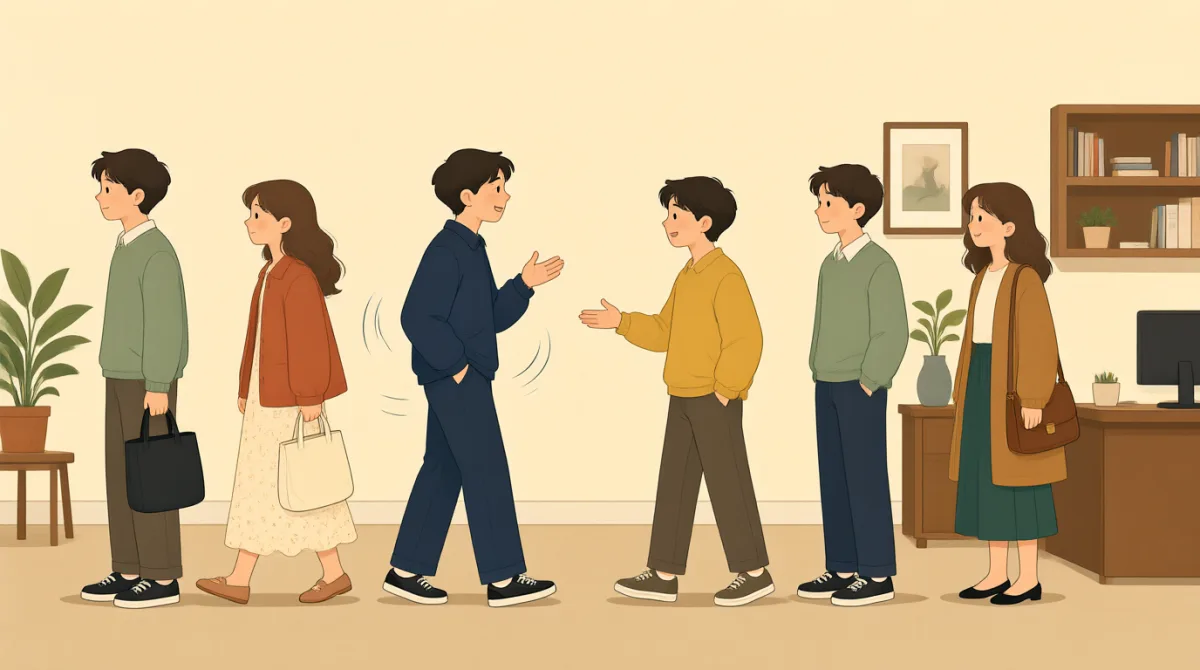

Oh, excuse me! I am so sorry. I didn't see you there.
ओह, माफ़ कीजिए! मुझे बहुत अफ़सोस है। मैंने आपको वहाँ देखा नहीं।

No worries at all! It happens. This line is quite long.
कोई बात नहीं! ऐसा हो जाता है। यह लाइन काफ़ी लंबी है।
It certainly is. Are you waiting for the new exhibit too?
वाकई। क्या आप भी नई प्रदर्शनी देखने के लिए इंतज़ार कर रहे हैं?
Yes, I am! I heard great things about it.
हाँ! मैंने इसके बारे में बहुत अच्छी बातें सुनी हैं।
Me too. Hopefully, it's worth the wait. Again, my apologies for bumping into you.
मैंने भी। उम्मीद है, इंतज़ार करना बेकार नहीं जाएगा। आपसे टकराने के लिए एक बार फिर माफ़ी चाहता हूँ।
Seriously, no problem. Enjoy the exhibit!
सच में, कोई बात नहीं। प्रदर्शनी का आनंद लीजिए!
शब्दावली7
- excuse meमाफ़ कीजिए
A polite way to apologize for a small mistake, like bumping into someone, or to get attention. Use it in everyday situations to show respect.
किसी छोटी-सी गलती, जैसे किसी से टकरा जाने, के लिए माफ़ी माँगने या किसी का ध्यान खींचने का यह एक विनम्र तरीका है। सम्मान दिखाने के लिए रोज़मर्रा की बातचीत में इसका इस्तेमाल करें।
- sorryमाफ़ी चाहता/चाहती हूँ
A common word to express regret or apology for something you did wrong. It's simple and used in both formal and informal settings.
यह किसी गलती या किए गए काम के लिए अफ़सोस जताने और माफ़ी माँगने का आम तरीका है। यह सरल है और औपचारिक व अनौपचारिक, दोनों तरह की स्थितियों में इस्तेमाल होता है।
- no worriesकोई बात नहीं
An informal phrase meaning 'don't worry' or 'it's okay.' It's a friendly way to accept an apology and make the other person feel better.
'no worries' का मतलब है 'चिंता मत कीजिए' या 'कोई बात नहीं।' माफ़ी स्वीकार करके सामने वाले को सहज महसूस कराने का यह दोस्ताना तरीका है।
- it happensऐसा हो जाता है
Means that something is common or normal and not a big deal. Use it to reassure someone after a minor accident.
इसका मतलब है कि कोई बात आम या सामान्य है और उसे लेकर परेशान होने की ज़रूरत नहीं। किसी छोटी दुर्घटना के बाद सामने वाले को आश्वस्त करने के लिए इसका इस्तेमाल करें।
- lineलाइन; कतार
Refers to a queue of people waiting for something, like at a store or event. In American English, it's 'line'; in British, it's often 'queue.'
लोगों की उस कतार को कहते हैं जो किसी चीज़ के लिए इंतज़ार कर रहे हों, जैसे दुकान या किसी कार्यक्रम में। अमेरिकी अंग्रेज़ी में इसके लिए 'line' और ब्रिटिश अंग्रेज़ी में अक्सर 'queue' कहा जाता है।
- exhibitप्रदर्शनी
A display or show, often in a museum or gallery, featuring art, history, or new items. Useful for talking about cultural events.
किसी जगह पर दिखाई गई चीज़ों या शो को कहते हैं। यह अक्सर संग्रहालय या कला दीर्घा में होता है और इसमें कला, इतिहास या नई चीज़ें दिखाई जाती हैं। सांस्कृतिक कार्यक्रमों के बारे में बात करते समय यह शब्द काम आता है।
- worth the waitइंतज़ार के लायक
Means something is valuable or good enough to make the waiting time okay. Use it when discussing patience for rewarding experiences.
इसका मतलब है कि कोई चीज़ इतनी अच्छी या मूल्यवान है कि उसके लिए किया गया इंतज़ार सार्थक लगे। किसी अच्छे अनुभव के लिए धैर्य रखने की बात करते समय इसका इस्तेमाल करें।
मुख्य वाक्य7
- 1
Oh, excuse me! I am so sorry. I didn't see you there.
ओह, माफ़ कीजिए! मुझे बहुत अफ़सोस है। मैंने आपको वहाँ देखा नहीं।
This is a polite apology for accidentally bumping someone. It uses 'excuse me' and 'sorry' together for emphasis, and 'I didn't see you there' explains the mistake without excuses. Useful for small accidents in public to keep interactions friendly.
गलती से किसी से टकराने पर माफ़ी माँगने का यह एक विनम्र तरीका है। इसमें 'excuse me' और 'sorry' का साथ में इस्तेमाल माफ़ी पर ज़ोर देता है। 'I didn't see you there' बिना बहाना बनाए गलती की वजह बताता है। सार्वजनिक जगहों पर छोटी-मोटी दुर्घटनाओं के बाद बातचीत को सहज और दोस्ताना बनाए रखने के लिए यह काम आता है।
- 2
No worries at all! It happens.
बिल्कुल कोई बात नहीं! ऐसा हो जाता है।
A reassuring response to an apology. 'No worries at all' is emphatic and casual, while 'it happens' shows it's common. Great for small talk to diffuse awkwardness and end on a positive note.
यह माफ़ी के जवाब में सामने वाले को आश्वस्त करने का तरीका है। 'No worries at all' ज़ोर देकर, अनौपचारिक ढंग से कहता है कि कोई बात नहीं, जबकि 'it happens' बताता है कि ऐसा अक्सर हो जाता है। बातचीत की झिझक दूर करने और उसे अच्छे ढंग से आगे बढ़ाने के लिए यह उपयोगी है।
- 3
This line is quite long.
यह लाइन काफ़ी लंबी है।
Describes a waiting queue. 'Quite' softens the adjective 'long' to mean 'fairly long' politely. Useful in conversations while waiting to start small talk about the shared situation.
यह इंतज़ार कर रही लोगों की कतार के बारे में बताता है। 'Quite' विशेषण 'long' के प्रभाव को थोड़ा नरम करता है और इसका मतलब 'काफ़ी लंबी' होता है। इंतज़ार करते समय साझा परिस्थिति पर बात शुरू करने के लिए यह उपयोगी है।
- 4
Are you waiting for the new exhibit too?
क्या आप भी नई प्रदर्शनी देखने के लिए इंतज़ार कर रहे हैं?
A question to continue the conversation. 'Too' means 'also,' and the structure is a yes/no question with present continuous tense. It's practical for building rapport in lines by finding common interests.
बातचीत आगे बढ़ाने के लिए यह एक सवाल है। 'Too' का मतलब 'भी' है और सवाल में वर्तमान निरंतर काल का इस्तेमाल हुआ है। लाइन में साथ खड़े लोगों की समान रुचि जानकर उनसे घुलने-मिलने में यह सवाल काम आता है।
- 5
I heard great things about it.
मैंने इसके बारे में बहुत अच्छी बातें सुनी हैं।
Expresses positive hearsay. 'Heard great things' uses past tense for reported information. Useful for showing enthusiasm and encouraging others in casual chats about events.
यह दूसरों से सुनी गई सकारात्मक बातों को बताता है। 'Heard great things' में सुनी हुई जानकारी के लिए भूतकाल का इस्तेमाल होता है। कार्यक्रमों के बारे में अनौपचारिक बातचीत में उत्साह दिखाने और दूसरों को बातचीत के लिए प्रेरित करने के लिए यह वाक्य उपयोगी है।
- 6
Hopefully, it's worth the wait.
उम्मीद है, इंतज़ार करना बेकार नहीं जाएगा।
Shows optimism about waiting. 'Hopefully' expresses hope, and 'it's worth the wait' is an idiom meaning the result justifies the time. Good for polite small talk when anticipating something exciting.
यह इंतज़ार को लेकर आशावाद दिखाता है। 'Hopefully' उम्मीद जताता है, जबकि 'it's worth the wait' एक मुहावरा है जिसका मतलब है कि नतीजा इंतज़ार में लगे समय को सार्थक बना देगा। किसी रोमांचक चीज़ का इंतज़ार करते हुए विनम्र बातचीत में इसका इस्तेमाल करें।
- 7
Seriously, no problem. Enjoy the exhibit!
सच में, कोई बात नहीं। प्रदर्शनी का आनंद लीजिए!
Reiterates acceptance of an apology with 'seriously' for emphasis, and ends positively with a wish. 'Enjoy the exhibit' is a friendly goodbye. Use this to close conversations warmly in social settings.
'Seriously' पर ज़ोर देकर यह फिर से कहता है कि माफ़ी स्वीकार है और कोई परेशानी नहीं। अंत में शुभकामना देकर बात को अच्छे ढंग से समाप्त किया गया है। 'Enjoy the exhibit' दोस्ताना विदाई का तरीका है। सामाजिक परिस्थितियों में बातचीत को गर्मजोशी से समाप्त करने के लिए इसका इस्तेमाल करें।