Commenting on the Long Line
लंबी कतार पर बात करना
Two people waiting in a long line make eye contact and start a conversation by acknowledging how long the wait is.
लंबी कतार में इंतज़ार कर रहे दो लोग एक-दूसरे से नज़रें मिलाते हैं और इंतज़ार कितना लंबा है, इस पर बात शुरू करते हैं।
संवाद8
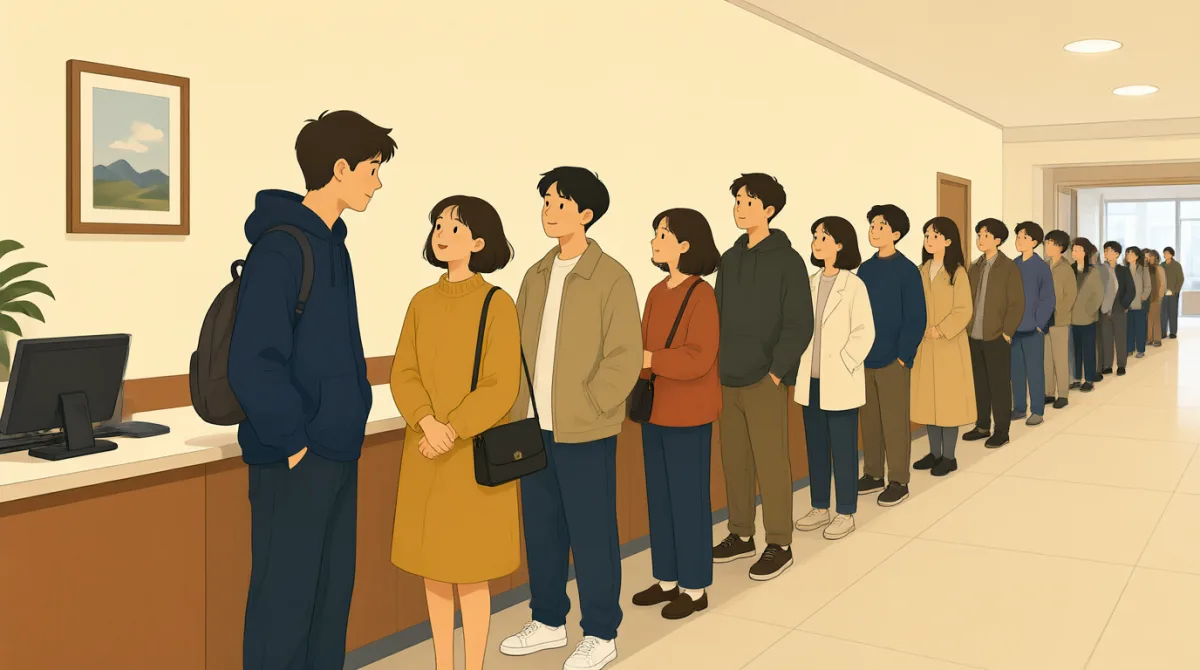

Wow, this line is never-ending, is it?
वाह, यह कतार तो खत्म ही नहीं हो रही, है ना?

Tell me about it! I thought coming at this hour would help, but clearly not.
सही कहा! मुझे लगा था कि इस समय आने से कुछ फ़र्क पड़ेगा, लेकिन साफ़ है कि ऐसा नहीं हुआ।
Me too! I've been standing here for at least 15 minutes already, and it barely seems to have moved.
मुझे भी! मैं कम से कम 15 मिनट से यहाँ खड़ी हूँ, और कतार ज़रा भी आगे बढ़ती नहीं दिख रही।
At this rate, we'll be here all day. What are you waiting for, if you don't mind me asking?
इसी रफ़्तार से चले तो हम पूरा दिन यहीं रहेंगे। अगर आपको बुरा न लगे तो पूछूँ, आप किस लिए इंतज़ार कर रहे हैं?
Just trying to pick up a new ID. And you?
बस नया पहचान-पत्र लेने आई हूँ। और आप?
Passport renewal. Always a joy, isn't it?
पासपोर्ट का नवीनीकरण करवाना है। बड़ा मज़ेदार काम है, है ना?
Definitely not! Well, I guess we're in this together for a while.
बिल्कुल नहीं! खैर, लगता है हमें कुछ देर तक यह सब साथ ही झेलना पड़ेगा।
Looks like it. Good luck to us!
लगता तो ऐसा ही है। चलो, हम दोनों को शुभकामनाएँ!
शब्दावली6
- never-endingnever-ending — अंतहीन
Means something that seems to go on forever without stopping, often used to complain about long waits or boring tasks.
इसका मतलब है कोई ऐसी चीज़ जो बिना रुके चलती ही रहे, मानो कभी खत्म न हो। इसका इस्तेमाल अक्सर लंबे इंतज़ार या उबाऊ कामों की शिकायत करने के लिए किया जाता है।
- Tell me about it!Tell me about it! — बिल्कुल सही कहा!
An idiomatic expression used to strongly agree with someone's complaint, like saying 'I know exactly what you mean!' in casual conversations.
यह एक मुहावरेदार अभिव्यक्ति है, जिसका इस्तेमाल किसी की शिकायत से ज़ोरदार सहमति जताने के लिए होता है। अनौपचारिक बातचीत में इसका भाव है, “मैं समझ सकता हूँ कि आपका क्या मतलब है!”
- at this rateat this rate — इसी रफ़्तार से
A phrase meaning 'if things continue in this way,' often used to predict a frustrating outcome, like a long delay.
इसका मतलब है “अगर चीज़ें इसी तरह चलती रहीं।” इसका इस्तेमाल अक्सर लंबी देरी जैसे निराशाजनक नतीजे का अंदाज़ा लगाने के लिए किया जाता है।
- pick uppick up — लेने जाना
In this context, means to collect or get something that is ready for you, like documents from an office.
इस संदर्भ में इसका मतलब है कोई तैयार चीज़ लेने जाना या उसे हासिल करना, जैसे किसी दफ़्तर से दस्तावेज़ लेना।
- renewalrenewal — नवीनीकरण
The process of extending or updating something official, like a passport or license, that is expiring.
किसी आधिकारिक चीज़, जैसे पासपोर्ट या लाइसेंस, की अवधि बढ़ाने या उसे अद्यतन करने की प्रक्रिया, जब उसकी अवधि समाप्त होने वाली हो।
- joyjoy — खुशी; मज़ा
Happiness or pleasure, but here used sarcastically to mean the opposite, like saying something is annoying.
इसका मतलब खुशी या आनंद होता है, लेकिन यहाँ इसका इस्तेमाल व्यंग्य में इसके उलट, यानी किसी चिढ़ाने वाली चीज़ के लिए किया गया है।
मुख्य वाक्य8
- 1
Wow, this line is never-ending, is it?
वाह, यह कतार तो खत्म ही नहीं हो रही, है ना?
This is a casual way to start small talk by complaining and using a tag question ('is it?') to invite agreement. It's useful for breaking the ice in queues and shows how to express frustration politely.
शिकायत के साथ हल्की-फुल्की बातचीत शुरू करने का यह एक अनौपचारिक तरीका है। इसमें “is it?” जैसा सवाल जोड़कर सामने वाले को सहमति जताने का मौका दिया जाता है। कतार में बातचीत शुरू करने के लिए यह उपयोगी है और झुँझलाहट को विनम्रता से जताता है।
- 2
Tell me about it!
बिल्कुल सही कहा!
A common idiomatic response to agree emphatically with a complaint. Use it in everyday chats to show sympathy without adding more details; it's great for building rapport quickly.
यह किसी शिकायत से ज़ोरदार सहमति जताने का एक आम मुहावरेदार जवाब है। रोज़मर्रा की बातचीत में बिना और जानकारी जोड़े सहानुभूति दिखाने के लिए इसका इस्तेमाल करें। इससे जल्दी अपनापन बनता है।
- 3
At this rate, we'll be here all day.
इसी रफ़्तार से चले तो हम पूरा दिन यहीं रहेंगे।
Uses 'at this rate' to predict a negative future based on the current slow pace. The future tense 'we'll be' helps express exaggeration in complaints; useful for shared waiting situations.
'at this rate' का इस्तेमाल मौजूदा धीमी रफ़्तार के आधार पर किसी बुरे नतीजे का अंदाज़ा लगाने के लिए किया गया है। 'we'll be' का भविष्यकाल शिकायत को बढ़ा-चढ़ाकर कहने में मदद करता है। साथ में इंतज़ार करते समय यह वाक्य उपयोगी है।
- 4
What are you waiting for, if you don't mind me asking?
अगर आपको बुरा न लगे तो पूछूँ, आप किस लिए इंतज़ार कर रहे हैं?
A polite way to ask a personal question by adding 'if you don't mind me asking' to soften it. This structure shows courtesy in conversations; ideal for small talk with strangers.
'if you don't mind me asking' जोड़ने से निजी सवाल को नरम और विनम्र बनाया जाता है। यह तरीका बातचीत में शिष्टता दिखाता है और अनजान लोगों से हल्की-फुल्की बात करने के लिए अच्छा है।
- 5
Just trying to pick up a new ID. And you?
बस नया पहचान-पत्र लेने आई हूँ। और आप?
A simple response to a question followed by 'And you?' to keep the conversation going. The present continuous 'trying to' adds a casual tone; perfect for reciprocal small talk.
यह सवाल का एक सीधा जवाब है, जिसके बाद 'And you?' कहकर बातचीत आगे बढ़ाई जाती है। 'trying to' का वर्तमान निरंतर रूप इसे अनौपचारिक अंदाज़ देता है। एक-दूसरे से सवाल-जवाब वाली हल्की बातचीत के लिए यह बढ़िया है।
- 6
Always a joy, isn't it?
बड़ा मज़ेदार काम है, है ना?
Sarcastic use of 'joy' with a tag question to comment on something unpleasant. It demonstrates irony in English; use it to humorously agree about annoyances like bureaucracy.
यहाँ 'joy' का इस्तेमाल व्यंग्य में, किसी अप्रिय चीज़ पर टिप्पणी करने के लिए किया गया है। साथ का सवाल इसे अंग्रेज़ी की विडंबनापूर्ण शैली का उदाहरण बनाता है। सरकारी कामकाज जैसी परेशानियों पर मज़ाकिया सहमति जताने के लिए इसका इस्तेमाल करें।
- 7
Well, I guess we're in this together for a while.
खैर, लगता है हमें कुछ देर तक यह सब साथ ही झेलना पड़ेगा।
Uses 'I guess' for uncertainty and 'in this together' to show shared experience. This sentence builds camaraderie; useful for ending a chat positively in group waits.
'I guess' से अनिश्चितता जताई जाती है और 'in this together' से साझा अनुभव का भाव आता है। यह वाक्य अपनापन बढ़ाता है और साथ इंतज़ार कर रहे लोगों से बातचीत को सकारात्मक ढंग से खत्म करने के लिए उपयोगी है।
- 8
Good luck to us!
चलो, हम दोनों को शुभकामनाएँ!
A mutual well-wish using 'to us' for inclusivity. It's a friendly closer to conversations; say it when sharing a tough situation to end on a positive note.
'to us' कहकर शुभकामना में दोनों को शामिल किया जाता है। बातचीत खत्म करने का यह दोस्ताना तरीका है। किसी मुश्किल स्थिति को साथ झेलते समय इसे कहें, ताकि बात का अंत सकारात्मक हो।