Apologizing for an Accidental Bump
ขอโทษที่เผลอชน
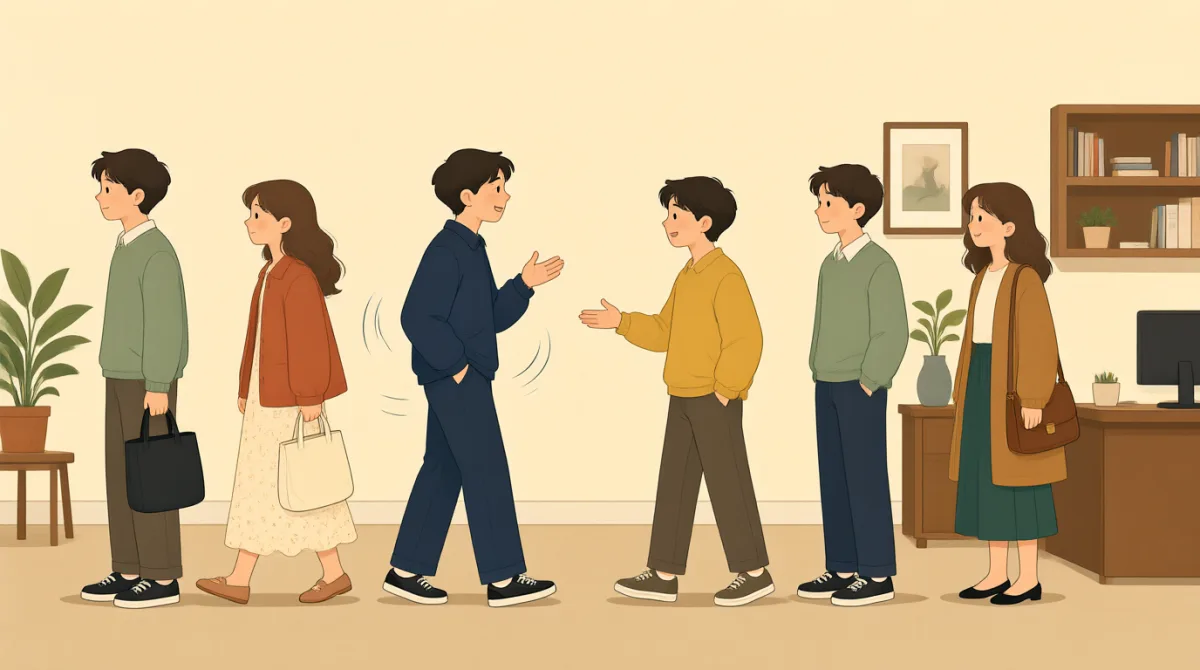
One person accidentally bumps into another while shifting in line and apologizes, leading to a brief exchange of pleasantries.
คนหนึ่งเผลอชนอีกคนขณะขยับตัวในแถว จึงกล่าวขอโทษและพูดคุยทักทายกันสั้น ๆ
บทสนทนา6

Oh, excuse me! I am so sorry. I didn't see you there.
อุ๊ย ขอโทษครับ! ผมขอโทษจริง ๆ ครับ ไม่ทันเห็นคุณตรงนั้น

No worries at all! It happens. This line is quite long.
ไม่เป็นไรเลยค่ะ! เรื่องแบบนี้เกิดขึ้นได้ แถวยาวเหมือนกันนะคะ
It certainly is. Are you waiting for the new exhibit too?
จริงด้วยครับ คุณก็มารอชมนิทรรศการใหม่เหมือนกันเหรอครับ
Yes, I am! I heard great things about it.
ใช่ค่ะ! ได้ยินมาว่าดีมากเลยค่ะ
Me too. Hopefully, it's worth the wait. Again, my apologies for bumping into you.
ผมก็เหมือนกันครับ หวังว่าจะคุ้มกับที่รอนะครับ ขอโทษอีกครั้งที่ชนคุณ
Seriously, no problem. Enjoy the exhibit!
ไม่เป็นไรจริง ๆ ค่ะ ขอให้ชมนิทรรศการให้สนุกนะคะ!
คำศัพท์7
- excuse meขอโทษนะ
A polite way to apologize for a small mistake, like bumping into someone, or to get attention. Use it in everyday situations to show respect.
คำสุภาพที่ใช้ขอโทษเมื่อทำเรื่องเล็ก ๆ น้อย ๆ เช่น เผลอชนใคร หรือใช้เรียกความสนใจ ใช้ได้ในชีวิตประจำวันเพื่อแสดงความเกรงใจ
- sorryขอโทษ
A common word to express regret or apology for something you did wrong. It's simple and used in both formal and informal settings.
คำที่ใช้แสดงความเสียใจหรือขอโทษเมื่อทำสิ่งที่ไม่ควร เป็นคำง่าย ๆ ที่ใช้ได้ทั้งในสถานการณ์เป็นทางการและไม่เป็นทางการ
- no worriesไม่เป็นไร
An informal phrase meaning 'don't worry' or 'it's okay.' It's a friendly way to accept an apology and make the other person feel better.
วลีไม่เป็นทางการที่หมายถึง ‘ไม่ต้องกังวล’ หรือ ‘ไม่เป็นไร’ ใช้ตอบรับคำขอโทษอย่างเป็นมิตรและทำให้อีกฝ่ายสบายใจ
- it happensเรื่องแบบนี้เกิดขึ้นได้
Means that something is common or normal and not a big deal. Use it to reassure someone after a minor accident.
หมายความว่าสิ่งนั้นเป็นเรื่องปกติและไม่ใช่เรื่องใหญ่ ใช้ปลอบใจอีกฝ่ายหลังเกิดอุบัติเหตุเล็ก ๆ น้อย ๆ
- lineแถว
Refers to a queue of people waiting for something, like at a store or event. In American English, it's 'line'; in British, it's often 'queue.'
หมายถึงกลุ่มคนที่ยืนรอสิ่งใดสิ่งหนึ่ง เช่น ที่ร้านค้าหรือในงาน ในภาษาอังกฤษแบบอเมริกันใช้ 'line' ส่วนแบบบริติชมักใช้ 'queue'
- exhibitนิทรรศการ
A display or show, often in a museum or gallery, featuring art, history, or new items. Useful for talking about cultural events.
การจัดแสดงหรืองานแสดง ซึ่งมักจัดในพิพิธภัณฑ์หรือหอศิลป์ และนำเสนอศิลปะ ประวัติศาสตร์ หรือสิ่งของใหม่ ๆ เป็นคำที่มีประโยชน์เมื่อต้องพูดถึงกิจกรรมทางวัฒนธรรม
- worth the waitคุ้มกับที่รอ
Means something is valuable or good enough to make the waiting time okay. Use it when discussing patience for rewarding experiences.
หมายความว่าสิ่งนั้นดีหรือมีคุณค่ามากพอที่จะทำให้เวลาที่รอคอยไม่เสียเปล่า ใช้พูดถึงประสบการณ์ที่คุ้มค่ากับการอดทนรอ
ประโยคสำคัญ7
- 1
Oh, excuse me! I am so sorry. I didn't see you there.
อุ๊ย ขอโทษนะครับ! ผมขอโทษจริง ๆ ครับ ไม่ทันเห็นคุณตรงนั้น
This is a polite apology for accidentally bumping someone. It uses 'excuse me' and 'sorry' together for emphasis, and 'I didn't see you there' explains the mistake without excuses. Useful for small accidents in public to keep interactions friendly.
ประโยคนี้ใช้ขอโทษอย่างสุภาพเมื่อเผลอชนใคร โดยใช้ 'excuse me' และ 'sorry' คู่กันเพื่อเน้นย้ำ ส่วน 'I didn't see you there' อธิบายความผิดพลาดโดยไม่แก้ตัว เหมาะกับเหตุเล็ก ๆ น้อย ๆ ในที่สาธารณะและช่วยให้การพูดคุยเป็นมิตร
- 2
No worries at all! It happens.
ไม่เป็นไรเลยค่ะ! เรื่องแบบนี้เกิดขึ้นได้
A reassuring response to an apology. 'No worries at all' is emphatic and casual, while 'it happens' shows it's common. Great for small talk to diffuse awkwardness and end on a positive note.
เป็นคำตอบที่ช่วยให้อีกฝ่ายสบายใจเมื่อเขาขอโทษ 'No worries at all' เน้นย้ำอย่างเป็นกันเองว่าไม่ต้องกังวล ส่วน 'it happens' บอกว่าเป็นเรื่องที่เกิดขึ้นได้ทั่วไป เหมาะสำหรับลดความกระอักกระอ่วนในการพูดคุยและจบการสนทนาด้วยความรู้สึกดี ๆ
- 3
This line is quite long.
แถวยาวพอสมควรเลยนะคะ
Describes a waiting queue. 'Quite' softens the adjective 'long' to mean 'fairly long' politely. Useful in conversations while waiting to start small talk about the shared situation.
ใช้บรรยายแถวที่คนกำลังรออยู่ คำว่า 'quite' ช่วยลดน้ำหนักของคำคุณศัพท์ 'long' ให้หมายถึง ‘ค่อนข้างยาว’ อย่างสุภาพ เป็นประโยคที่เหมาะใช้เริ่มพูดคุยเรื่องสถานการณ์ที่ทั้งคู่กำลังเจอระหว่างรอ
- 4
Are you waiting for the new exhibit too?
คุณก็มารอชมนิทรรศการใหม่เหมือนกันเหรอคะ
A question to continue the conversation. 'Too' means 'also,' and the structure is a yes/no question with present continuous tense. It's practical for building rapport in lines by finding common interests.
เป็นคำถามที่ช่วยต่อบทสนทนา 'Too' หมายถึง ‘ด้วย’ และประโยคนี้เป็นคำถามตอบรับหรือปฏิเสธโดยใช้รูป present continuous ใช้ชวนคุยในแถวได้ดี เพราะช่วยให้พบว่ามีความสนใจเหมือนกัน
- 5
I heard great things about it.
ได้ยินมาว่าดีมากเลยค่ะ
Expresses positive hearsay. 'Heard great things' uses past tense for reported information. Useful for showing enthusiasm and encouraging others in casual chats about events.
ใช้บอกต่อข้อมูลเชิงบวกที่ได้ยินมา วลี 'Heard great things' ใช้รูปอดีตเพื่อพูดถึงข้อมูลที่ได้รับมา เหมาะสำหรับแสดงความตื่นเต้นและชวนให้อีกฝ่ายคุยต่อเกี่ยวกับงานหรือกิจกรรมต่าง ๆ
- 6
Hopefully, it's worth the wait.
หวังว่าจะคุ้มกับที่รอนะคะ
Shows optimism about waiting. 'Hopefully' expresses hope, and 'it's worth the wait' is an idiom meaning the result justifies the time. Good for polite small talk when anticipating something exciting.
แสดงความหวังดีเกี่ยวกับการรอ 'Hopefully' ใช้บอกความหวัง ส่วน 'it's worth the wait' เป็นสำนวนที่หมายถึงผลลัพธ์ดีพอที่จะคุ้มกับเวลาที่รอ เหมาะกับการพูดคุยอย่างสุภาพระหว่างรอสิ่งที่น่าตื่นเต้น
- 7
Seriously, no problem. Enjoy the exhibit!
ไม่เป็นไรจริง ๆ ค่ะ ขอให้ชมนิทรรศการให้สนุกนะคะ!
Reiterates acceptance of an apology with 'seriously' for emphasis, and ends positively with a wish. 'Enjoy the exhibit' is a friendly goodbye. Use this to close conversations warmly in social settings.
เป็นการยืนยันว่าไม่ติดใจเรื่องที่อีกฝ่ายขอโทษ โดยใช้ 'seriously' เพื่อเน้นย้ำ แล้วจบด้วยคำอวยพร 'Enjoy the exhibit' เป็นคำบอกลาอย่างเป็นมิตร ใช้ปิดบทสนทนาในสถานการณ์ทางสังคมได้อย่างอบอุ่น