Discussing the Purpose of the Line
कतार का मकसद जानना
Someone in line asks another person what they are waiting for, leading to a brief discussion about the event or service.
कतार में खड़ा एक व्यक्ति दूसरे से पूछता है कि वे किस चीज़ का इंतज़ार कर रहे हैं। फिर उस आयोजन या सेवा के बारे में थोड़ी बातचीत होती है।
संवाद7
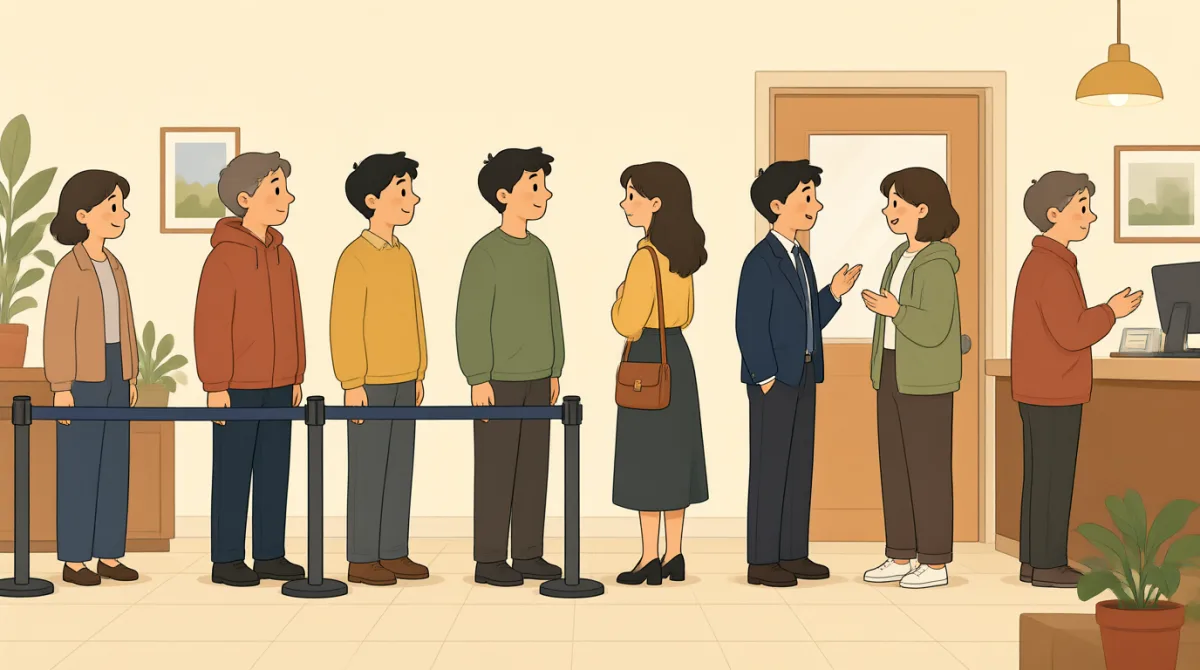

Excuse me, do you know what this line is for?
माफ़ कीजिए, क्या आपको पता है कि यह कतार किसलिए है?

Oh, this is for the new exhibit at the museum. The 'Ancient Civilizations' one.
ओह, यह संग्रहालय की नई प्रदर्शनी के लिए है। ‘प्राचीन सभ्यताएँ’ वाली।
Ah, really? I thought it might be for tickets, but I already have mine. So this is just to get in?
अच्छा, सच में? मुझे लगा था कि यह टिकटों के लिए होगी, लेकिन मेरे पास टिकट पहले से है। तो यह सिर्फ़ अंदर जाने के लिए है?
Exactly. They're managing the number of people inside, so there's a bit of a wait, even with tickets.
बिल्कुल। अंदर लोगों की संख्या सीमित रखी जा रही है, इसलिए टिकट होने पर भी थोड़ा इंतज़ार करना पड़ता है।
That makes sense. I heard good things about this exhibit. Are you excited to see it?
यह बात समझ में आती है। मैंने इस प्रदर्शनी के बारे में अच्छी बातें सुनी हैं। क्या आप इसे देखने के लिए उत्साहित हैं?
Definitely! I'm particularly interested in the Egyptian artifacts. What about you?
बिल्कुल! मुझे ख़ास तौर पर मिस्र की पुरावस्तुओं में दिलचस्पी है। और आपको?
Me too! I'm hoping to see some of the Mesopotamian sculptures. Well, at least we know what we're waiting for now.
मुझे भी! उम्मीद है कि मेसोपोटामिया की कुछ मूर्तियाँ देखने को मिलेंगी। खैर, कम से कम अब हमें पता है कि हम किसका इंतज़ार कर रहे हैं।
शब्दावली6
- exhibitप्रदर्शनी
A public display of interesting objects, like art or historical items, often in a museum. Use it when talking about shows or displays: 'The new exhibit is very popular.'
दिलचस्प चीज़ों, जैसे कला या ऐतिहासिक वस्तुओं, का सार्वजनिक प्रदर्शन, जो अक्सर संग्रहालय में होता है। प्रदर्शनियों या शो के बारे में बात करते समय इसका इस्तेमाल करें: 'The new exhibit is very popular.' (नई प्रदर्शनी बहुत लोकप्रिय है।)
- lineकतार
A queue of people waiting for something, like tickets or entry. In American English, it's 'line'; in British, it's 'queue'. Say: 'There's a long line at the store.'
लोगों की वह पंक्ति जो टिकट या प्रवेश जैसी किसी चीज़ के लिए इंतज़ार कर रहे हों। अमेरिकी अंग्रेज़ी में इसे 'line' और ब्रिटिश अंग्रेज़ी में 'queue' कहते हैं। कहें: 'There's a long line at the store.' (दुकान पर लंबी कतार है।)
- ticketsटिकट
Pieces of paper or digital passes that allow entry to events, museums, or shows. Useful for travel or events: 'I bought two tickets online.'
कागज़ के टिकट या डिजिटल पास, जिनसे किसी आयोजन, संग्रहालय या शो में प्रवेश मिलता है। यात्रा या आयोजनों के बारे में बात करते समय काम आता है: 'I bought two tickets online.' (मैंने ऑनलाइन दो टिकट खरीदे।)
- waitइंतज़ार करना; इंतज़ार
To stay in one place until an event starts or something is ready. Common in daily life: 'We have to wait for the bus.' It can be a noun too: 'There's a short wait.'
किसी आयोजन के शुरू होने या किसी चीज़ के तैयार होने तक एक जगह रुके रहना। रोज़मर्रा की बातचीत में आम है: 'We have to wait for the bus.' (हमें बस का इंतज़ार करना है।) इसका इस्तेमाल संज्ञा के रूप में भी होता है: 'There's a short wait.' (थोड़ा इंतज़ार करना होगा।)
- excitedउत्साहित
Feeling happy and eager about something upcoming. Use in conversations about plans: 'I'm excited about the trip!' It's positive and builds rapport.
आने वाली किसी चीज़ को लेकर खुश और उत्सुक महसूस करना। योजनाओं के बारे में बातचीत में इसका इस्तेमाल करें: 'I'm excited about the trip!' (मैं यात्रा को लेकर बहुत उत्साहित हूँ!) यह सकारात्मक शब्द है और बातचीत में अपनापन बढ़ाता है।
- artifactsपुरावस्तुएँ
Old objects from ancient times, like tools or art, studied in history or museums. Say: 'The museum has many Egyptian artifacts.' Good for cultural discussions.
प्राचीन समय की पुरानी वस्तुएँ, जैसे औज़ार या कलाकृतियाँ, जिनका इतिहास या संग्रहालयों में अध्ययन किया जाता है। कहें: 'The museum has many Egyptian artifacts.' (संग्रहालय में मिस्र की कई पुरावस्तुएँ हैं।) सांस्कृतिक विषयों पर बातचीत में यह शब्द काम आता है।
मुख्य वाक्य6
- 1
Excuse me, do you know what this line is for?
माफ़ कीजिए, क्या आपको पता है कि यह कतार किसलिए है?
This is a polite way to start a conversation by asking for information. 'Excuse me' shows respect; 'what...is for?' asks the purpose. Use it in public to break the ice without being rude.
जानकारी पूछकर बातचीत शुरू करने का यह एक विनम्र तरीका है। 'Excuse me' सम्मान जताता है, और 'what...is for?' किसी चीज़ का मकसद पूछता है। सार्वजनिक जगह पर बिना रूखे लगे बातचीत शुरू करने के लिए इसका इस्तेमाल करें।
- 2
Ah, really? I thought it might be for tickets, but I already have mine.
अच्छा, सच में? मुझे लगा था कि यह टिकटों के लिए होगी, लेकिन मेरे पास टिकट पहले से है।
Expresses surprise ('Ah, really?') and shares a mistaken idea ('I thought...'). 'Might be' shows possibility; 'already have' uses present perfect for completed actions. Useful for correcting assumptions in chats.
इससे हैरानी ('Ah, really?') जताई जाती है और एक ग़लतफ़हमी साझा की जाती है ('I thought...')। 'Might be' संभावना बताता है, जबकि 'already have' ऐसे काम के लिए present perfect का इस्तेमाल करता है जो पहले ही पूरा हो चुका है। बातचीत में अपनी धारणा सुधारने के लिए यह उपयोगी है।
- 3
That makes sense.
यह बात समझ में आती है।
A simple agreement meaning 'I understand now.' It's casual and positive, ending a point nicely. Use it in small talk to show you're listening and agree, without needing more words.
यह सहमति जताने का सरल तरीका है, जिसका मतलब है 'अब मुझे समझ में आया।' यह अनौपचारिक और सकारात्मक है और बात को अच्छे से पूरा करता है। छोटी-मोटी बातचीत में सामने वाले को यह दिखाने के लिए कहें कि आप सुन रहे हैं और सहमत हैं—बिना कुछ और कहे।
- 4
Are you excited to see it?
क्या आप इसे देखने के लिए उत्साहित हैं?
Asks about someone's feelings using 'excited to + verb' for future enthusiasm. It's an open question to continue conversation. Great for building connection in lines or events.
'Excited to + verb' का इस्तेमाल करके यह किसी की आने वाली चीज़ को लेकर उत्सुकता पूछता है। बातचीत आगे बढ़ाने के लिए यह एक खुला सवाल है। कतारों या आयोजनों में लोगों से जुड़ने का यह बढ़िया तरीका है।
- 5
What about you?
और आपको?
Turns the question back to the other person, keeping talk balanced. Short and natural; use after sharing your own info to invite response, common in friendly chats.
यह सवाल दूसरे व्यक्ति से पूछकर बातचीत को संतुलित रखता है। यह छोटा और स्वाभाविक वाक्य है। अपनी बात बताने के बाद सामने वाले को जवाब देने के लिए आमंत्रित करने में इसका इस्तेमाल करें। दोस्ताना बातचीत में यह आम है।
- 6
Well, at least we know what we're waiting for now.
खैर, कम से कम अब हमें पता है कि हम किसका इंतज़ार कर रहे हैं।
Ends positively with 'at least' meaning 'it's good that...'. 'We're waiting' uses present continuous for ongoing action. Use to wrap up small talk on a light note.
यह वाक्य 'at least' का इस्तेमाल करके सकारात्मक ढंग से बात ख़त्म करता है, जिसका अर्थ है 'अच्छी बात यह है कि...'। 'We're waiting' जारी क्रिया के लिए present continuous का इस्तेमाल करता है। हल्के-फुल्के अंदाज़ में छोटी-मोटी बातचीत समेटने के लिए इसका इस्तेमाल करें।