Apologizing for an Accidental Bump
為意外碰撞道歉
One person accidentally bumps into another while shifting in line and apologizes, leading to a brief exchange of pleasantries.
一個人在隊伍中移動時不小心撞到了另一個人並道歉,從而引發簡短的客套交流。
對話6
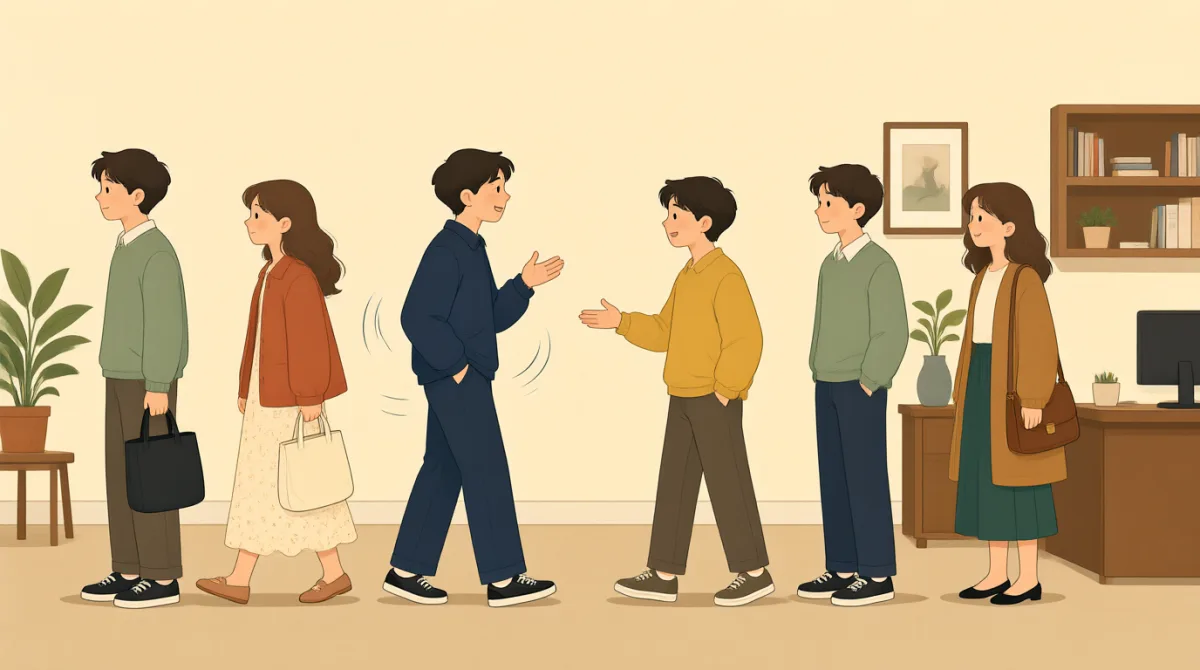

Oh, excuse me! I am so sorry. I didn't see you there.
哦,對不起!我非常抱歉。我沒看到你。

No worries at all! It happens. This line is quite long.
沒關係!常有的事。這隊伍還挺長的。
It certainly is. Are you waiting for the new exhibit too?
確實是。你也是在等新的展覽嗎?
Yes, I am! I heard great things about it.
對,我是!我聽說這個展覽很棒。
Me too. Hopefully, it's worth the wait. Again, my apologies for bumping into you.
我也是。希望它值得等待。再次抱歉撞到你了。
Seriously, no problem. Enjoy the exhibit!
真的,沒關係。祝你觀展愉快!
詞彙7
- excuse me不好意思
A polite way to apologize for a small mistake, like bumping into someone, or to get attention. Use it in everyday situations to show respect.
“excuse me”是一種禮貌的表達,可以用來為撞到別人這樣的小失誤道歉,也可以用來引起別人的注意。在日常場合使用它,能體現你的尊重。
- sorry對不起
A common word to express regret or apology for something you did wrong. It's simple and used in both formal and informal settings.
“sorry”是常見的道歉用語,用來表達對自己做錯事情的歉意。它簡單實用,正式和非正式場合都能用。
- no worries沒關係
An informal phrase meaning 'don't worry' or 'it's okay.' It's a friendly way to accept an apology and make the other person feel better.
“no worries”是一種非正式說法,意思是“別擔心”或“沒關係”。用它友好地接受別人的道歉,可以讓對方安心。
- it happens這種事難免
Means that something is common or normal and not a big deal. Use it to reassure someone after a minor accident.
“it happens”的意思是某件事很常見或很正常,不是什麼大問題。別人遇到小意外時,可以用這句話安慰對方。
- line隊伍
Refers to a queue of people waiting for something, like at a store or event. In American English, it's 'line'; in British, it's often 'queue.'
“line”指一群排隊等候的人,比如在商店或活動現場排隊。在美式英語中說“line”,英式英語中則常說“queue”。
- exhibit展覽
A display or show, often in a museum or gallery, featuring art, history, or new items. Useful for talking about cultural events.
“exhibit”指展出或展示的內容,常見於博物館或畫廊,可能是藝術品、歷史文物或新品。談論文化活動時很實用。
- worth the wait值得等待
Means something is valuable or good enough to make the waiting time okay. Use it when discussing patience for rewarding experiences.
“worth the wait”的意思是某樣東西足夠好或有價值,讓等待變得值得。談到需要耐心等待、但結果令人期待的體驗時可以用它。
關鍵句7
- 1
Oh, excuse me! I am so sorry. I didn't see you there.
哦,不好意思!我真的很抱歉。我沒看見你。
This is a polite apology for accidentally bumping someone. It uses 'excuse me' and 'sorry' together for emphasis, and 'I didn't see you there' explains the mistake without excuses. Useful for small accidents in public to keep interactions friendly.
這句話用於不小心撞到別人時禮貌地道歉。把“excuse me”和“sorry”放在一起能加強歉意;“I didn't see you there”則解釋了失誤,但不是在找藉口。在公共場合發生小意外時,這樣說能讓交流保持友好。
- 2
No worries at all! It happens.
完全沒關係!這種事難免。
A reassuring response to an apology. 'No worries at all' is emphatic and casual, while 'it happens' shows it's common. Great for small talk to diffuse awkwardness and end on a positive note.
這是回應道歉、安慰對方的說法。“No worries at all”語氣隨和,也加強了“沒關係”的意思;“it happens”則表示這種事很常見。閒聊時用這句話可以化解尷尬,讓交流輕鬆地繼續下去。
- 3
This line is quite long.
這隊伍還挺長的。
Describes a waiting queue. 'Quite' softens the adjective 'long' to mean 'fairly long' politely. Useful in conversations while waiting to start small talk about the shared situation.
這句話用來形容排隊等候的隊伍。“Quite”修飾“long”,讓語氣更委婉,表示“相當長”。等候時可以用它聊聊眼前的情況,開啟閒聊。
- 4
Are you waiting for the new exhibit too?
你也是在等新的展覽嗎?
A question to continue the conversation. 'Too' means 'also,' and the structure is a yes/no question with present continuous tense. It's practical for building rapport in lines by finding common interests.
這是一個用來繼續交談的問題。“Too”表示“也”,而整個句子是現在進行時的一般疑問句。在隊伍裡可以用它尋找共同話題、拉近距離。
- 5
I heard great things about it.
我聽說這個展覽很棒。
Expresses positive hearsay. 'Heard great things' uses past tense for reported information. Useful for showing enthusiasm and encouraging others in casual chats about events.
這句話表達了聽來的好評。“Heard great things”使用過去時,表示這些資訊是之前聽說的。和別人隨意聊活動時,可以用它表達期待,也鼓勵對方接話。
- 6
Hopefully, it's worth the wait.
希望這次等待是值得的。
Shows optimism about waiting. 'Hopefully' expresses hope, and 'it's worth the wait' is an idiom meaning the result justifies the time. Good for polite small talk when anticipating something exciting.
這句話表達了對等待結果的期待。“Hopefully”表示希望;“it's worth the wait”是一個習語,意思是結果值得花時間等待。在期待某件令人興奮的事情時,可以用它禮貌地閒聊。
- 7
Seriously, no problem. Enjoy the exhibit!
真的,沒關係。祝你觀展愉快!
Reiterates acceptance of an apology with 'seriously' for emphasis, and ends positively with a wish. 'Enjoy the exhibit' is a friendly goodbye. Use this to close conversations warmly in social settings.
這句話用“seriously”加強語氣,再次表示接受對方的道歉,最後以祝福友好地結束交談。“Enjoy the exhibit”是親切的道別方式,適合在社交場合溫暖地結束對話。