Apologizing for an Accidental Bump
الاعتذار عن الاصطدام بشخص دون قصد
One person accidentally bumps into another while shifting in line and apologizes, leading to a brief exchange of pleasantries.
يصطدم شخص بآخر دون قصد أثناء تحركه في الطابور، فيعتذر له، ثم يتبادلان بعض عبارات المجاملة.
حوار6
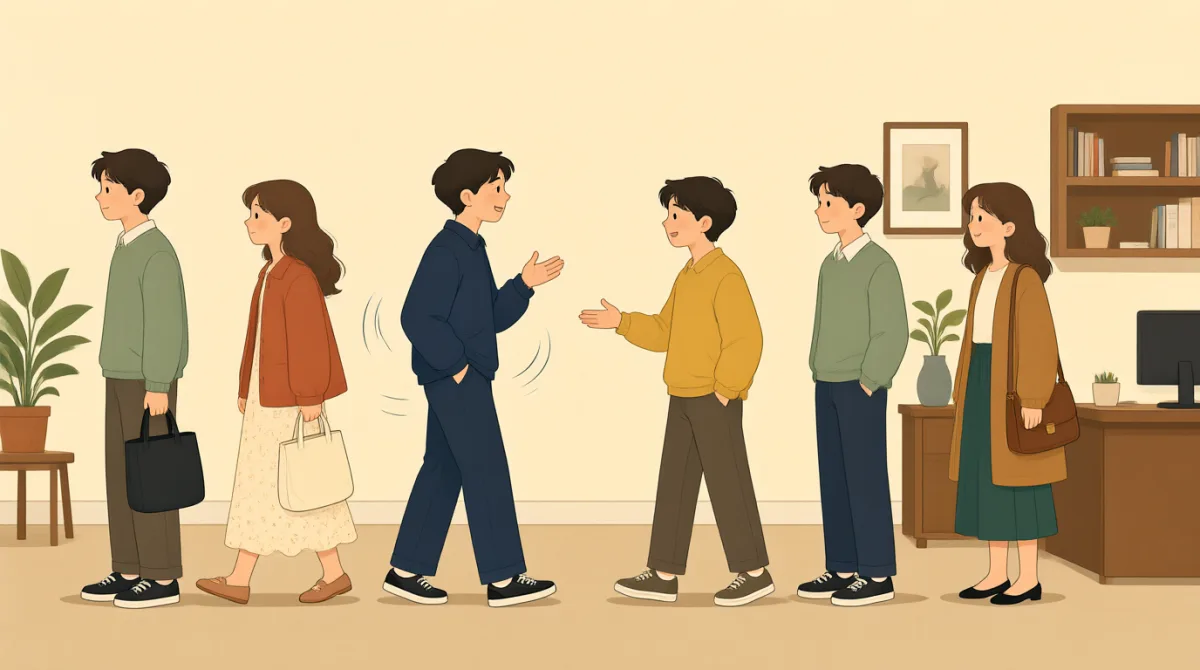

Oh, excuse me! I am so sorry. I didn't see you there.
أوه، عذرًا! أنا آسف جدًا. لم أرك.

No worries at all! It happens. This line is quite long.
لا بأس إطلاقًا! يحدث ذلك. هذا الطابور طويل إلى حدٍّ ما.
It certainly is. Are you waiting for the new exhibit too?
بالفعل. هل تنتظر المعرض الجديد أيضًا؟
Yes, I am! I heard great things about it.
نعم! سمعت عنه أشياء رائعة.
Me too. Hopefully, it's worth the wait. Again, my apologies for bumping into you.
وأنا أيضًا. آمل أن يستحق الانتظار. وأعتذر مجددًا عن اصطدامي بك.
Seriously, no problem. Enjoy the exhibit!
حقًا، لا مشكلة. استمتع بالمعرض!
المفردات7
- excuse meعذرًا
A polite way to apologize for a small mistake, like bumping into someone, or to get attention. Use it in everyday situations to show respect.
طريقة مهذبة للاعتذار عن خطأ بسيط، مثل الاصطدام بشخص، أو للفت الانتباه. تُستخدم في المواقف اليومية لإظهار الاحترام.
- sorryآسف
A common word to express regret or apology for something you did wrong. It's simple and used in both formal and informal settings.
كلمة شائعة للتعبير عن الندم أو الاعتذار عن خطأ ارتكبته. وهي بسيطة وتُستخدم في المواقف الرسمية وغير الرسمية.
- no worriesلا بأس
An informal phrase meaning 'don't worry' or 'it's okay.' It's a friendly way to accept an apology and make the other person feel better.
عبارة غير رسمية تعني «لا تقلق» أو «الأمر على ما يرام». وهي طريقة ودودة لقبول الاعتذار وطمأنة الشخص الآخر.
- it happensيحدث ذلك
Means that something is common or normal and not a big deal. Use it to reassure someone after a minor accident.
تعني أن الأمر شائع أو طبيعي وليس مشكلة كبيرة. تُستخدم لطمأنة شخص بعد حادث بسيط.
- lineطابور
Refers to a queue of people waiting for something, like at a store or event. In American English, it's 'line'; in British, it's often 'queue.'
يشير إلى صف من الأشخاص ينتظرون شيئًا، مثل الانتظار في متجر أو في فعالية. في الإنجليزية الأمريكية تُقال 'line'، أما في الإنجليزية البريطانية فكثيرًا ما تُقال 'queue'.
- exhibitمعرض
A display or show, often in a museum or gallery, featuring art, history, or new items. Useful for talking about cultural events.
عرض أو فعالية، غالبًا في متحف أو معرض فني، تضم أعمالًا فنية أو مواد تاريخية أو أشياء جديدة. تفيد هذه الكلمة عند الحديث عن الفعاليات الثقافية.
- worth the waitيستحق الانتظار
Means something is valuable or good enough to make the waiting time okay. Use it when discussing patience for rewarding experiences.
تعني أن شيئًا ما جيد أو قيّم بما يكفي ليجعل وقت الانتظار مقبولًا. تُستخدم عند الحديث عن التحلي بالصبر من أجل تجربة ممتعة أو مفيدة.
الجمل الأساسية7
- 1
Oh, excuse me! I am so sorry. I didn't see you there.
أوه، عذرًا! أنا آسف جدًا. لم أرك.
This is a polite apology for accidentally bumping someone. It uses 'excuse me' and 'sorry' together for emphasis, and 'I didn't see you there' explains the mistake without excuses. Useful for small accidents in public to keep interactions friendly.
هذا اعتذار مهذب عن الاصطدام بشخص دون قصد. يجمع بين 'excuse me' و'sorry' للتأكيد، وتوضح عبارة 'I didn't see you there' سبب الخطأ من دون تقديم أعذار. يفيد هذا التعبير عند وقوع حوادث بسيطة في الأماكن العامة، ويساعد على إبقاء التعامل وديًا.
- 2
No worries at all! It happens.
لا بأس إطلاقًا! يحدث ذلك.
A reassuring response to an apology. 'No worries at all' is emphatic and casual, while 'it happens' shows it's common. Great for small talk to diffuse awkwardness and end on a positive note.
رد يطمئن الشخص بعد اعتذاره. عبارة 'No worries at all' ودية وغير رسمية وتؤكد أن الأمر لا يسبب أي إزعاج، أما 'it happens' فتشير إلى أن ذلك أمر شائع. إنها طريقة مناسبة لتخفيف الإحراج وإنهاء الموقف بنبرة إيجابية.
- 3
This line is quite long.
هذا الطابور طويل إلى حدٍّ ما.
Describes a waiting queue. 'Quite' softens the adjective 'long' to mean 'fairly long' politely. Useful in conversations while waiting to start small talk about the shared situation.
تصف هذه الجملة صفًا من الأشخاص ينتظرون. تخفف كلمة 'quite' من حدة الصفة 'long'، وتعني هنا «طويل إلى حدٍّ ما». تفيد في بدء حديث عابر عن الموقف الذي يتشاركه المنتظرون.
- 4
Are you waiting for the new exhibit too?
هل تنتظر المعرض الجديد أيضًا؟
A question to continue the conversation. 'Too' means 'also,' and the structure is a yes/no question with present continuous tense. It's practical for building rapport in lines by finding common interests.
سؤال لمواصلة الحديث. تعني 'too' «أيضًا»، والجملة سؤال إجابته نعم أو لا، ويُستخدم فيها زمن المضارع المستمر. يفيد هذا السؤال في التقارب مع الآخرين في الطابور من خلال اكتشاف الاهتمامات المشتركة.
- 5
I heard great things about it.
سمعت عنه أشياء رائعة.
Expresses positive hearsay. 'Heard great things' uses past tense for reported information. Useful for showing enthusiasm and encouraging others in casual chats about events.
تعبّر الجملة عن معلومات إيجابية وصلتك من الآخرين. تستخدم عبارة 'heard great things' الماضي للإشارة إلى ما سمعته. تفيد في إظهار الحماس وتشجيع الآخرين في الأحاديث العفوية عن الفعاليات.
- 6
Hopefully, it's worth the wait.
آمل أن يستحق الانتظار.
Shows optimism about waiting. 'Hopefully' expresses hope, and 'it's worth the wait' is an idiom meaning the result justifies the time. Good for polite small talk when anticipating something exciting.
تعبر الجملة عن التفاؤل أثناء الانتظار. تُستخدم 'Hopefully' للتعبير عن الأمل، أما 'it's worth the wait' فهي عبارة اصطلاحية تعني أن النتيجة تبرر الوقت المبذول. تلائم الأحاديث الودية المهذبة عند ترقب شيء ممتع.
- 7
Seriously, no problem. Enjoy the exhibit!
حقًا، لا مشكلة. استمتع بالمعرض!
Reiterates acceptance of an apology with 'seriously' for emphasis, and ends positively with a wish. 'Enjoy the exhibit' is a friendly goodbye. Use this to close conversations warmly in social settings.
يؤكد قبول الاعتذار باستخدام 'seriously' للتشديد، ويختتم الحديث بتمنٍّ لطيف. عبارة 'Enjoy the exhibit' تُقال عند الوداع بأسلوب ودود. استخدمها لإنهاء الأحاديث بلطف في المواقف الاجتماعية.