Commenting on the Weather or Environment
मौसम या आसपास के माहौल पर टिप्पणी करना
People strike up a conversation by remarking on the current weather conditions (too hot, too cold) or the immediate surroundings.
लोग मौजूदा मौसम (बहुत गर्मी या बहुत ठंड) या अपने आसपास के माहौल पर टिप्पणी करके बातचीत शुरू करते हैं।
संवाद8
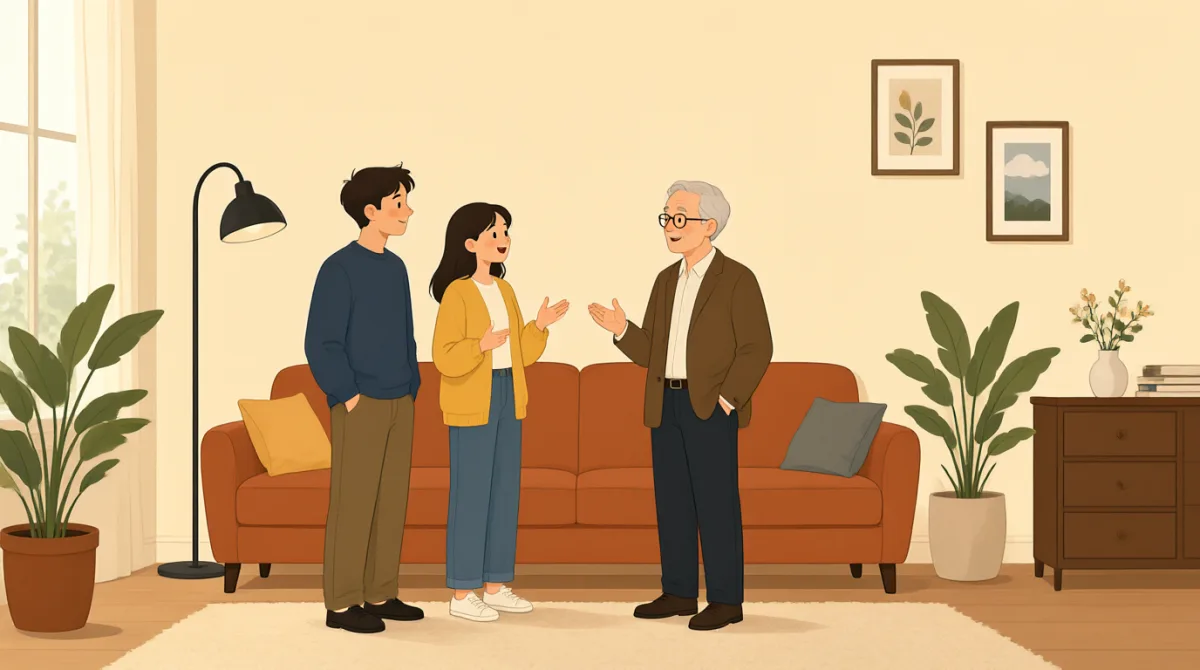

Wow, it's really warm in here, isn't it?
वाह, यहाँ तो बहुत गर्मी है, है ना?

Yeah, it is. I think the heating might be a bit too high.
हाँ, है तो। मुझे लगता है हीटिंग थोड़ी ज़्यादा तेज़ है।
Definitely. I'm already starting to feel a bit stuffy.
बिल्कुल। अभी से यहाँ घुटन महसूस होने लगी है।
Me too. And with this many people, it's only going to get warmer.
मुझे भी। और इतने सारे लोगों के साथ, यहाँ और गर्मी ही होगी।
True. At least we're not waiting outside today. It's freezing out there.
सही कहा। कम से कम आज हमें बाहर इंतज़ार तो नहीं करना पड़ रहा। वहाँ कड़ाके की ठंड है।
Oh, absolutely. I heard it might even snow later.
ओह, बिल्कुल। मैंने सुना है कि बाद में बर्फ़ भी गिर सकती है।
Really? Well, I guess a little warmth is better than shivering.
सच में? ख़ैर, लगता है थोड़ी गर्मी में रहना ठंड से काँपने से तो बेहतर है।
You've got a point there.
तुम्हारी बात में दम है।
शब्दावली6
- warmगर्म
Warm means having a comfortably high temperature, not too hot. It's often used to describe indoor spaces or mild weather. For example, in small talk, you can say 'It's warm today' to start a conversation about the environment.
Warm का मतलब है आरामदायक रूप से गर्म, लेकिन बहुत ज़्यादा गर्म नहीं। इसका इस्तेमाल अक्सर घर के अंदर की जगहों या हल्के गर्म मौसम के लिए होता है। उदाहरण के लिए, आसपास के माहौल पर बातचीत शुरू करने के लिए आप कह सकते हैं, 'It's warm today' (आज मौसम गर्म है)।
- heatingहीटिंग; कमरे को गर्म करने की व्यवस्था
Heating refers to the system that makes a room warmer, like radiators or air conditioners set to warm air. In conversations, people complain about it if it's too strong, such as 'The heating is on too high.'
Heating उस व्यवस्था को कहते हैं जो कमरे को गर्म करती है, जैसे रेडिएटर या गर्म हवा देने के लिए सेट किया गया एयर कंडीशनर। अगर यह बहुत तेज़ चल रही हो, तो लोग बातचीत में इसकी शिकायत कर सकते हैं, जैसे 'The heating is on too high.' (हीटिंग बहुत तेज़ चल रही है)।
- stuffyघुटन भरा
Stuffy describes air that feels hot, humid, and uncomfortable, making it hard to breathe easily. It's common in crowded or poorly ventilated places, like saying 'It feels stuffy in here' during small talk.
Stuffy ऐसी हवा या जगह को कहते हैं जो गर्म, उमस भरी और असहज लगे, जिससे आसानी से साँस लेना मुश्किल हो। भीड़भाड़ वाली या जहाँ हवा का ठीक से आना-जाना न हो, ऐसी जगहों के लिए यह शब्द आम है। बातचीत में आप कह सकते हैं, 'It feels stuffy in here' (यहाँ घुटन महसूस हो रही है)।
- freezingकड़ाके की ठंड
Freezing means extremely cold, often so cold that it feels painful. It's informal and used for outdoor weather, for example, 'It's freezing outside!' to express discomfort.
Freezing का मतलब है बहुत ज़्यादा ठंडा—इतनी ठंड कि दर्द महसूस हो सकता है। यह अनौपचारिक शब्द अक्सर बाहर के मौसम के लिए इस्तेमाल होता है। असहज महसूस होने पर आप कह सकते हैं, 'It's freezing outside!' (बाहर कड़ाके की ठंड है!)।
- shiveringठंड से काँपना
Shivering means shaking slightly because you are very cold. It's a physical reaction, and in talk, you might say 'I'm shivering' to describe feeling cold compared to being warm.
Shivering का मतलब है बहुत ठंड लगने की वजह से हल्का-हल्का काँपना। यह शरीर की एक प्रतिक्रिया है। ठंड लगने का ज़िक्र करते हुए आप कह सकते हैं, 'I'm shivering' (मैं ठंड से काँप रहा/रही हूँ)।
- absolutelyबिल्कुल; पूरी तरह
Absolutely means completely or totally, used to show strong agreement. In casual chats, it emphasizes yes, like 'Absolutely, I agree!' to keep the conversation positive.
Absolutely का मतलब है बिल्कुल या पूरी तरह। इसका इस्तेमाल किसी बात से ज़ोरदार सहमति जताने के लिए होता है। अनौपचारिक बातचीत में सहमति पर ज़ोर देने के लिए आप कह सकते हैं, 'Absolutely, I agree!' (बिल्कुल, मैं सहमत हूँ!)।
मुख्य वाक्य8
- 1
Wow, it's really warm in here, isn't it?
वाह, यहाँ तो बहुत गर्मी है, है ना?
This sentence starts a conversation by commenting on the temperature and uses a tag question 'isn't it?' to invite agreement. It's useful for small talk in lines or queues because it makes the other person respond easily and builds rapport.
यह वाक्य तापमान पर टिप्पणी करके बातचीत शुरू करता है। इसमें 'isn't it?' (है ना?) वाला टैग प्रश्न है, जो सामने वाले को सहमति जताने का मौका देता है। कतार में इंतज़ार करते समय हल्की-फुल्की बातचीत के लिए यह उपयोगी है, क्योंकि सामने वाले के लिए जवाब देना आसान होता है और आपस में अपनापन बढ़ता है।
- 2
Yeah, it is. I think the heating might be a bit too high.
हाँ, है तो। मुझे लगता है हीटिंग थोड़ी ज़्यादा तेज़ है।
This shows agreement with 'Yeah, it is' and gives an opinion using 'I think' and 'might' for possibility. It's practical for everyday chats as it continues the topic politely without being too direct.
'Yeah, it is' (हाँ, है तो) कहकर आप सहमति जताते हैं, फिर 'I think' (मुझे लगता है) और 'might' (शायद) के ज़रिए अपनी राय और संभावना बताते हैं। रोज़मर्रा की बातचीत में यह किसी विषय को विनम्रता से आगे बढ़ाने का अच्छा तरीका है, बिना बहुत सीधे हुए।
- 3
Definitely. I'm already starting to feel a bit stuffy.
बिल्कुल। अभी से यहाँ घुटन महसूस होने लगी है।
'Definitely' strongly agrees, and the sentence describes a personal feeling with 'starting to feel' in present continuous tense. Use this to express discomfort in shared spaces, helping learners practice adverb placement and sensory verbs.
'Definitely' से आप ज़ोरदार सहमति जताते हैं। 'starting to feel' का इस्तेमाल करके यह वाक्य बताता है कि आपको कैसा महसूस हो रहा है और यह वर्तमान में शुरू हो रहा है। साझा जगहों में असहजता बताने के लिए इसका इस्तेमाल करें। इससे आपको क्रिया से जुड़ी अनुभूति बताने वाले शब्दों और वाक्य में क्रिया-विशेषण की जगह का अभ्यास भी होगा।
- 4
Me too. And with this many people, it's only going to get warmer.
मुझे भी। और इतने सारे लोगों के साथ, यहाँ और गर्मी ही होगी।
'Me too' agrees quickly, and the second part predicts the future with 'it's only going to get' in future tense. This pattern is common in small talk to add reasons and keep the dialogue flowing naturally.
'Me too' (मुझे भी) कहकर आप तुरंत सहमति जताते हैं। इसके बाद 'it's only going to get' वाला ढाँचा भविष्य में होने वाली बात का अनुमान लगाता है। हल्की-फुल्की बातचीत में यह ढाँचा कोई कारण जोड़ने और बातचीत को सहज रूप से आगे बढ़ाने के लिए आम है।
- 5
True. At least we're not waiting outside today. It's freezing out there.
सही कहा। कम से कम आज हमें बाहर इंतज़ार तो नहीं करना पड़ रहा। वहाँ कड़ाके की ठंड है।
'True' agrees simply, and 'At least' introduces a positive aspect with a comparison. The contraction 'It's freezing out there' is idiomatic for extreme cold. It's useful for balancing complaints with positives in casual conversations.
'True' (सही कहा) कहकर आप सीधे सहमति जताते हैं, और 'At least' (कम से कम) तुलना के ज़रिए एक अच्छी बात सामने लाता है। 'It's freezing out there' बाहर की बेहद ठंड बताने का मुहावरेदार तरीका है। अनौपचारिक बातचीत में शिकायत के साथ कोई सकारात्मक बात जोड़ने के लिए यह उपयोगी है।
- 6
Oh, absolutely. I heard it might even snow later.
ओह, बिल्कुल। मैंने सुना है कि बाद में बर्फ़ भी गिर सकती है।
'Oh, absolutely' shows surprise and strong agreement, followed by sharing information with 'I heard' and 'might' for uncertainty. This sentence teaches how to introduce new info in weather talks, making it engaging for listeners.
'Oh, absolutely' से हैरानी और ज़ोरदार सहमति झलकती है। इसके बाद 'I heard' (मैंने सुना है) और अनिश्चितता जताने के लिए 'might' (शायद) का इस्तेमाल करके कोई जानकारी साझा की जाती है। मौसम की बातचीत में नई जानकारी दिलचस्प ढंग से बताने के लिए यह वाक्य उपयोगी है।
- 7
Really? Well, I guess a little warmth is better than shivering.
सच में? ख़ैर, लगता है थोड़ी गर्मी में रहना ठंड से काँपने से तो बेहतर है।
'Really?' expresses surprise, and 'I guess' softens an opinion, using a comparative 'better than' to contrast options. It's great for intermediate learners to practice expressing preferences and comparisons in response to news.
'Really?' हैरानी जताता है और 'I guess' किसी राय को थोड़ा नरम बनाता है। 'better than' का इस्तेमाल दो विकल्पों की तुलना के लिए हुआ है। किसी ख़बर के जवाब में अपनी पसंद और तुलना बताने का अभ्यास करने के लिए यह वाक्य अच्छा है।
- 8
You've got a point there.
तुम्हारी बात में दम है।
This idiom means 'You are right' or 'That's a good idea,' used to agree with someone's opinion politely. It's a common phrase in English small talk to end or acknowledge a point without saying much more.
इस मुहावरे का मतलब है 'तुम सही हो' या 'यह अच्छा विचार है।' इसका इस्तेमाल किसी की राय से विनम्रता से सहमत होने के लिए किया जाता है। अंग्रेज़ी की हल्की-फुल्की बातचीत में यह आम वाक्यांश है, जिससे आप बिना और ज़्यादा कहे सामने वाले की बात मान सकते हैं।