Apologizing for an Accidental Bump
অনিচ্ছাকৃতভাবে ধাক্কা লাগার জন্য ক্ষমা চাওয়া
One person accidentally bumps into another while shifting in line and apologizes, leading to a brief exchange of pleasantries.
লাইনে দাঁড়িয়ে জায়গা বদলানোর সময় একজনের সঙ্গে আরেকজনের ভুল করে ধাক্কা লাগে। তিনি ক্ষমা চান, এরপর দুজনের মধ্যে সংক্ষিপ্ত সৌজন্য বিনিময় হয়।
সংলাপ6
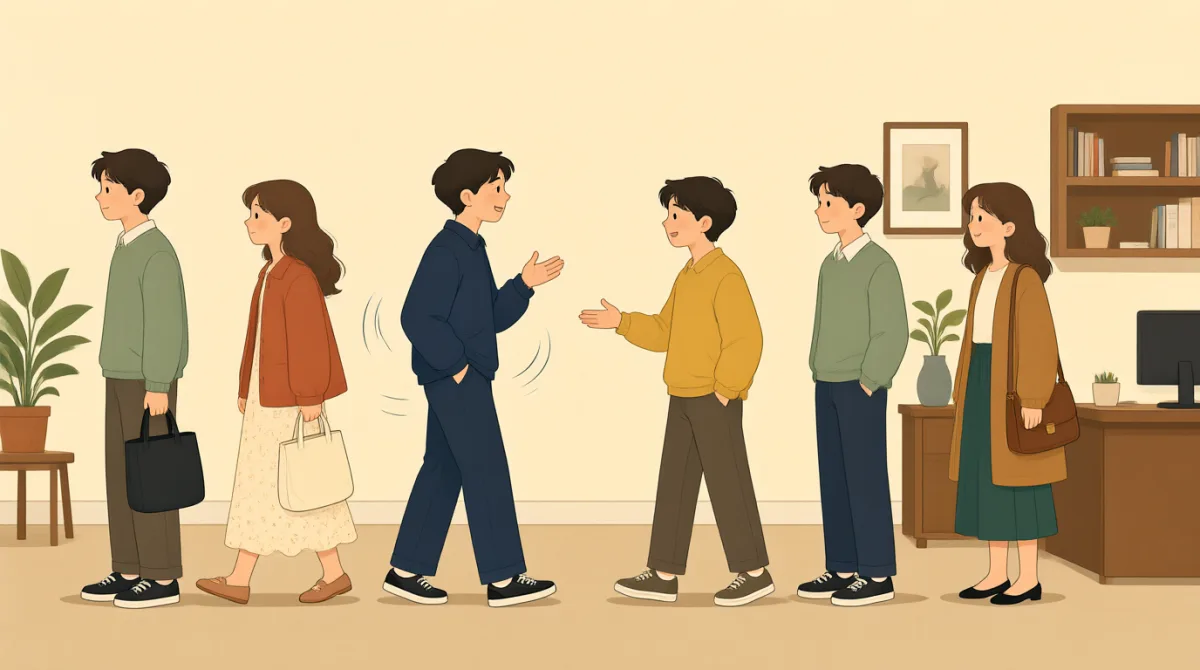

Oh, excuse me! I am so sorry. I didn't see you there.
ওহ, মাফ করবেন! আমি সত্যিই খুব দুঃখিত। আপনাকে খেয়াল করিনি।

No worries at all! It happens. This line is quite long.
একদম চিন্তা করবেন না! এমন হয়েই থাকে। লাইনটা বেশ লম্বা।
It certainly is. Are you waiting for the new exhibit too?
সত্যিই তাই। আপনিও কি নতুন প্রদর্শনীটি দেখতে অপেক্ষা করছেন?
Yes, I am! I heard great things about it.
হ্যাঁ! এটা সম্পর্কে অনেক ভালো কথা শুনেছি।
Me too. Hopefully, it's worth the wait. Again, my apologies for bumping into you.
আমিও। আশা করি, অপেক্ষা সার্থক হবে। আপনাকে ধাক্কা দেওয়ার জন্য আবারও দুঃখিত।
Seriously, no problem. Enjoy the exhibit!
সত্যিই, কোনো সমস্যা নেই। প্রদর্শনীটি উপভোগ করুন!
শব্দভান্ডার7
- excuse meমাফ করবেন
A polite way to apologize for a small mistake, like bumping into someone, or to get attention. Use it in everyday situations to show respect.
কারও সঙ্গে ধাক্কা লেগে যাওয়ার মতো ছোটখাটো ভুলের জন্য ক্ষমা চাইতে বা কারও দৃষ্টি আকর্ষণ করতে ভদ্রভাবে বলা হয় “excuse me”। সম্মান দেখাতে দৈনন্দিন পরিস্থিতিতে এটি ব্যবহার করুন।
- sorryদুঃখিত
A common word to express regret or apology for something you did wrong. It's simple and used in both formal and informal settings.
নিজের করা কোনো ভুলের জন্য অনুশোচনা বা ক্ষমা প্রকাশের একটি প্রচলিত শব্দ হলো “sorry”। এটি সহজ এবং আনুষ্ঠানিক ও অনানুষ্ঠানিক—দুই ধরনের পরিস্থিতিতেই ব্যবহৃত হয়।
- no worriesচিন্তার কিছু নেই
An informal phrase meaning 'don't worry' or 'it's okay.' It's a friendly way to accept an apology and make the other person feel better.
“no worries” একটি অনানুষ্ঠানিক অভিব্যক্তি, যার অর্থ ‘চিন্তা করবেন না’ বা ‘ঠিক আছে’। কারও ক্ষমা সহজভাবে গ্রহণ করে তাকে স্বস্তি দেওয়ার এটি বন্ধুত্বপূর্ণ উপায়।
- it happensএমন হয়েই থাকে
Means that something is common or normal and not a big deal. Use it to reassure someone after a minor accident.
“it happens” বলতে বোঝায়, কোনো ঘটনা সাধারণ বা স্বাভাবিক এবং তা নিয়ে বেশি ভাবার কিছু নেই। ছোটখাটো দুর্ঘটনার পর কাউকে আশ্বস্ত করতে এটি বলুন।
- lineসারি; অপেক্ষার লাইন
Refers to a queue of people waiting for something, like at a store or event. In American English, it's 'line'; in British, it's often 'queue.'
“line” বলতে দোকান বা অনুষ্ঠানের মতো জায়গায় কোনো কিছুর জন্য অপেক্ষা করা মানুষের সারি বোঝায়। আমেরিকান ইংরেজিতে “line” বলা হয়; ব্রিটিশ ইংরেজিতে প্রায়ই “queue” বলা হয়।
- exhibitপ্রদর্শনী
A display or show, often in a museum or gallery, featuring art, history, or new items. Useful for talking about cultural events.
“exhibit” হলো কোনো প্রদর্শন বা আয়োজন, সাধারণত জাদুঘর বা আর্ট গ্যালারিতে, যেখানে শিল্পকর্ম, ইতিহাস বা নতুন জিনিস দেখানো হয়। সাংস্কৃতিক অনুষ্ঠান নিয়ে কথা বলতে শব্দটি কাজে লাগে।
- worth the waitঅপেক্ষা সার্থক হওয়া
Means something is valuable or good enough to make the waiting time okay. Use it when discussing patience for rewarding experiences.
“worth the wait” বলতে বোঝায়, কোনো কিছু এতটাই ভালো বা মূল্যবান যে তার জন্য অপেক্ষা করাটা সার্থক। ভালো অভিজ্ঞতার আশায় অপেক্ষা করার কথা বলতে এটি ব্যবহার করুন।
গুরুত্বপূর্ণ বাক্য7
- 1
Oh, excuse me! I am so sorry. I didn't see you there.
ওহ, মাফ করবেন! আমি সত্যিই খুব দুঃখিত। আপনাকে খেয়াল করিনি।
This is a polite apology for accidentally bumping someone. It uses 'excuse me' and 'sorry' together for emphasis, and 'I didn't see you there' explains the mistake without excuses. Useful for small accidents in public to keep interactions friendly.
কারও সঙ্গে ভুল করে ধাক্কা লাগলে এটি ভদ্রভাবে ক্ষমা চাওয়ার কথা। এখানে “excuse me” ও “sorry” একসঙ্গে বলায় ক্ষমা চাওয়ার জোর বাড়ে, আর “I didn't see you there” অজুহাত না দিয়ে ভুলটি ব্যাখ্যা করে। জনসমক্ষে ছোটখাটো দুর্ঘটনায় কথাবার্তা বন্ধুত্বপূর্ণ রাখতে এটি কাজে লাগে।
- 2
No worries at all! It happens.
একদম চিন্তা করবেন না! এমন হয়েই থাকে।
A reassuring response to an apology. 'No worries at all' is emphatic and casual, while 'it happens' shows it's common. Great for small talk to diffuse awkwardness and end on a positive note.
এটি ক্ষমা চাওয়ার উত্তরে আশ্বস্ত করার কথা। “No worries at all” জোর দিয়ে অনানুষ্ঠানিকভাবে বলে যে কোনো সমস্যা নেই, আর “it happens” বোঝায় যে এমন ঘটনা স্বাভাবিক। অস্বস্তি কাটিয়ে কথাবার্তা ইতিবাচকভাবে শেষ করতে এটি বেশ কাজে লাগে।
- 3
This line is quite long.
লাইনটা বেশ লম্বা।
Describes a waiting queue. 'Quite' softens the adjective 'long' to mean 'fairly long' politely. Useful in conversations while waiting to start small talk about the shared situation.
অপেক্ষার সারি বোঝাতে এই বাক্যটি বলা হয়। “quite” শব্দটি “long” বিশেষণটিকে কিছুটা নরম করে, অর্থ দাঁড়ায় ‘বেশ লম্বা’। অপেক্ষা করার সময় একই পরিস্থিতি নিয়ে ছোটখাটো আলাপ শুরু করতে এটি কাজে লাগে।
- 4
Are you waiting for the new exhibit too?
আপনিও কি নতুন প্রদর্শনীটি দেখতে অপেক্ষা করছেন?
A question to continue the conversation. 'Too' means 'also,' and the structure is a yes/no question with present continuous tense. It's practical for building rapport in lines by finding common interests.
কথোপকথন এগিয়ে নিতে এটি একটি প্রশ্ন। “too” মানে ‘এছাড়াও’, আর বাক্যটি বর্তমান ঘটমান কাল ব্যবহার করে করা হ্যাঁ-না প্রশ্ন। লাইনে অপেক্ষা করার সময় একই আগ্রহ খুঁজে বের করে সখ্য গড়তে এটি কাজে লাগে।
- 5
I heard great things about it.
এটা সম্পর্কে অনেক ভালো কথা শুনেছি।
Expresses positive hearsay. 'Heard great things' uses past tense for reported information. Useful for showing enthusiasm and encouraging others in casual chats about events.
এই বাক্যে অন্যের কাছ থেকে শোনা ইতিবাচক তথ্য প্রকাশ করা হয়। “heard great things” অংশে অতীত কাল ব্যবহার করে শোনা তথ্যের কথা বলা হয়েছে। অনুষ্ঠান নিয়ে অনানুষ্ঠানিক আলাপে উৎসাহ প্রকাশ করতে এবং অন্যদের সঙ্গে কথা এগিয়ে নিতে এটি কাজে লাগে।
- 6
Hopefully, it's worth the wait.
আশা করি, অপেক্ষা সার্থক হবে।
Shows optimism about waiting. 'Hopefully' expresses hope, and 'it's worth the wait' is an idiom meaning the result justifies the time. Good for polite small talk when anticipating something exciting.
এই বাক্যে অপেক্ষা নিয়ে আশাবাদ প্রকাশ করা হয়। “Hopefully” আশা বোঝায়, আর “it's worth the wait” একটি বাগধারা, যার অর্থ ফলাফল অপেক্ষার সময়কে সার্থক করবে। কোনো রোমাঞ্চকর কিছুর অপেক্ষায় ভদ্রভাবে আলাপ করার সময় এটি বলতে পারেন।
- 7
Seriously, no problem. Enjoy the exhibit!
সত্যিই, কোনো সমস্যা নেই। প্রদর্শনীটি উপভোগ করুন!
Reiterates acceptance of an apology with 'seriously' for emphasis, and ends positively with a wish. 'Enjoy the exhibit' is a friendly goodbye. Use this to close conversations warmly in social settings.
এখানে “seriously” জোর দিয়ে আবারও ক্ষমা গ্রহণ করা হয়, আর শেষে শুভকামনা জানানো হয়। “Enjoy the exhibit” হলো বন্ধুত্বপূর্ণ বিদায় জানানোর কথা। সামাজিক পরিবেশে উষ্ণভাবে কথোপকথন শেষ করতে এটি ব্যবহার করুন।