Choosing the First Ride
Choisir la première attraction
The friends look at the ride map and decide where to go first. Leo wants an exciting ride, while Mia suggests starting with something gentle.
Les amis consultent le plan des attractions et décident où aller en premier. Leo veut une attraction à sensations, tandis que Mia propose de commencer par quelque chose de tranquille.
Dialogue8
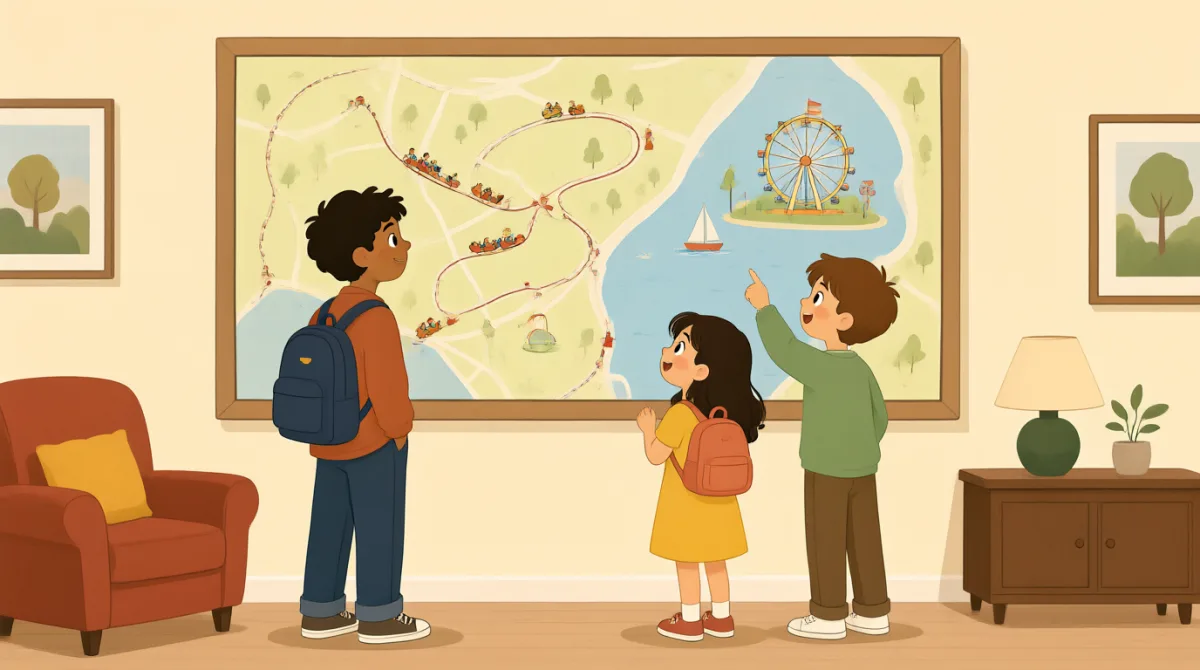

Here’s the ride map. What should we try first?
Voilà le plan des attractions. On essaie quoi en premier ?

Let’s go to the big roller coaster! It looks amazing.
Allons sur les grandes montagnes russes ! Elles ont l’air géniales.

It does, but maybe we should start with something gentle.
C’est vrai, mais on devrait peut-être commencer par quelque chose de tranquille.
Come on, Mia! We didn’t come here to take it easy.
Allez, Mia ! On n’est pas venus ici pour y aller doucement.
What about the little boat ride? It’s right over there.
Et le petit tour en bateau ? C’est juste là-bas.
Good idea. We can warm up there, then try a bigger ride.
Bonne idée. On peut se mettre dans le bain là-bas, puis essayer une attraction plus impressionnante.
Fine, but after that, we’re going straight to the coaster.
D’accord, mais après, on file directement aux montagnes russes.
Deal! Let’s follow the map and head to the boats.
Ça marche ! Suivons le plan et allons vers les bateaux.
Vocabulaire7
- ride mapplan des attractions
A ride map shows where the rides are in the amusement park. You can use it to decide where to go.
Un « ride map » (plan des attractions) indique où se trouvent les attractions dans un parc d’attractions. Il peut t’aider à décider où aller.
- try firstessayer en premier
This means to choose something to do before the other options. You can say, “What should we try first?” when making a plan.
« Try first » signifie choisir quelque chose à faire avant les autres possibilités. Tu peux dire « What should we try first? » (On essaie quoi en premier ?) quand tu fais un plan.
- something gentlequelque chose de tranquille
This means an activity that is not too fast or scary. You can use it to suggest an easy way to start.
« Something gentle » désigne une activité qui n’est ni trop rapide ni trop effrayante. Tu peux employer cette expression pour proposer de commencer en douceur.
- take it easyy aller doucement
This means to relax or do something without rushing. Here, Leo says they did not come to the park to choose an easy ride.
« Take it easy » signifie se détendre ou faire quelque chose sans se presser. Ici, Leo dit qu’ils ne sont pas venus au parc pour choisir une attraction tranquille.
- warm upse mettre dans le bain
To warm up means to start with an easy activity before doing something more difficult. You can warm up before trying a bigger ride.
« Warm up » signifie commencer par une activité facile avant d’en faire une plus difficile. On peut se mettre dans le bain avant d’essayer une attraction plus impressionnante.
- straight todirectement à
This means going directly to a place or activity. You can say, “Let’s go straight to the entrance.”
« Straight to » signifie aller directement à un endroit ou passer directement à une activité. Tu peux dire « Let’s go straight to the entrance. » (Allons directement à l’entrée.)
- head tose diriger vers
To head to a place means to go there. You can say, “Let’s head to the boats” when you are ready to leave.
« Head to » signifie aller quelque part. Tu peux dire « Let’s head to the boats » (Allons vers les bateaux) quand tu es prêt à partir.
Phrases clés7
- 1
What should we try first?
On essaie quoi en premier ?
Use this question when you need to choose the first activity or place. Replace “try” with another verb, such as “visit” or “eat.”
Utilise cette question quand tu dois choisir la première activité ou le premier endroit. Remplace « try » par un autre verbe, comme « visit » ou « eat ».
- 2
Let’s go to the big roller coaster!
Allons sur les grandes montagnes russes !
This is a friendly way to suggest an activity. You can change the place or activity after “go to.”
C’est une façon amicale de proposer une activité. Tu peux changer l’endroit ou l’activité après « go to ».
- 3
Maybe we should start with something gentle.
On devrait peut-être commencer par quelque chose de tranquille.
Use this to suggest beginning with an easy or calm activity. “Maybe we should” makes the suggestion sound polite.
Utilise cette phrase pour proposer de commencer par une activité facile ou calme. « Maybe we should » rend la suggestion plus douce.
- 4
What about the little boat ride?
Et le petit tour en bateau ?
Use “What about...?” to offer an idea or suggestion. You can use it with a place, activity, or plan.
Utilise « What about...? » pour proposer une idée ou faire une suggestion. Tu peux l’employer avec un lieu, une activité ou un projet.
- 5
We can warm up there, then try a bigger ride.
On peut se mettre dans le bain là-bas, puis essayer une attraction plus impressionnante.
This sentence explains a plan with two steps. Use “then” to show what you will do next.
Cette phrase présente un plan en deux étapes. Utilise « then » pour indiquer ce que tu feras ensuite.
- 6
After that, we’re going straight to the coaster.
Après ça, on file directement aux montagnes russes.
Use “after that” to say what you plan to do next. “We’re going” can describe a future plan.
Utilise « after that » pour dire ce que tu prévois de faire ensuite. « We’re going » peut exprimer un projet futur.
- 7
Let’s follow the map and head to the boats.
Suivons le plan et allons vers les bateaux.
This is a useful way to suggest going somewhere together. Replace “the boats” with another destination.
C’est une façon pratique de proposer d’aller quelque part ensemble. Remplace « the boats » par une autre destination.