Choosing the First Ride
पहली राइड चुनना
The friends look at the ride map and decide where to go first. Leo wants an exciting ride, while Mia suggests starting with something gentle.
दोस्त राइडों का नक्शा देखते हैं और तय करते हैं कि सबसे पहले कहाँ जाएँ। Leo रोमांचक राइड चाहता है, जबकि Mia कुछ हल्की-फुल्की राइड से शुरुआत करने का सुझाव देती है।
संवाद8
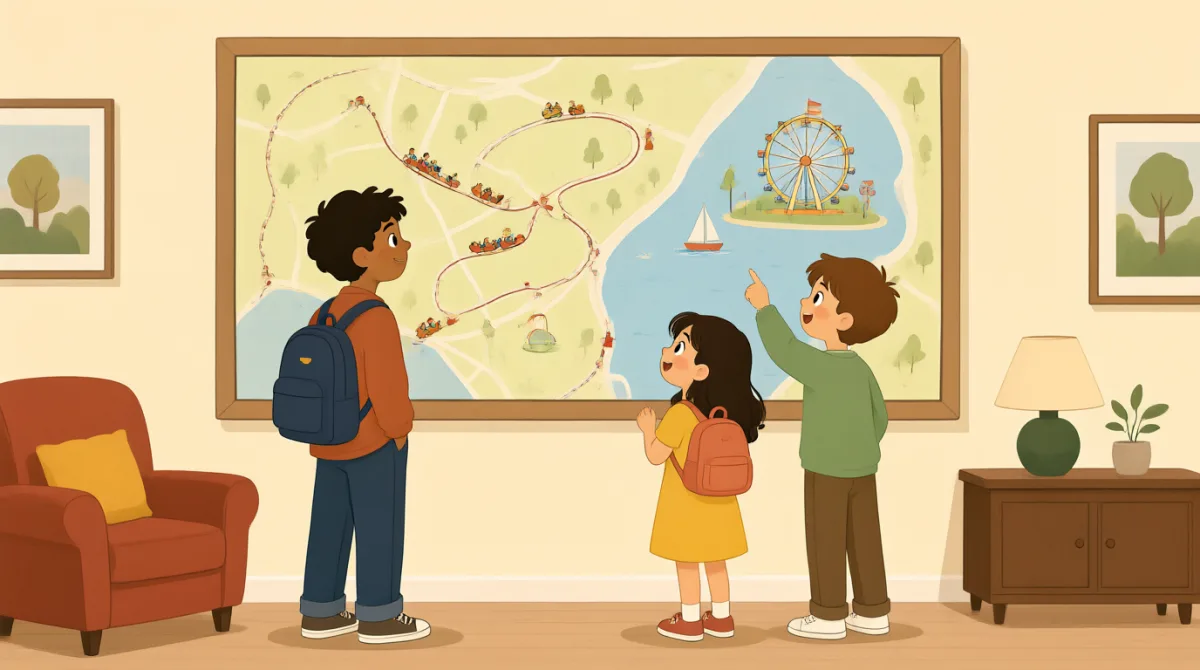

Here’s the ride map. What should we try first?
यह रहा राइडों का नक्शा। सबसे पहले कौन-सी राइड आज़माएँ?

Let’s go to the big roller coaster! It looks amazing.
चलो, बड़े रोलर कोस्टर पर चलते हैं! यह कमाल का लग रहा है।

It does, but maybe we should start with something gentle.
लग तो रहा है, लेकिन शायद हमें किसी हल्की-फुल्की राइड से शुरुआत करनी चाहिए।
Come on, Mia! We didn’t come here to take it easy.
अरे, Mia! हम यहाँ आराम से वक्त बिताने तो नहीं आए हैं।
What about the little boat ride? It’s right over there.
उस छोटी नाव वाली राइड का क्या ख़याल है? वह ठीक वहीं है।
Good idea. We can warm up there, then try a bigger ride.
अच्छा सुझाव है। वहाँ पहले थोड़ा अभ्यास कर लेते हैं, फिर कोई बड़ी राइड आज़माएँगे।
Fine, but after that, we’re going straight to the coaster.
ठीक है, लेकिन उसके बाद हम सीधे रोलर कोस्टर पर जाएँगे।
Deal! Let’s follow the map and head to the boats.
पक्का! चलो, नक्शे के मुताबिक नावों वाली राइड की ओर चलते हैं।
शब्दावली7
- ride mapराइडों का नक्शा
A ride map shows where the rides are in the amusement park. You can use it to decide where to go.
राइडों के नक्शे में मनोरंजन पार्क की सभी राइडों की जगह दिखाई जाती है। इसका इस्तेमाल करके तुम तय कर सकते हो कि कहाँ जाना है।
- try firstसबसे पहले आज़माना
This means to choose something to do before the other options. You can say, “What should we try first?” when making a plan.
इसका मतलब है, बाकी विकल्पों से पहले किसी चीज़ को करने के लिए चुनना। योजना बनाते समय तुम कह सकते हो, “What should we try first?” (सबसे पहले कौन-सी चीज़ आज़माएँ?)
- something gentleकोई हल्की-फुल्की चीज़
This means an activity that is not too fast or scary. You can use it to suggest an easy way to start.
इसका मतलब है ऐसी गतिविधि जो बहुत तेज़ या डरावनी न हो। शुरुआत आसान रखने का सुझाव देने के लिए तुम इस वाक्यांश का इस्तेमाल कर सकते हो।
- take it easyआराम से करना
This means to relax or do something without rushing. Here, Leo says they did not come to the park to choose an easy ride.
इसका मतलब है आराम करना या बिना जल्दबाज़ी के कुछ करना। यहाँ Leo कहता है कि वे पार्क में कोई आसान राइड चुनने नहीं आए हैं।
- warm upशुरुआत में थोड़ा अभ्यास करना
To warm up means to start with an easy activity before doing something more difficult. You can warm up before trying a bigger ride.
warm up का मतलब है कोई मुश्किल काम करने से पहले आसान गतिविधि से शुरुआत करना। बड़ी राइड आज़माने से पहले तुम थोड़ी आसान राइड से शुरुआत कर सकते हो।
- straight toसीधे जाना
This means going directly to a place or activity. You can say, “Let’s go straight to the entrance.”
इसका मतलब है सीधे किसी जगह या गतिविधि पर जाना। तुम कह सकते हो, “Let’s go straight to the entrance.” (चलो, सीधे प्रवेश द्वार पर चलते हैं।)
- head toकी ओर जाना
To head to a place means to go there. You can say, “Let’s head to the boats” when you are ready to leave.
किसी जगह की ओर जाने का मतलब है वहाँ जाना। जब तुम निकलने के लिए तैयार हो, तो कह सकते हो, “Let’s head to the boats” (चलो, नावों वाली राइड की ओर चलते हैं)।
मुख्य वाक्य7
- 1
What should we try first?
सबसे पहले कौन-सी चीज़ आज़माएँ?
Use this question when you need to choose the first activity or place. Replace “try” with another verb, such as “visit” or “eat.”
जब तुम्हें पहली गतिविधि या जगह चुननी हो, तब यह सवाल पूछो। “try” की जगह कोई दूसरा क्रिया-शब्द लगा सकते हो, जैसे “visit” या “eat”।
- 2
Let’s go to the big roller coaster!
चलो, बड़े रोलर कोस्टर पर चलते हैं!
This is a friendly way to suggest an activity. You can change the place or activity after “go to.”
किसी गतिविधि का सुझाव देने का यह एक दोस्ताना तरीका है। “go to” के बाद जगह या गतिविधि बदलकर अपनी बात कह सकते हो।
- 3
Maybe we should start with something gentle.
शायद हमें किसी हल्की-फुल्की चीज़ से शुरुआत करनी चाहिए।
Use this to suggest beginning with an easy or calm activity. “Maybe we should” makes the suggestion sound polite.
आसान या शांत गतिविधि से शुरुआत करने का सुझाव देने के लिए यह वाक्य बोलो। “Maybe we should” कहने से सुझाव थोड़ा विनम्र लगता है।
- 4
What about the little boat ride?
उस छोटी नाव वाली राइड का क्या ख़याल है?
Use “What about...?” to offer an idea or suggestion. You can use it with a place, activity, or plan.
किसी विचार या सुझाव को सामने रखने के लिए “What about...?” का इस्तेमाल करो। इसके बाद किसी जगह, गतिविधि या योजना का नाम ले सकते हो।
- 5
We can warm up there, then try a bigger ride.
हम वहाँ पहले थोड़ा अभ्यास कर सकते हैं, फिर कोई बड़ी राइड आज़मा सकते हैं।
This sentence explains a plan with two steps. Use “then” to show what you will do next.
इस वाक्य में दो चरणों वाली योजना बताई गई है। आगे क्या करोगे, यह दिखाने के लिए “then” का इस्तेमाल करो।
- 6
After that, we’re going straight to the coaster.
उसके बाद हम सीधे रोलर कोस्टर पर जाएँगे।
Use “after that” to say what you plan to do next. “We’re going” can describe a future plan.
आगे क्या करने का इरादा है, यह बताने के लिए “after that” का इस्तेमाल करो। भविष्य की योजना बताने के लिए “We’re going” भी कह सकते हो।
- 7
Let’s follow the map and head to the boats.
चलो, नक्शे के मुताबिक चलते हैं और नावों वाली राइड की ओर जाते हैं।
This is a useful way to suggest going somewhere together. Replace “the boats” with another destination.
किसी के साथ कहीं जाने का सुझाव देने का यह एक उपयोगी तरीका है। “the boats” की जगह अपनी मंज़िल का नाम रख सकते हो।