Choosing the First Ride
Wybór pierwszej atrakcji
The friends look at the ride map and decide where to go first. Leo wants an exciting ride, while Mia suggests starting with something gentle.
Przyjaciele oglądają mapę atrakcji i decydują, dokąd najpierw się wybrać. Leo chce skorzystać z ekscytującej atrakcji, a Mia proponuje zacząć od czegoś spokojnego.
Dialog8
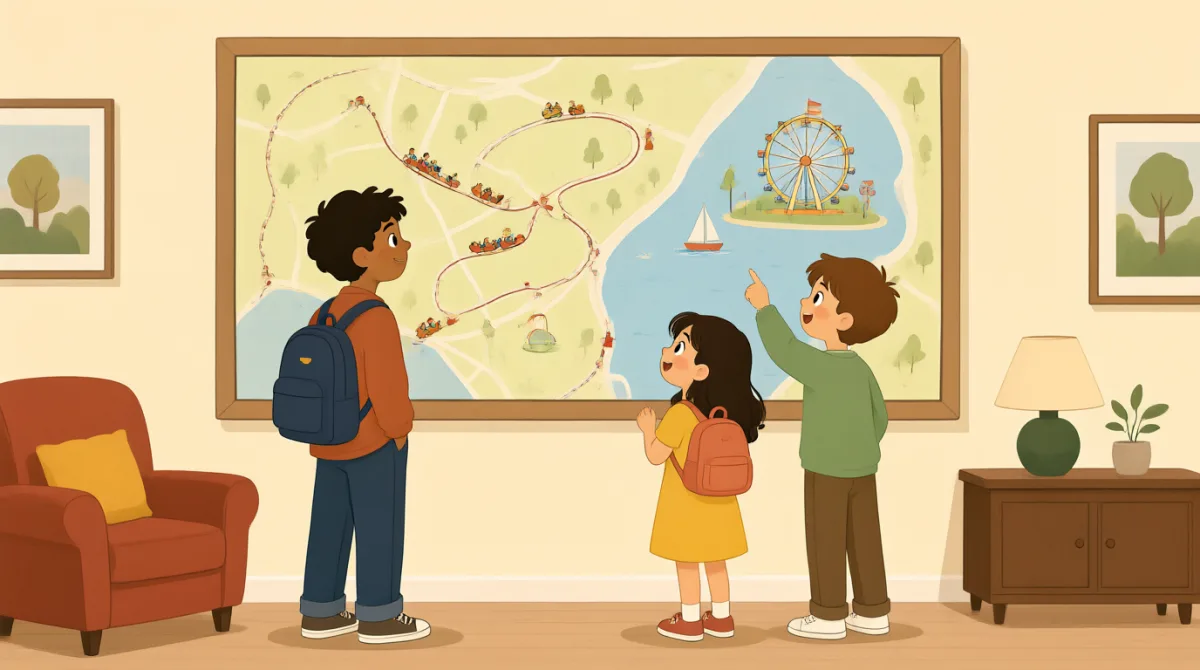

Here’s the ride map. What should we try first?
Oto mapa atrakcji. Z czego powinniśmy skorzystać najpierw?

Let’s go to the big roller coaster! It looks amazing.
Chodźmy na tę wielką kolejkę górską! Wygląda niesamowicie.

It does, but maybe we should start with something gentle.
To prawda, ale może powinniśmy zacząć od czegoś spokojnego.
Come on, Mia! We didn’t come here to take it easy.
No chodź, Mia! Nie przyjechaliśmy tutaj, żeby się oszczędzać.
What about the little boat ride? It’s right over there.
A co powiecie na tę małą przejażdżkę łódką? Jest właśnie tam.
Good idea. We can warm up there, then try a bigger ride.
Dobry pomysł. Możemy się tam rozgrzać, a potem spróbować większej atrakcji.
Fine, but after that, we’re going straight to the coaster.
Dobra, ale potem idziemy prosto na kolejkę.
Deal! Let’s follow the map and head to the boats.
Umowa stoi! Sprawdźmy mapę i chodźmy do łódek.
Słownictwo7
- ride mapmapa atrakcji
A ride map shows where the rides are in the amusement park. You can use it to decide where to go.
Mapa atrakcji pokazuje, gdzie znajdują się atrakcje w parku rozrywki. Możesz jej użyć, żeby zdecydować, dokąd się wybrać.
- try firstspróbować najpierw
This means to choose something to do before the other options. You can say, “What should we try first?” when making a plan.
To znaczy wybrać coś do zrobienia przed innymi możliwościami. Możesz powiedzieć „What should we try first?”, kiedy ustalacie plan.
- something gentlecoś spokojnego
This means an activity that is not too fast or scary. You can use it to suggest an easy way to start.
Oznacza to aktywność, która nie jest zbyt szybka ani straszna. Możesz użyć tego wyrażenia, żeby zaproponować łatwy sposób na rozpoczęcie.
- take it easyspokojnie do tego podejść
This means to relax or do something without rushing. Here, Leo says they did not come to the park to choose an easy ride.
To znaczy odpocząć albo coś zrobić bez pośpiechu. Tutaj Leo mówi, że nie przyjechali do parku, żeby wybrać spokojną atrakcję.
- warm uprozgrzać się
To warm up means to start with an easy activity before doing something more difficult. You can warm up before trying a bigger ride.
To warm up oznacza zacząć od łatwej aktywności przed zrobieniem czegoś trudniejszego. Możesz się rozgrzać przed wypróbowaniem większej atrakcji.
- straight toprosto do
This means going directly to a place or activity. You can say, “Let’s go straight to the entrance.”
Oznacza to udać się bezpośrednio do jakiegoś miejsca albo przejść od razu do jakiejś aktywności. Możesz powiedzieć „Let’s go straight to the entrance.”
- head toudać się do
To head to a place means to go there. You can say, “Let’s head to the boats” when you are ready to leave.
To head to a place znaczy udać się do tego miejsca. Możesz powiedzieć „Let’s head to the boats”, kiedy jesteście gotowi ruszyć.
Kluczowe zdania7
- 1
What should we try first?
Z czego powinniśmy skorzystać najpierw?
Use this question when you need to choose the first activity or place. Replace “try” with another verb, such as “visit” or “eat.”
Użyj tego pytania, kiedy musisz wybrać pierwszą aktywność albo miejsce. Zastąp „try” innym czasownikiem, na przykład „visit” albo „eat”.
- 2
Let’s go to the big roller coaster!
Chodźmy na tę wielką kolejkę górską!
This is a friendly way to suggest an activity. You can change the place or activity after “go to.”
To przyjazny sposób na zaproponowanie jakiejś aktywności. Po „go to” możesz zmienić miejsce albo aktywność.
- 3
Maybe we should start with something gentle.
Może powinniśmy zacząć od czegoś spokojnego.
Use this to suggest beginning with an easy or calm activity. “Maybe we should” makes the suggestion sound polite.
Użyj tego, żeby zaproponować rozpoczęcie od łatwej albo spokojnej aktywności. „Maybe we should” sprawia, że sugestia brzmi uprzejmie.
- 4
What about the little boat ride?
A co powiecie na tę małą przejażdżkę łódką?
Use “What about...?” to offer an idea or suggestion. You can use it with a place, activity, or plan.
Użyj „What about...?”, żeby przedstawić pomysł albo sugestię. Możesz użyć tego wyrażenia z miejscem, aktywnością albo planem.
- 5
We can warm up there, then try a bigger ride.
Możemy się tam rozgrzać, a potem spróbować większej atrakcji.
This sentence explains a plan with two steps. Use “then” to show what you will do next.
To zdanie wyjaśnia plan składający się z dwóch etapów. Użyj „then”, żeby pokazać, co zrobicie później.
- 6
After that, we’re going straight to the coaster.
Potem idziemy prosto na kolejkę.
Use “after that” to say what you plan to do next. “We’re going” can describe a future plan.
Użyj „after that”, żeby powiedzieć, co planujesz zrobić później. „We’re going” może opisywać plan na przyszłość.
- 7
Let’s follow the map and head to the boats.
Sprawdźmy mapę i chodźmy do łódek.
This is a useful way to suggest going somewhere together. Replace “the boats” with another destination.
To przydatny sposób, żeby zaproponować wspólne udanie się w jakieś miejsce. Zastąp „the boats” innym celem podróży.