Picking Up a Friend's Child
Récupérer l’enfant d’une amie
Mia asks Emma to take her child home, too. Emma checks the child's name before they leave.
Mia demande à Emma de ramener aussi son enfant à la maison. Avant de partir, Emma vérifie le prénom de l’enfant.
Dialogue6
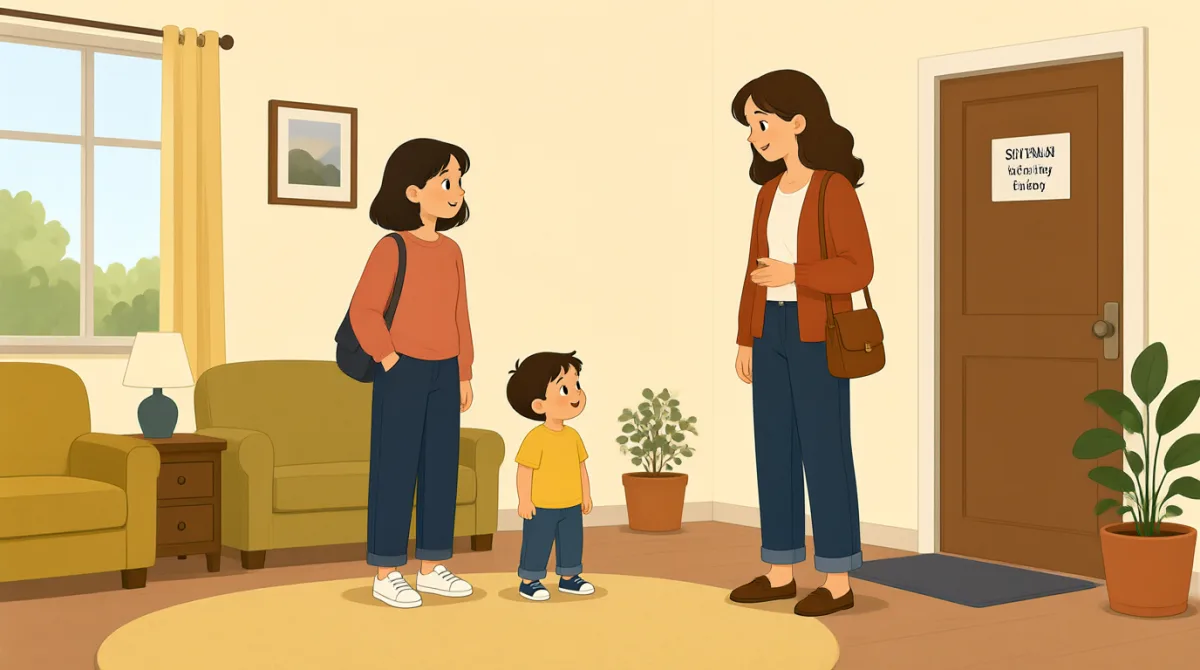

Emma, can you take my child home, too?
Emma, tu peux aussi ramener mon enfant à la maison ?

Sure. What is your child's name?
Bien sûr. Comment s’appelle ton enfant ?
Her name is Lily. She is by the gate.
Elle s’appelle Lily. Elle est près du portail.
Okay. Is she wearing a blue coat?
D’accord. Elle a un manteau bleu ?
Yes, that's her. Thank you so much.
Oui, c’est elle. Merci beaucoup.
You're welcome. Let's go find her.
Je t’en prie. Allons la chercher.
Vocabulaire8
- take my child homeramener mon enfant à la maison
This means to bring my child to their home. Use “take [someone] home” when you offer to bring someone home.
Cela signifie ramener mon enfant chez lui. Utilise “take [someone] home” quand tu proposes de raccompagner quelqu’un chez lui.
- Sure.Bien sûr.
This is a friendly way to say yes. You can use it when someone asks you for help.
C’est une façon amicale de dire oui. Tu peux l’utiliser quand quelqu’un te demande de l’aide.
- What is your child's name?Comment s’appelle ton enfant ?
Use this question to ask for a child's name. You can also ask, “What is his name?” or “What is her name?”
Utilise cette question pour demander le prénom d’un enfant. Tu peux aussi demander “What is his name?” ou “What is her name?”.
- by the gateprès du portail
This means near the gate. Use “by” to say that a person or thing is next to a place.
Cela signifie à proximité du portail. Utilise “by” pour dire qu’une personne ou une chose se trouve à côté d’un endroit.
- wearing a blue coatporter un manteau bleu
This describes clothes someone has on. You can replace “a blue coat” with another item of clothing.
Cette expression décrit les vêtements que quelqu’un porte. Tu peux remplacer “a blue coat” par un autre vêtement.
- that's herc’est elle
This means the person you see is the girl you are talking about. Use “that's him” for a boy.
Cela signifie que la personne que tu vois est la fille dont vous parlez. Pour un garçon, utilise “that's him”.
- Thank you so much.Merci beaucoup.
This is a warm way to say thank you. Use it when someone does something helpful for you.
C’est une façon chaleureuse de remercier quelqu’un. Utilise cette expression quand quelqu’un t’aide.
- Let's go find her.Allons la chercher.
This means “Let us go and look for her.” Use “Let's go find [someone]” to suggest looking for a person together.
Cela signifie “Allons la chercher”. Utilise “Let's go find [someone]” pour proposer de chercher quelqu’un ensemble.
Phrases clés8
- 1
Emma, can you take my child home, too?
Emma, tu peux aussi ramener mon enfant à la maison ?
Use “Can you…?” to make a polite request. You can replace “take my child home” with another helpful action.
Utilise “Can you…?” pour faire une demande polie. Tu peux remplacer “take my child home” par une autre action utile.
- 2
Sure.
Bien sûr.
This is a simple, friendly way to agree. You can use it to accept a request or offer.
C’est une façon simple et amicale d’accepter. Tu peux l’utiliser pour répondre favorablement à une demande ou à une proposition.
- 3
What is your child's name?
Comment s’appelle ton enfant ?
Use this question to ask someone for their child's name. You can change “your child” to “your son” or “your daughter.”
Utilise cette question pour demander à quelqu’un le prénom de son enfant. Tu peux remplacer “your child” par “your son” ou “your daughter.”
- 4
Her name is Lily.
Elle s’appelle Lily.
Use “Her name is…” to tell someone a girl's name. For a boy, say “His name is…”.
Utilise “Her name is…” pour donner le prénom d’une fille. Pour un garçon, dis “His name is…”.
- 5
She is by the gate.
Elle est près du portail.
This tells someone where a girl is. Replace “by the gate” with another place to give a different location.
Cette phrase indique où se trouve une fille. Remplace “by the gate” par un autre endroit pour donner une autre indication.
- 6
Is she wearing a blue coat?
Elle a un manteau bleu ?
Use this yes-or-no question to check what someone is wearing. You can replace “a blue coat” with another clothing item.
Utilise cette question fermée pour vérifier ce que porte quelqu’un. Tu peux remplacer “a blue coat” par un autre vêtement.
- 7
Yes, that's her.
Oui, c’est elle.
Use this to confirm that a girl is the person you mean. For a boy, say “Yes, that's him.”
Utilise cette phrase pour confirmer que la fille est bien la personne dont tu parles. Pour un garçon, dis “Yes, that's him.”
- 8
Let's go find her.
Allons la chercher.
Use “Let's…” to suggest doing something together. Replace “find her” with another action, such as “go home.”
Utilise “Let's…” pour proposer de faire quelque chose ensemble. Remplace “find her” par une autre action, comme “go home.”