Picking Up a Friend's Child
友達の子どもを迎えに行く
Mia asks Emma to take her child home, too. Emma checks the child's name before they leave.
ミアがエマに、自分の子どもも一緒に家まで連れて帰ってほしいと頼みます。出発する前に、エマは子どもの名前を確認します。
会話6
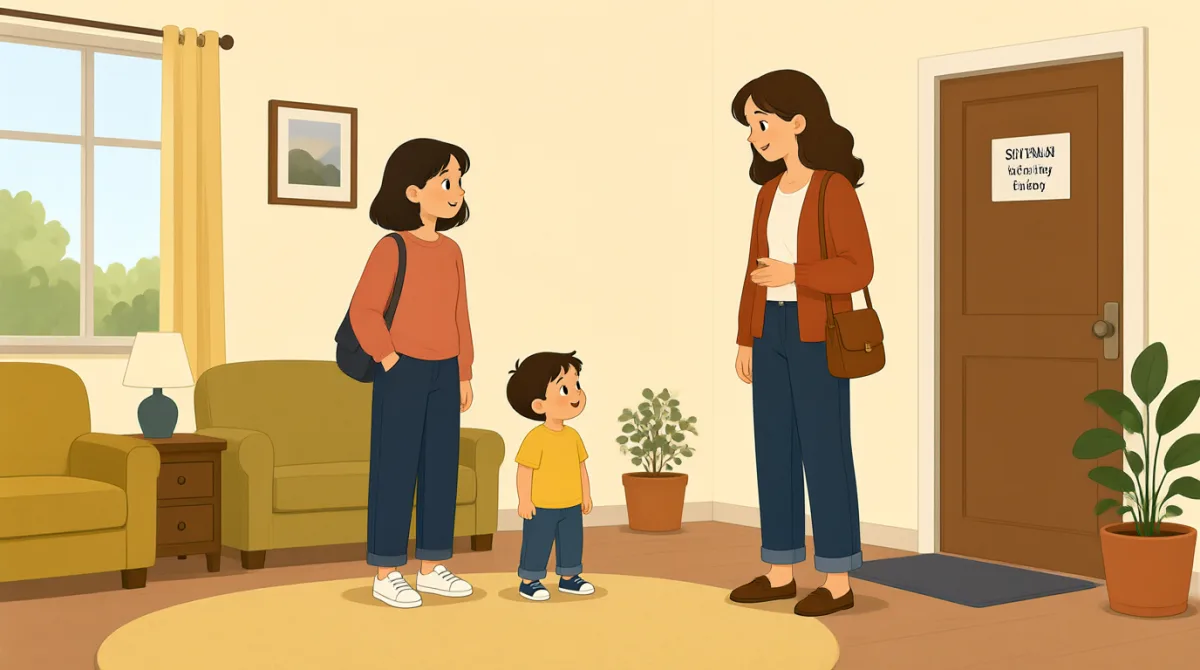

Emma, can you take my child home, too?
エマ、うちの子も一緒に家まで連れて帰ってくれる?

Sure. What is your child's name?
もちろん。子どもの名前は何ていうの?
Her name is Lily. She is by the gate.
リリーだよ。門のそばにいるよ。
Okay. Is she wearing a blue coat?
わかった。青いコートを着てる子?
Yes, that's her. Thank you so much.
そう、その子だよ。本当にありがとう。
You're welcome. Let's go find her.
どういたしまして。あの子を探しに行こう。
語彙8
- take my child homeうちの子を家まで連れて帰る
This means to bring my child to their home. Use “take [someone] home” when you offer to bring someone home.
これは「うちの子を家まで連れて行く」という意味です。誰かを家まで送ると申し出るときは、「take [someone] home」を使います。
- Sure.もちろん。
This is a friendly way to say yes. You can use it when someone asks you for help.
これは、親しみを込めて「いいよ」と答える言い方です。誰かに助けを頼まれたときに使えます。
- What is your child's name?子どもの名前は何ですか?
Use this question to ask for a child's name. You can also ask, “What is his name?” or “What is her name?”
子どもの名前を尋ねるときに使う質問です。「What is his name?」や「What is her name?」と尋ねることもできます。
- by the gate門のそばに
This means near the gate. Use “by” to say that a person or thing is next to a place.
これは「門の近くに」という意味です。「by」は、人や物がある場所のすぐそばにあることを表します。
- wearing a blue coat青いコートを着ている
This describes clothes someone has on. You can replace “a blue coat” with another item of clothing.
これは、誰かが身につけている服を説明する表現です。「a blue coat」の部分を、別の服の名前に変えられます。
- that's herあの子だよ
This means the person you see is the girl you are talking about. Use “that's him” for a boy.
これは、見えている人が話題にしている女の子だという意味です。男の子なら「that's him」と言います。
- Thank you so much.本当にありがとう。
This is a warm way to say thank you. Use it when someone does something helpful for you.
これは、感謝の気持ちを温かく伝える言い方です。誰かが助けてくれたときに使います。
- Let's go find her.あの子を探しに行こう。
This means “Let us go and look for her.” Use “Let's go find [someone]” to suggest looking for a person together.
これは「彼女を探しに行こう」という意味です。「Let's go find [someone]」を使うと、一緒に人を探そうと提案できます。
重要な文8
- 1
Emma, can you take my child home, too?
エマ、うちの子も一緒に家まで連れて帰ってくれる?
Use “Can you…?” to make a polite request. You can replace “take my child home” with another helpful action.
「Can you…?」を使うと、丁寧に何かを頼めます。「take my child home」の部分を、別の手助けに置き換えることもできます。
- 2
Sure.
もちろん。
This is a simple, friendly way to agree. You can use it to accept a request or offer.
これは、気軽に相手の申し出や頼みを引き受ける言い方です。
- 3
What is your child's name?
子どもの名前は何ていうの?
Use this question to ask someone for their child's name. You can change “your child” to “your son” or “your daughter.”
相手の子どもの名前を尋ねる質問です。「your child」を「your son」や「your daughter」に変えることもできます。
- 4
Her name is Lily.
名前はリリーだよ。
Use “Her name is…” to tell someone a girl's name. For a boy, say “His name is…”.
女の子の名前を伝えるときは「Her name is…」を使います。男の子の場合は「His name is…」と言います。
- 5
She is by the gate.
門のそばにいるよ。
This tells someone where a girl is. Replace “by the gate” with another place to give a different location.
女の子がどこにいるかを伝える表現です。場所を変えて伝えるときは、「by the gate」の部分を別の場所に置き換えます。
- 6
Is she wearing a blue coat?
青いコートを着てる子?
Use this yes-or-no question to check what someone is wearing. You can replace “a blue coat” with another clothing item.
相手が何を着ているか確認するときに使う、はい・いいえで答えられる質問です。「a blue coat」を別の服に置き換えられます。
- 7
Yes, that's her.
そう、その子だよ。
Use this to confirm that a girl is the person you mean. For a boy, say “Yes, that's him.”
女の子が探している相手だと確認するときに使います。男の子の場合は「Yes, that's him.」と言います。
- 8
Let's go find her.
あの子を探しに行こう。
Use “Let's…” to suggest doing something together. Replace “find her” with another action, such as “go home.”
「Let's…」を使うと、一緒に何かをしようと提案できます。「find her」を「go home」などの別の行動に置き換えられます。