Picking Up a Friend's Child
Bir Arkadaşının Çocuğunu Okuldan Alma
Mia asks Emma to take her child home, too. Emma checks the child's name before they leave.
Mia, Emma’dan kendi çocuğunu da eve götürmesini ister. Emma, yola çıkmadan önce çocuğun adını teyit eder.
Diyalog6
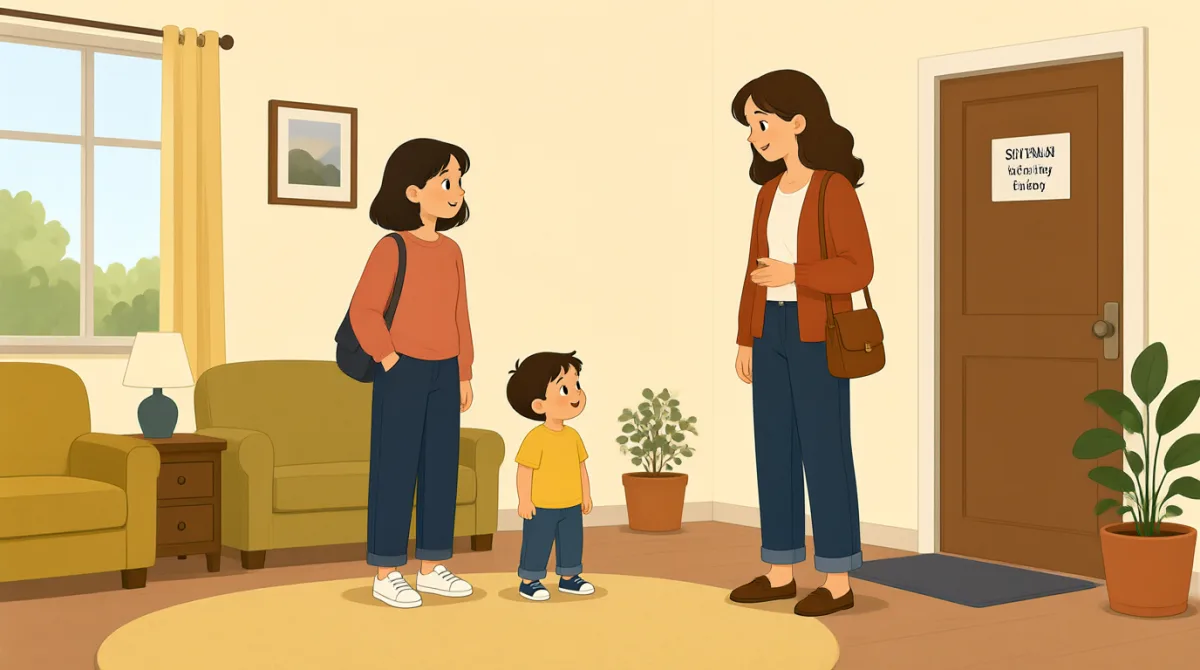

Emma, can you take my child home, too?
Emma, benim çocuğumu da eve götürebilir misin?

Sure. What is your child's name?
Tabii. Çocuğunun adı ne?
Her name is Lily. She is by the gate.
Adı Lily. Kapının yanında.
Okay. Is she wearing a blue coat?
Tamam. Üzerinde mavi bir mont mu var?
Yes, that's her. Thank you so much.
Evet, o. Çok teşekkür ederim.
You're welcome. Let's go find her.
Rica ederim. Hadi onu bulmaya gidelim.
Kelime Bilgisi8
- take my child homeçocuğumu eve götürmek
This means to bring my child to their home. Use “take [someone] home” when you offer to bring someone home.
Bu, çocuğumu evine götürmek anlamına gelir. Birini evine götürmeyi teklif ederken “take [someone] home” kalıbını kullan.
- Sure.Tabii.
This is a friendly way to say yes. You can use it when someone asks you for help.
Bu, evet demenin samimi bir yoludur. Biri senden yardım istediğinde kullanabilirsin.
- What is your child's name?Çocuğunun adı ne?
Use this question to ask for a child's name. You can also ask, “What is his name?” or “What is her name?”
Bir çocuğun adını sormak için bu soruyu kullan. “What is his name?” ya da “What is her name?” diye de sorabilirsin.
- by the gatekapının yanında
This means near the gate. Use “by” to say that a person or thing is next to a place.
Bu, kapıya yakın demektir. Bir kişinin ya da eşyanın bir yerin yanında olduğunu belirtmek için “by” kullanılır.
- wearing a blue coatüzerinde mavi bir mont var
This describes clothes someone has on. You can replace “a blue coat” with another item of clothing.
Bu ifade, birinin üzerindeki kıyafeti anlatır. “a blue coat” yerine başka bir giysi adı kullanabilirsin.
- that's hero
This means the person you see is the girl you are talking about. Use “that's him” for a boy.
Bu, gördüğün kişinin sözünü ettiğin kız olduğunu belirtir. Bir erkek çocuk için “that's him” kullanılır.
- Thank you so much.Çok teşekkür ederim.
This is a warm way to say thank you. Use it when someone does something helpful for you.
Bu, içten bir teşekkür etme şeklidir. Biri sana yardım ettiğinde kullanabilirsin.
- Let's go find her.Hadi onu bulmaya gidelim.
This means “Let us go and look for her.” Use “Let's go find [someone]” to suggest looking for a person together.
Bu, “Hadi gidip onu arayalım.” demektir. Birini birlikte aramayı önermek için “Let's go find [someone]” kalıbını kullan.
Önemli Cümleler8
- 1
Emma, can you take my child home, too?
Emma, benim çocuğumu da eve götürebilir misin?
Use “Can you…?” to make a polite request. You can replace “take my child home” with another helpful action.
Kibarca bir şey rica etmek için “Can you…?” kalıbını kullan. “take my child home” yerine başka bir yardım teklifini koyabilirsin.
- 2
Sure.
Tabii.
This is a simple, friendly way to agree. You can use it to accept a request or offer.
Bu, kabul etmenin kısa ve samimi bir yoludur. Bir isteği ya da teklifi kabul ederken kullanabilirsin.
- 3
What is your child's name?
Çocuğunun adı ne?
Use this question to ask someone for their child's name. You can change “your child” to “your son” or “your daughter.”
Birine çocuğunun adını sormak için bu soruyu kullan. “your child” yerine “your son” ya da “your daughter” diyebilirsin.
- 4
Her name is Lily.
Onun adı Lily.
Use “Her name is…” to tell someone a girl's name. For a boy, say “His name is…”.
Bir kızın adını söylemek için “Her name is…” kalıbını kullan. Erkek çocuk için “His name is…” dersin.
- 5
She is by the gate.
Kapının yanında.
This tells someone where a girl is. Replace “by the gate” with another place to give a different location.
Bu cümle, bir kızın nerede olduğunu söyler. Farklı bir yer belirtmek için “by the gate” yerine başka bir yer adı kullanabilirsin.
- 6
Is she wearing a blue coat?
Üzerinde mavi bir mont mu var?
Use this yes-or-no question to check what someone is wearing. You can replace “a blue coat” with another clothing item.
Birinin ne giydiğini kontrol etmek için bu evet-hayır sorusunu kullan. “a blue coat” yerine başka bir giysi adı koyabilirsin.
- 7
Yes, that's her.
Evet, o.
Use this to confirm that a girl is the person you mean. For a boy, say “Yes, that's him.”
Bir kızın sözünü ettiğin kişi olduğunu doğrulamak için bu ifadeyi kullan. Erkek çocuk için “Yes, that's him.” dersin.
- 8
Let's go find her.
Hadi onu bulmaya gidelim.
Use “Let's…” to suggest doing something together. Replace “find her” with another action, such as “go home.”
Bir şeyi birlikte yapmayı önermek için “Let's…” kalıbını kullan. “find her” yerine “go home” gibi başka bir eylem koyabilirsin.