Picking Up a Friend's Child
दोस्त के बच्चे को लेने जाना
Mia asks Emma to take her child home, too. Emma checks the child's name before they leave.
मिया एमा से अपने बच्चे को भी घर ले जाने के लिए कहती है। जाने से पहले एमा बच्चे का नाम पक्का करती है।
संवाद6
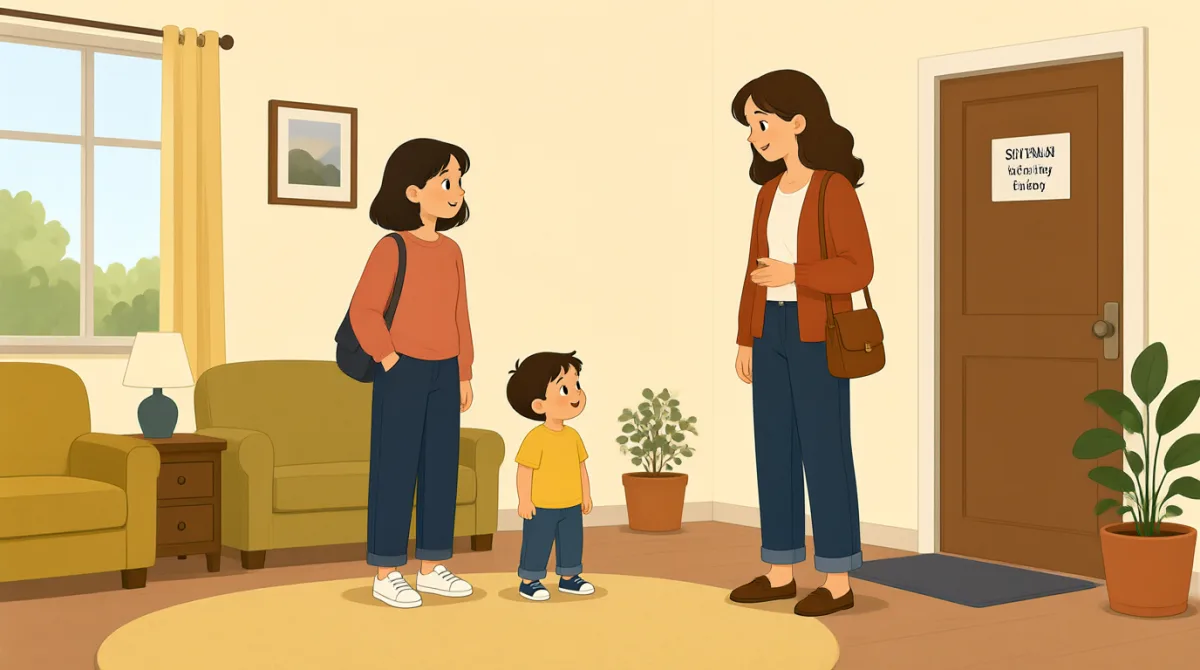

Emma, can you take my child home, too?
एमा, क्या तुम मेरे बच्चे को भी घर ले जा सकती हो?

Sure. What is your child's name?
ज़रूर। तुम्हारे बच्चे का नाम क्या है?
Her name is Lily. She is by the gate.
उसका नाम लिली है। वह फाटक के पास है।
Okay. Is she wearing a blue coat?
ठीक है। क्या उसने नीला कोट पहना है?
Yes, that's her. Thank you so much.
हाँ, वही है। बहुत-बहुत शुक्रिया।
You're welcome. Let's go find her.
कोई बात नहीं। चलो, उसे ढूँढ़ते हैं।
शब्दावली8
- take my child homeमेरे बच्चे को घर ले जाना
This means to bring my child to their home. Use “take [someone] home” when you offer to bring someone home.
इसका मतलब है मेरे बच्चे को उसके घर पहुँचाना। किसी को घर पहुँचाने की पेशकश करते समय “take [someone] home” का इस्तेमाल करें।
- Sure.ज़रूर।
This is a friendly way to say yes. You can use it when someone asks you for help.
हाँ कहने का यह एक दोस्ताना तरीका है। कोई आपसे मदद माँगे, तो आप इसका इस्तेमाल कर सकते हैं।
- What is your child's name?तुम्हारे बच्चे का नाम क्या है?
Use this question to ask for a child's name. You can also ask, “What is his name?” or “What is her name?”
बच्चे का नाम पूछने के लिए यह सवाल पूछें। आप “What is his name?” या “What is her name?” भी पूछ सकते हैं।
- by the gateफाटक के पास
This means near the gate. Use “by” to say that a person or thing is next to a place.
इसका मतलब है फाटक के नज़दीक। किसी व्यक्ति या चीज़ के किसी जगह के पास होने की बात बताने के लिए “by” का इस्तेमाल करें।
- wearing a blue coatनीला कोट पहने हुए
This describes clothes someone has on. You can replace “a blue coat” with another item of clothing.
यह बताता है कि किसी ने कौन-से कपड़े पहने हैं। आप “a blue coat” की जगह कपड़ों की कोई दूसरी चीज़ रख सकते हैं।
- that's herवही लड़की है
This means the person you see is the girl you are talking about. Use “that's him” for a boy.
इसका मतलब है कि जिसे आप देख रहे हैं, वही लड़की है जिसके बारे में आप बात कर रहे हैं। लड़के के लिए “that's him” कहें।
- Thank you so much.बहुत-बहुत शुक्रिया।
This is a warm way to say thank you. Use it when someone does something helpful for you.
शुक्रिया कहने का यह एक गर्मजोशी भरा तरीका है। जब कोई आपकी मदद के लिए कुछ करे, तो इसका इस्तेमाल करें।
- Let's go find her.चलो, उसे ढूँढ़ते हैं।
This means “Let us go and look for her.” Use “Let's go find [someone]” to suggest looking for a person together.
इसका मतलब है “चलो, उसे ढूँढ़ने चलते हैं।” किसी को साथ मिलकर ढूँढ़ने का सुझाव देने के लिए “Let's go find [someone]” का इस्तेमाल करें।
मुख्य वाक्य8
- 1
Emma, can you take my child home, too?
एमा, क्या तुम मेरे बच्चे को भी घर ले जा सकती हो?
Use “Can you…?” to make a polite request. You can replace “take my child home” with another helpful action.
विनम्रता से अनुरोध करने के लिए “Can you…?” का इस्तेमाल करें। आप “take my child home” की जगह मदद के लिए कोई दूसरी कार्रवाई रख सकते हैं।
- 2
Sure.
ज़रूर।
This is a simple, friendly way to agree. You can use it to accept a request or offer.
सहमत होने का यह एक आसान और दोस्ताना तरीका है। किसी अनुरोध या प्रस्ताव को स्वीकार करने के लिए इसका इस्तेमाल करें।
- 3
What is your child's name?
तुम्हारे बच्चे का नाम क्या है?
Use this question to ask someone for their child's name. You can change “your child” to “your son” or “your daughter.”
किसी से उसके बच्चे का नाम पूछने के लिए यह सवाल पूछें। आप “your child” की जगह “your son” या “your daughter” कह सकते हैं।
- 4
Her name is Lily.
उसका नाम लिली है।
Use “Her name is…” to tell someone a girl's name. For a boy, say “His name is…”.
किसी को लड़की का नाम बताने के लिए “Her name is…” का इस्तेमाल करें। लड़के के लिए “His name is…” कहें।
- 5
She is by the gate.
वह फाटक के पास है।
This tells someone where a girl is. Replace “by the gate” with another place to give a different location.
इससे किसी को पता चलता है कि लड़की कहाँ है। दूसरी जगह बताने के लिए “by the gate” की जगह कोई और जगह रखें।
- 6
Is she wearing a blue coat?
क्या उसने नीला कोट पहना है?
Use this yes-or-no question to check what someone is wearing. You can replace “a blue coat” with another clothing item.
किसी ने क्या पहना है, यह जानने के लिए हाँ-या-नहीं में जवाब वाला यह सवाल पूछें। आप “a blue coat” की जगह कपड़ों की कोई दूसरी चीज़ रख सकते हैं।
- 7
Yes, that's her.
हाँ, वही है।
Use this to confirm that a girl is the person you mean. For a boy, say “Yes, that's him.”
यह बताने के लिए इसका इस्तेमाल करें कि लड़की वही व्यक्ति है जिसके बारे में आप कह रहे हैं। लड़के के लिए “Yes, that's him.” कहें।
- 8
Let's go find her.
चलो, उसे ढूँढ़ते हैं।
Use “Let's…” to suggest doing something together. Replace “find her” with another action, such as “go home.”
साथ मिलकर कुछ करने का सुझाव देने के लिए “Let's…” का इस्तेमाल करें। “find her” की जगह कोई दूसरी कार्रवाई रखें, जैसे “go home.”