Picking Up a Friend's Child
친구 아이 데려다주기
Mia asks Emma to take her child home, too. Emma checks the child's name before they leave.
미아가 에마에게 자기 아이도 집에 데려다 달라고 부탁해요. 떠나기 전에 에마가 아이의 이름을 확인해요.
대화6
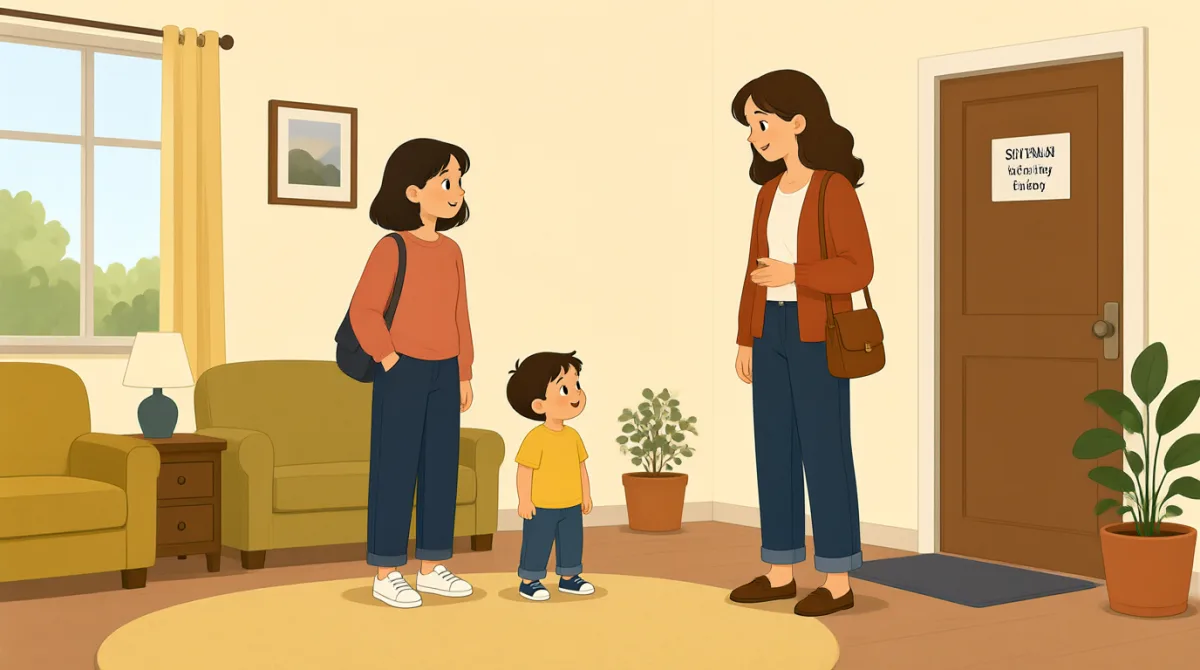

Emma, can you take my child home, too?
에마, 우리 애도 집에 데려다줄 수 있어?

Sure. What is your child's name?
그럼. 네 아이 이름이 뭐야?
Her name is Lily. She is by the gate.
릴리야. gate 옆에 있어.
Okay. Is she wearing a blue coat?
알았어. 파란 코트 입은 애야?
Yes, that's her. Thank you so much.
응, 그 애야. 정말 고마워.
You're welcome. Let's go find her.
천만에. 같이 찾아보자.
어휘8
- take my child home우리 아이를 집에 데려다주다
This means to bring my child to their home. Use “take [someone] home” when you offer to bring someone home.
“take my child home”(우리 아이를 집에 데려다주다)이라는 뜻이에요. 누군가를 집까지 데려다주겠다고 할 때 “take [someone] home”을 써요.
- Sure.그럼요.
This is a friendly way to say yes. You can use it when someone asks you for help.
친근하게 승낙할 때 쓰는 표현이에요. 누군가 도움을 부탁했을 때 쓸 수 있어요.
- What is your child's name?네 아이 이름이 뭐야?
Use this question to ask for a child's name. You can also ask, “What is his name?” or “What is her name?”
아이 이름을 물어볼 때 쓰는 질문이에요. “What is his name?”(그 애 이름이 뭐야?) 또는 “What is her name?”(그 애 이름이 뭐야?)라고 물어볼 수도 있어요.
- by the gategate 옆에
This means near the gate. Use “by” to say that a person or thing is next to a place.
“by the gate”(gate 옆에)라는 뜻이에요. 사람이나 사물이 어떤 장소 바로 옆에 있다고 말할 때 “by”를 써요.
- wearing a blue coat파란 코트를 입은
This describes clothes someone has on. You can replace “a blue coat” with another item of clothing.
누군가 입고 있는 옷을 묘사하는 표현이에요. “a blue coat” 대신 다른 옷을 넣어 쓸 수 있어요.
- that's her저 애야
This means the person you see is the girl you are talking about. Use “that's him” for a boy.
“that's her”(저 애야)라는 뜻으로, 눈앞에 보이는 사람이 말하던 여자아이라고 알려 줄 때 써요. 남자아이라면 “that's him”이라고 해요.
- Thank you so much.정말 고마워.
This is a warm way to say thank you. Use it when someone does something helpful for you.
따뜻하게 고마움을 전하는 표현이에요. 누군가가 나를 도와줬을 때 쓸 수 있어요.
- Let's go find her.같이 찾아보자.
This means “Let us go and look for her.” Use “Let's go find [someone]” to suggest looking for a person together.
“Let's go find her.”는 같이 가서 그 애를 찾아보자는 뜻이에요. 누군가를 함께 찾자고 제안할 때 “Let's go find [someone]”을 써요.
핵심 문장8
- 1
Emma, can you take my child home, too?
에마, 우리 애도 집에 데려다줄 수 있어?
Use “Can you…?” to make a polite request. You can replace “take my child home” with another helpful action.
정중하게 부탁할 때 “Can you…?”를 써요. “take my child home” 대신 다른 도움을 주는 행동을 넣을 수 있어요.
- 2
Sure.
그럼.
This is a simple, friendly way to agree. You can use it to accept a request or offer.
친근하고 간단하게 승낙하는 표현이에요. 부탁을 들어주거나 제안을 받아들일 때 쓸 수 있어요.
- 3
What is your child's name?
네 아이 이름이 뭐야?
Use this question to ask someone for their child's name. You can change “your child” to “your son” or “your daughter.”
상대방에게 아이 이름을 물을 때 쓰는 질문이에요. “your child”를 “your son”이나 “your daughter”로 바꿔 쓸 수 있어요.
- 4
Her name is Lily.
이름은 릴리야.
Use “Her name is…” to tell someone a girl's name. For a boy, say “His name is…”.
여자아이의 이름을 알려 줄 때 “Her name is…”라고 해요. 남자아이라면 “His name is…”라고 해요.
- 5
She is by the gate.
gate 옆에 있어.
This tells someone where a girl is. Replace “by the gate” with another place to give a different location.
여자아이가 어디 있는지 알려 주는 문장이에요. 다른 장소를 말하려면 “by the gate”를 바꾸면 돼요.
- 6
Is she wearing a blue coat?
파란 코트 입고 있어?
Use this yes-or-no question to check what someone is wearing. You can replace “a blue coat” with another clothing item.
상대가 어떤 옷을 입고 있는지 확인할 때 쓰는 예·아니요 질문이에요. “a blue coat”를 다른 옷으로 바꿔 쓸 수 있어요.
- 7
Yes, that's her.
응, 그 애야.
Use this to confirm that a girl is the person you mean. For a boy, say “Yes, that's him.”
그 여자아이가 찾던 사람이라고 확인해 줄 때 써요. 남자아이라면 “Yes, that's him.”이라고 해요.
- 8
Let's go find her.
같이 찾아보자.
Use “Let's…” to suggest doing something together. Replace “find her” with another action, such as “go home.”
함께 뭔가 하자고 제안할 때 “Let's…”를 써요. “find her”를 “go home”처럼 다른 행동으로 바꿀 수 있어요.