Picking Up a Friend's Child
Recoger al hijo de una amiga
Mia asks Emma to take her child home, too. Emma checks the child's name before they leave.
Mia le pide a Emma que lleve también a su hija a casa. Antes de irse, Emma confirma cómo se llama la niña.
Diálogo6
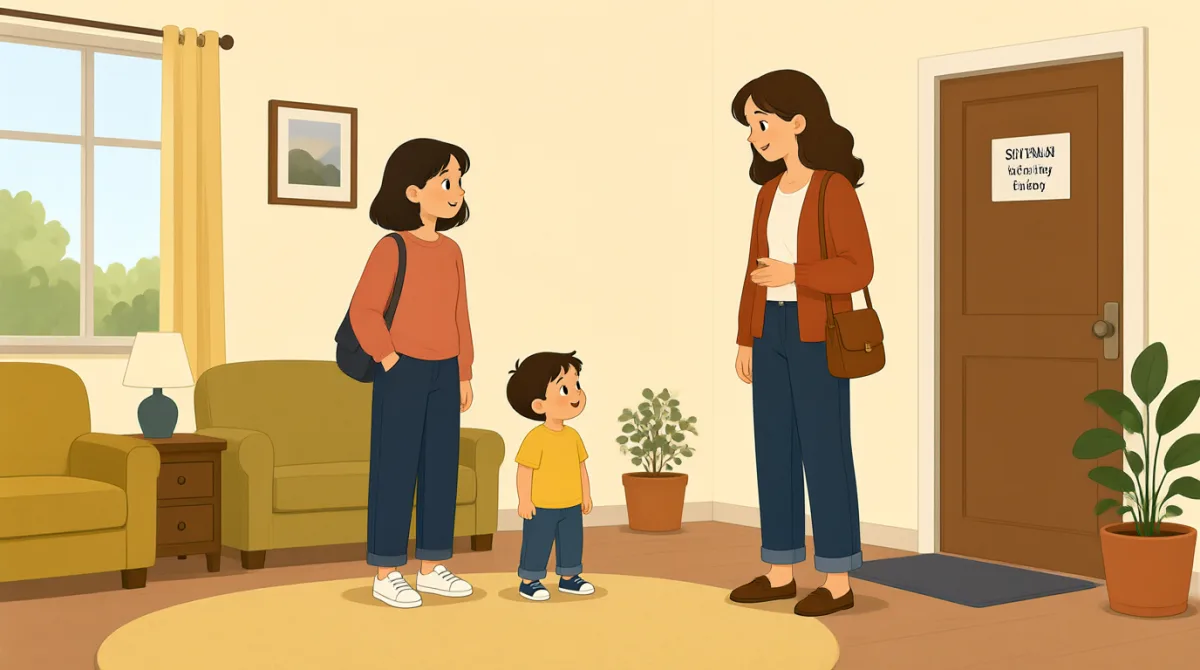

Emma, can you take my child home, too?
Emma, ¿puedes llevar también a mi hija a casa?

Sure. What is your child's name?
Claro. ¿Cómo se llama tu hija?
Her name is Lily. She is by the gate.
Se llama Lily. Está junto a la puerta.
Okay. Is she wearing a blue coat?
Vale. ¿Lleva un abrigo azul?
Yes, that's her. Thank you so much.
Sí, es ella. Muchísimas gracias.
You're welcome. Let's go find her.
De nada. Vamos a buscarla.
Vocabulario8
- take my child homellevar a mi hija a casa
This means to bring my child to their home. Use “take [someone] home” when you offer to bring someone home.
Significa llevar a mi hija hasta su casa. Usa “take [someone] home” cuando te ofreces a llevar a alguien a casa.
- Sure.Claro.
This is a friendly way to say yes. You can use it when someone asks you for help.
Es una forma amistosa de decir que sí. Puedes usarla cuando alguien te pide ayuda.
- What is your child's name?¿Cómo se llama tu hija?
Use this question to ask for a child's name. You can also ask, “What is his name?” or “What is her name?”
Usa esta pregunta para preguntar cómo se llama una niña. También puedes preguntar “What is his name?” o “What is her name?”.
- by the gatejunto a la puerta
This means near the gate. Use “by” to say that a person or thing is next to a place.
Significa cerca de la puerta. Usa “by” para decir que una persona o cosa está al lado de un lugar.
- wearing a blue coatllevar un abrigo azul
This describes clothes someone has on. You can replace “a blue coat” with another item of clothing.
Esta expresión describe la ropa que alguien tiene puesta. Puedes sustituir “a blue coat” por otra prenda de vestir.
- that's heres ella
This means the person you see is the girl you are talking about. Use “that's him” for a boy.
Significa que la persona que ves es la niña de la que estás hablando. Para un niño, usa “that's him”.
- Thank you so much.Muchísimas gracias.
This is a warm way to say thank you. Use it when someone does something helpful for you.
Es una forma afectuosa de dar las gracias. Úsala cuando alguien hace algo para ayudarte.
- Let's go find her.Vamos a buscarla.
This means “Let us go and look for her.” Use “Let's go find [someone]” to suggest looking for a person together.
Significa “Vamos a ir a buscarla”. Usa “Let's go find [someone]” para proponer que busquen juntos a una persona.
Frases clave8
- 1
Emma, can you take my child home, too?
Emma, ¿puedes llevar también a mi hija a casa?
Use “Can you…?” to make a polite request. You can replace “take my child home” with another helpful action.
Usa “Can you…?” para hacer una petición amable. Puedes sustituir “take my child home” por otra acción útil.
- 2
Sure.
Claro.
This is a simple, friendly way to agree. You can use it to accept a request or offer.
Es una forma sencilla y amistosa de aceptar. Puedes usarla para aceptar una petición o un ofrecimiento.
- 3
What is your child's name?
¿Cómo se llama tu hija?
Use this question to ask someone for their child's name. You can change “your child” to “your son” or “your daughter.”
Usa esta pregunta para preguntarle a alguien cómo se llama su hija. Puedes cambiar “your child” por “your son” o “your daughter.”
- 4
Her name is Lily.
Se llama Lily.
Use “Her name is…” to tell someone a girl's name. For a boy, say “His name is…”.
Usa “Her name is…” para decir cómo se llama una niña. Si es un niño, di “His name is…”.
- 5
She is by the gate.
Está junto a la puerta.
This tells someone where a girl is. Replace “by the gate” with another place to give a different location.
Esta frase le dice a alguien dónde está una niña. Sustituye “by the gate” por otro lugar para indicar una ubicación diferente.
- 6
Is she wearing a blue coat?
¿Lleva un abrigo azul?
Use this yes-or-no question to check what someone is wearing. You can replace “a blue coat” with another clothing item.
Usa esta pregunta de sí o no para confirmar qué ropa lleva alguien. Puedes sustituir “a blue coat” por otra prenda.
- 7
Yes, that's her.
Sí, es ella.
Use this to confirm that a girl is the person you mean. For a boy, say “Yes, that's him.”
Usa esta frase para confirmar que una niña es la persona a la que te refieres. Para un niño, di “Yes, that's him.”
- 8
Let's go find her.
Vamos a buscarla.
Use “Let's…” to suggest doing something together. Replace “find her” with another action, such as “go home.”
Usa “Let's…” para proponer hacer algo juntos. Sustituye “find her” por otra acción, como “go home.”