Picking Up a Friend's Child
Buscando o filho de uma amiga
Mia asks Emma to take her child home, too. Emma checks the child's name before they leave.
Mia pede a Emma que leve a filha dela para casa também. Antes de irem embora, Emma confirma o nome da menina.
Diálogo6
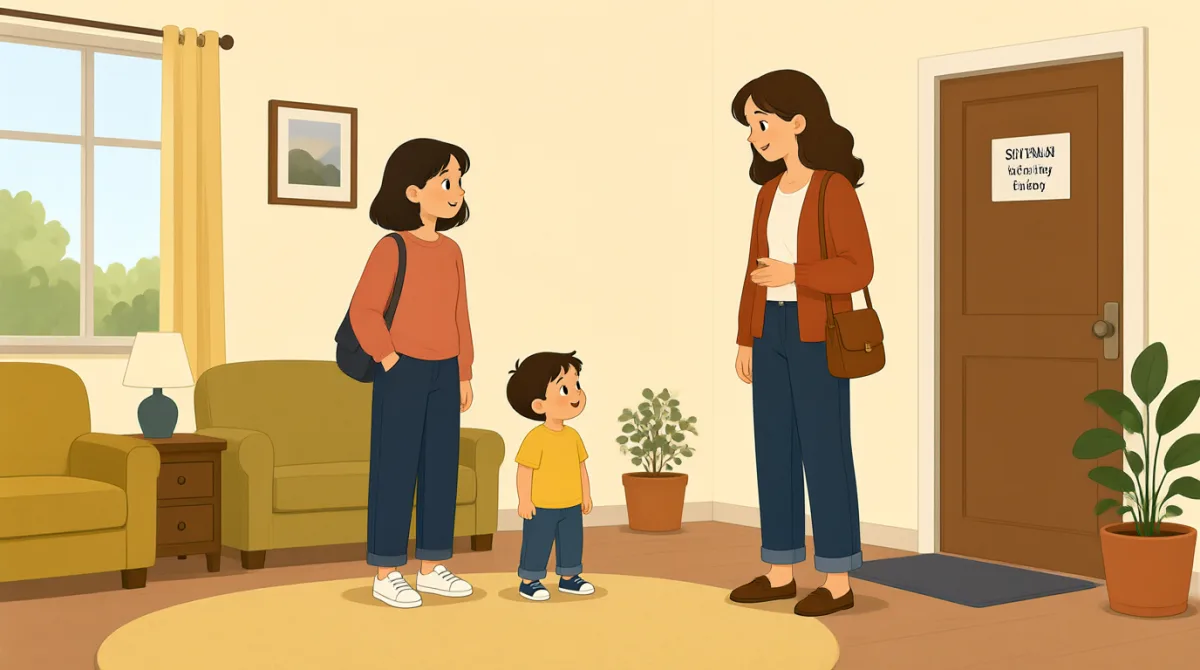

Emma, can you take my child home, too?
Emma, você pode levar minha filha para casa também?

Sure. What is your child's name?
Claro. Qual é o nome da sua filha?
Her name is Lily. She is by the gate.
O nome dela é Lily. Ela está perto do portão.
Okay. Is she wearing a blue coat?
Certo. Ela está usando um casaco azul?
Yes, that's her. Thank you so much.
Sim, é ela. Muito obrigada.
You're welcome. Let's go find her.
Por nada. Vamos procurá-la.
Vocabulário8
- take my child homelevar minha filha para casa
This means to bring my child to their home. Use “take [someone] home” when you offer to bring someone home.
Significa levar minha filha até a casa dela. Use “take [someone] home” quando se oferecer para levar alguém para casa.
- Sure.Claro.
This is a friendly way to say yes. You can use it when someone asks you for help.
É uma maneira simpática de dizer sim. Você pode usar essa expressão quando alguém pedir sua ajuda.
- What is your child's name?Qual é o nome da sua filha?
Use this question to ask for a child's name. You can also ask, “What is his name?” or “What is her name?”
Use essa pergunta para saber o nome de uma criança. Você também pode perguntar “What is his name?” ou “What is her name?”.
- by the gateperto do portão
This means near the gate. Use “by” to say that a person or thing is next to a place.
Significa perto do portão. Use “by” para dizer que alguém ou alguma coisa está junto a um lugar.
- wearing a blue coatusando um casaco azul
This describes clothes someone has on. You can replace “a blue coat” with another item of clothing.
Essa expressão descreve a roupa que alguém está vestindo. Você pode substituir “a blue coat” por outra peça de roupa.
- that's heré ela
This means the person you see is the girl you are talking about. Use “that's him” for a boy.
Significa que a pessoa que você está vendo é a menina de quem estão falando. Use “that's him” para um menino.
- Thank you so much.Muito obrigada.
This is a warm way to say thank you. Use it when someone does something helpful for you.
É uma maneira calorosa de agradecer. Use essa expressão quando alguém fizer algo para ajudar você.
- Let's go find her.Vamos procurá-la.
This means “Let us go and look for her.” Use “Let's go find [someone]” to suggest looking for a person together.
Significa “Vamos sair e procurá-la”. Use “Let's go find [someone]” para sugerir que procurem alguém juntos.
Frases-chave8
- 1
Emma, can you take my child home, too?
Emma, você pode levar minha filha para casa também?
Use “Can you…?” to make a polite request. You can replace “take my child home” with another helpful action.
Use “Can you…?” para fazer um pedido educado. Você pode substituir “take my child home” por outra coisa que a pessoa possa fazer para ajudar.
- 2
Sure.
Claro.
This is a simple, friendly way to agree. You can use it to accept a request or offer.
É uma maneira simples e simpática de concordar. Você pode usá-la para aceitar um pedido ou uma oferta.
- 3
What is your child's name?
Qual é o nome da sua filha?
Use this question to ask someone for their child's name. You can change “your child” to “your son” or “your daughter.”
Use essa pergunta para saber o nome do filho ou da filha de alguém. Você pode trocar “your child” por “your son” ou “your daughter.”
- 4
Her name is Lily.
O nome dela é Lily.
Use “Her name is…” to tell someone a girl's name. For a boy, say “His name is…”.
Use “Her name is…” para dizer o nome de uma menina. Para um menino, diga “His name is…”.
- 5
She is by the gate.
Ela está perto do portão.
This tells someone where a girl is. Replace “by the gate” with another place to give a different location.
Essa frase diz onde uma menina está. Substitua “by the gate” por outro lugar para indicar uma localização diferente.
- 6
Is she wearing a blue coat?
Ela está usando um casaco azul?
Use this yes-or-no question to check what someone is wearing. You can replace “a blue coat” with another clothing item.
Use essa pergunta, que pode ser respondida com sim ou não, para confirmar o que alguém está vestindo. Você pode substituir “a blue coat” por outra peça de roupa.
- 7
Yes, that's her.
Sim, é ela.
Use this to confirm that a girl is the person you mean. For a boy, say “Yes, that's him.”
Use essa frase para confirmar que a menina é a pessoa de quem você está falando. Para um menino, diga “Yes, that's him.”
- 8
Let's go find her.
Vamos procurá-la.
Use “Let's…” to suggest doing something together. Replace “find her” with another action, such as “go home.”
Use “Let's…” para sugerir que façam algo juntos. Substitua “find her” por outra ação, como “go home.”