Missing the Train
J’ai raté le train
Leo misses his train and asks Grace when the next one leaves. She tells him the time.
Leo rate son train et demande à Grace à quelle heure part le prochain. Elle lui indique l’heure.
Dialogue7
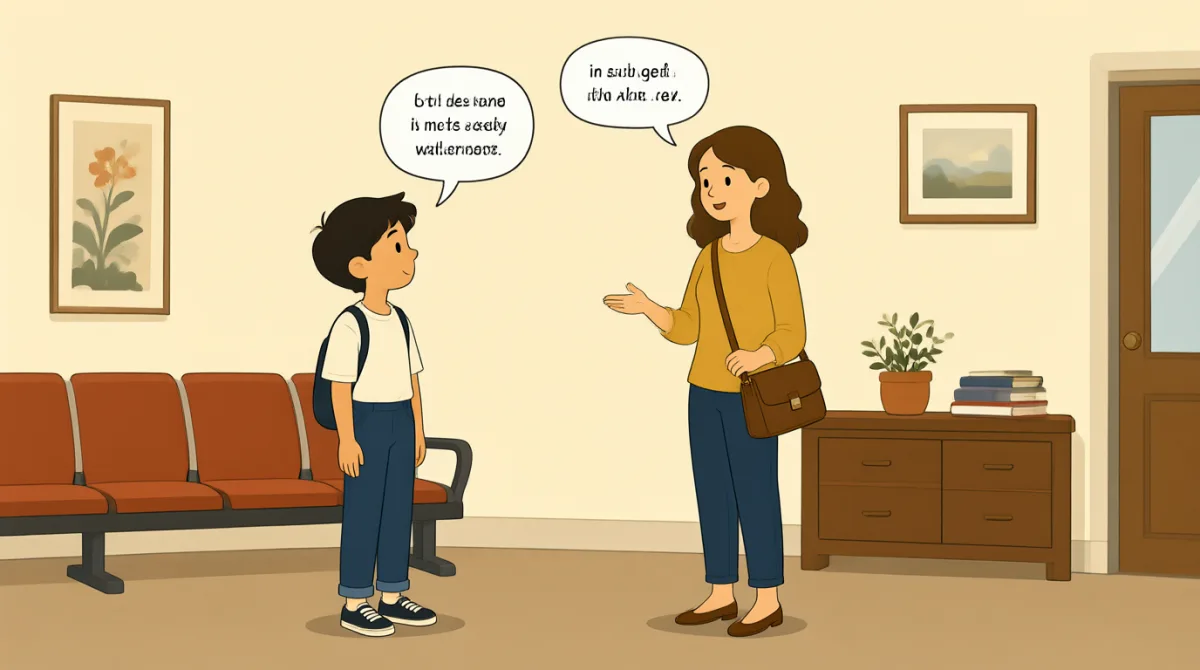

Oh no, I missed my train!
Oh non, j’ai raté mon train !

I’m sorry. Where are you going?
Je suis désolée. Où allez-vous ?
I’m going to Boston. When is the next train?
Je vais à Boston. À quelle heure est le prochain train ?
The next train leaves at three o’clock.
Le prochain train part à quinze heures.
Is there a seat on that train?
Est-ce qu’il y a une place dans ce train ?
Yes, there are seats. You can buy a ticket here.
Oui, il reste des places. Vous pouvez acheter un billet ici.
Great. One ticket to Boston, please.
Super. Un billet pour Boston, s’il vous plaît.
Vocabulaire8
- missed my trainrater mon train
This means the train left before I got on it. Use “I missed my train” to explain why you need another train.
Cela signifie que le train est parti avant que je monte dedans. Dites “I missed my train” (« J’ai raté mon train ») pour expliquer pourquoi vous avez besoin d’un autre train.
- Where are you going?Où allez-vous ?
This asks about someone’s destination. You can answer with “I’m going to” and a place.
Cette question porte sur la destination de quelqu’un. Vous pouvez répondre avec “I’m going to” suivi d’un lieu.
- I’m going to Boston.Je vais à Boston.
This tells someone where you plan to travel. Replace “Boston” with another place, such as “I’m going to work.”
Cette phrase indique à quelqu’un où vous comptez aller. Remplacez “Boston” par un autre lieu, par exemple dans “I’m going to work.” (« Je vais au travail. »)
- the next trainle prochain train
This means the train that leaves after the current or missed one. You can ask, “When is the next train?”
C’est le train qui part après celui qui est prévu actuellement ou que vous avez raté. Vous pouvez demander : “When is the next train?” (« À quelle heure est le prochain train ? »)
- three o’clocktrois heures
This is a way to say the time: 3:00. Replace it with another time to say when something happens.
C’est une façon d’indiquer l’heure : 3:00. Remplacez cette heure par une autre pour préciser quand quelque chose se passe.
- a seatune place assise
A seat is a place to sit on the train. You can ask, “Is there a seat?” when checking if one is available.
Une place assise est un endroit où s’asseoir dans le train. Vous pouvez demander “Is there a seat?” (« Est-ce qu’il y a une place ? ») pour savoir s’il en reste une.
- buy a ticketacheter un billet
This means to pay for a ticket so you can travel. You can say, “Where can I buy a ticket?”
Cela signifie payer un billet pour pouvoir voyager. Vous pouvez demander : “Where can I buy a ticket?” (« Où puis-je acheter un billet ? »)
- One ticket to Boston, please.Un billet pour Boston, s’il vous plaît.
This is a polite way to ask for a ticket to a place. Replace “Boston” with your destination.
C’est une façon polie de demander un billet pour un lieu. Remplacez “Boston” par votre destination.
Phrases clés8
- 1
Oh no, I missed my train!
Oh non, j’ai raté mon train !
Use this to say that your train left before you got on it. You can replace “my train” with another thing you missed.
Utilisez cette phrase pour dire que votre train est parti avant que vous montiez dedans. Vous pouvez remplacer “my train” par autre chose que vous avez raté.
- 2
Where are you going?
Où allez-vous ?
This is a simple way to ask someone’s destination. You can answer, “I’m going to” plus a place.
C’est une façon simple de demander la destination de quelqu’un. Vous pouvez répondre avec “I’m going to” suivi d’un lieu.
- 3
I’m going to Boston.
Je vais à Boston.
Use this sentence to say where you are traveling. Replace “Boston” with a different city or place.
Utilisez cette phrase pour dire où vous allez. Remplacez “Boston” par une autre ville ou un autre lieu.
- 4
When is the next train?
À quelle heure est le prochain train ?
Use this to ask when the next train leaves. Replace “train” with another service, such as “bus.”
Utilisez cette question pour demander à quelle heure part le prochain train. Remplacez “train” par un autre moyen de transport, comme “bus.”
- 5
The next train leaves at three o’clock.
Le prochain train part à trois heures.
This tells someone when the next train departs. Replace “three o’clock” with the correct time.
Cette phrase indique à quelqu’un à quelle heure part le prochain train. Remplacez “three o’clock” par l’heure exacte.
- 6
Is there a seat on that train?
Est-ce qu’il y a une place dans ce train ?
Use this to ask if a seat is available. You can replace “that train” with another option, such as “the bus.”
Utilisez cette question pour savoir s’il reste une place. Vous pouvez remplacer “that train” par une autre option, comme “the bus.”
- 7
You can buy a ticket here.
Vous pouvez acheter un billet ici.
This tells someone where they can get a ticket. Replace “here” with a place, such as “at the desk.”
Cette phrase indique à quelqu’un où acheter un billet. Remplacez “here” par un lieu, comme “at the desk.”
- 8
One ticket to Boston, please.
Un billet pour Boston, s’il vous plaît.
Use this polite sentence to ask for a ticket to a destination. Replace “Boston” with the place you want to go.
Utilisez cette phrase polie pour demander un billet pour une destination. Remplacez “Boston” par le lieu où vous voulez aller.