Buying Plates and Cups
خرید بشقاب و لیوان
Emma and Jack look for plates, cups, and napkins at the store. They choose enough for the guests without buying too much.
اِما و جک در فروشگاه دنبال بشقاب، لیوان و دستمال سفره میگردند. آنها بهاندازهٔ کافی برای مهمانها خرید میکنند، بدون اینکه بیش از حد خرید کنند.
گفتوگو8
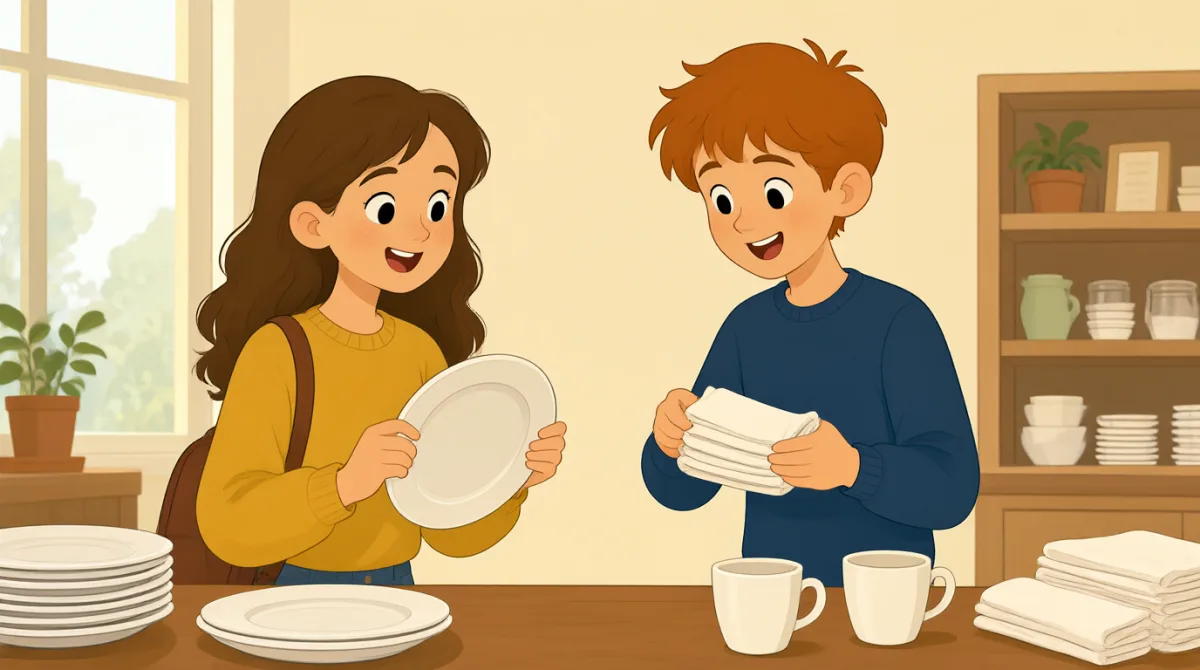

We still need plates, cups, and napkins for the party.
هنوز برای مهمانی بشقاب، لیوان و دستمال سفره لازم داریم.

The paper plates are over here. How many guests are coming?
بشقابهای یکبارمصرف اینجاست. چند نفر مهمان میآیند؟
About twenty. Let's get one plate for each person, plus a few extra.
حدود بیست نفر. بیا برای هر نفر یک بشقاب برداریم، بهعلاوهٔ چندتا اضافه.
These cups come in a pack of twenty-four. That should be enough.
این لیوانها بستههای بیستوچهارتایی هستند. باید کافی باشد.
Good. Do we need small cups too, or are these fine for every drink?
خوبه. لیوان کوچک هم لازم داریم یا اینها برای همهٔ نوشیدنیها مناسباند؟
These are fine. Let's get one pack and two packs of napkins.
اینها مناسبه. بیا یک بسته از اینها و دو بسته دستمال سفره برداریم.
There are two kinds of plates. The stronger ones cost a little more.
دو نوع بشقاب هست. اونهایی که محکمترن کمی گرونترن.
Let's take those. They won't bend when people put food on them.
همونها رو برداریم. وقتی آدمها غذا توشون میذارن خم نمیشن.
واژگان8
- How many guests are coming?چند نفر مهمان میآیند؟
This asks how many people will attend an event. Use “How many guests are coming?” to plan food, seats, or supplies.
این سؤال میپرسد چند نفر در یک رویداد شرکت میکنند. برای برنامهریزی غذا، صندلی یا وسایل میتوانی بگویی “How many guests are coming?” (چند نفر مهمان میآیند؟).
- one plate for each personبرای هر نفر یک بشقاب
This means every person gets one plate. You can use “one [thing] for each person” when planning supplies for a group.
یعنی هر نفر یک بشقاب میگیرد. وقتی برای یک گروه وسایل تهیه میکنی، میتوانی از الگوی “one [thing] for each person” (برای هر نفر یک [چیز]) استفاده کنی.
- a few extraچندتا اضافه
This means a small number more than you need. Use it when you want to have some spares.
یعنی تعداد کمی بیشتر از چیزی که لازم داری. وقتی میخواهی چندتا هم یدکی داشته باشی، از این عبارت استفاده کن.
- come in a pack of twenty-fourبستههای بیستوچهارتایی هستند
This means there are twenty-four items in one package. Use “come in a pack of [number]” to describe how products are sold.
یعنی در هر بسته بیستوچهار عدد از آن کالا هست. برای گفتن اینکه محصولات در چه تعدادهایی بستهبندی و فروخته میشوند، از “come in a pack of [number]” (در بستههای [تعداد]تایی عرضه شدن) استفاده کن.
- That should be enough.باید کافی باشد.
This means you think there is enough of something. Use it when deciding how much to buy or bring.
یعنی فکر میکنی مقدار چیزی کافی است. وقتی تصمیم میگیری چهقدر خرید کنی یا با خودت ببری، از این عبارت استفاده کن.
- are these fine for every drink?اینها برای همهٔ نوشیدنیها مناسباند؟
This asks whether the cups are suitable for all kinds of drinks. You can use “Are these fine for…?” to check if something will work for a purpose.
این سؤال میپرسد آیا لیوانها برای همهٔ نوع نوشیدنی مناسباند یا نه. برای اینکه بررسی کنی چیزی برای کاری مناسب است، میتوانی از “Are these fine for…?” (آیا اینها برای ... مناسباند؟) استفاده کنی.
- Let's take those.همونها رو برداریم.
This is a simple way to decide to buy or choose something. Use “Let's take those” when you and another person agree on an option.
این راه سادهای برای تصمیمگرفتن دربارهٔ خرید یا انتخاب چیزی است. وقتی تو و یک نفر دیگر با گزینهای موافقید، از “Let's take those” (همونها رو برداریم) استفاده کن.
- They won't bendخم نمیشن
This means the plates will stay firm and not fold under pressure. Use “won't” to say that something will not happen in the future.
یعنی بشقابها محکم میمانند و زیر فشار تا نمیشوند. از “won't” برای گفتن اینکه چیزی در آینده اتفاق نمیافتد استفاده کن.
جملات کلیدی8
- 1
We still need plates, cups, and napkins for the party.
هنوز برای مهمانی بشقاب، لیوان و دستمال سفره لازم داریم.
This sentence says what items are still needed. Reuse “We still need…” to list things you have not bought or prepared yet.
این جمله میگوید چه چیزهایی هنوز لازماند. برای فهرستکردن چیزهایی که هنوز نخریدهاید یا آماده نکردهاید، از “We still need…” (هنوز ... لازم داریم) استفاده کن.
- 2
How many guests are coming?
چند نفر مهمان میآیند؟
This is a useful question when planning for an event. Replace “guests” with another plural noun to ask how many people or items there will be.
این سؤال برای برنامهریزی یک رویداد کاربردی است. میتوانی “guests” را با اسم جمع دیگری جایگزین کنی تا بپرسی چند نفر یا چند چیز خواهند بود.
- 3
Let's get one plate for each person, plus a few extra.
بیا برای هر نفر یک بشقاب برداریم، بهعلاوهٔ چندتا اضافه.
This explains how many plates to buy, including some spares. Reuse “one [item] for each person, plus a few extra” when planning supplies.
این جمله میگوید چند بشقاب بخرید و چندتا هم اضافه بردارید. برای برنامهریزی وسایل، از الگوی “one [item] for each person, plus a few extra” (برای هر نفر یک [وسیله]، بهعلاوهٔ چندتا اضافه) استفاده کن.
- 4
These cups come in a pack of twenty-four.
این لیوانها بستههای بیستوچهارتایی هستند.
This gives the number of cups in one package. Replace “twenty-four” with the number shown on another product.
این جمله تعداد لیوانها را در هر بسته بیان میکند. میتوانی “twenty-four” را با عددی که روی محصول دیگری نوشته شده جایگزین کنی.
- 5
That should be enough.
باید کافی باشد.
This is a short way to say that you think the amount is sufficient. Use it when agreeing that a quantity will meet your needs.
این راه کوتاهی برای گفتن این است که فکر میکنی مقدار چیزی کافی است. وقتی موافقی که یک مقدار نیازهایتان را برآورده میکند، از این عبارت استفاده کن.
- 6
Do we need small cups too, or are these fine for every drink?
لیوان کوچک هم لازم داریم یا اینها برای همهٔ نوشیدنیها مناسباند؟
This asks whether another type is needed or if the current cups will work. Reuse “Do we need… too, or are these fine for…?” to compare options.
این سؤال میپرسد آیا نوع دیگری لازم است یا همین لیوانها کار را راه میاندازند. برای مقایسهٔ گزینهها، از الگوی “Do we need… too, or are these fine for…?” (آیا ... هم لازم داریم یا اینها برای ... مناسباند؟) استفاده کن.
- 7
Let's take those.
همونها رو برداریم.
This expresses a decision to choose or buy something. Use “Let's take…” to suggest an option you both prefer.
این جمله تصمیم به انتخاب یا خرید چیزی را بیان میکند. برای پیشنهاد گزینهای که هر دو ترجیح میدهید، از “Let's take…” (بیا ... رو برداریم) استفاده کن.
- 8
They won't bend when people put food on them.
وقتی آدمها غذا توشون میذارن، خم نمیشن.
This explains why the stronger plates are a good choice. Use “They won't…” to describe a useful result you expect in the future.
این جمله توضیح میدهد چرا بشقابهای محکمتر انتخاب خوبی هستند. برای توصیف نتیجهٔ مفیدی که در آینده انتظار داری، از “They won't…” (آنها ... نمیشوند) استفاده کن.