Asking for Route Confirmation
پرسیدن برای اطمینان از مسیر
A passenger asks the bus driver if the bus goes to a specific destination, confirming they are on the correct bus.
مسافری از رانندهٔ اتوبوس میپرسد آیا اتوبوس به مقصد مشخصی میرود تا مطمئن شود سوار اتوبوس درستی شده است.
گفتوگو8
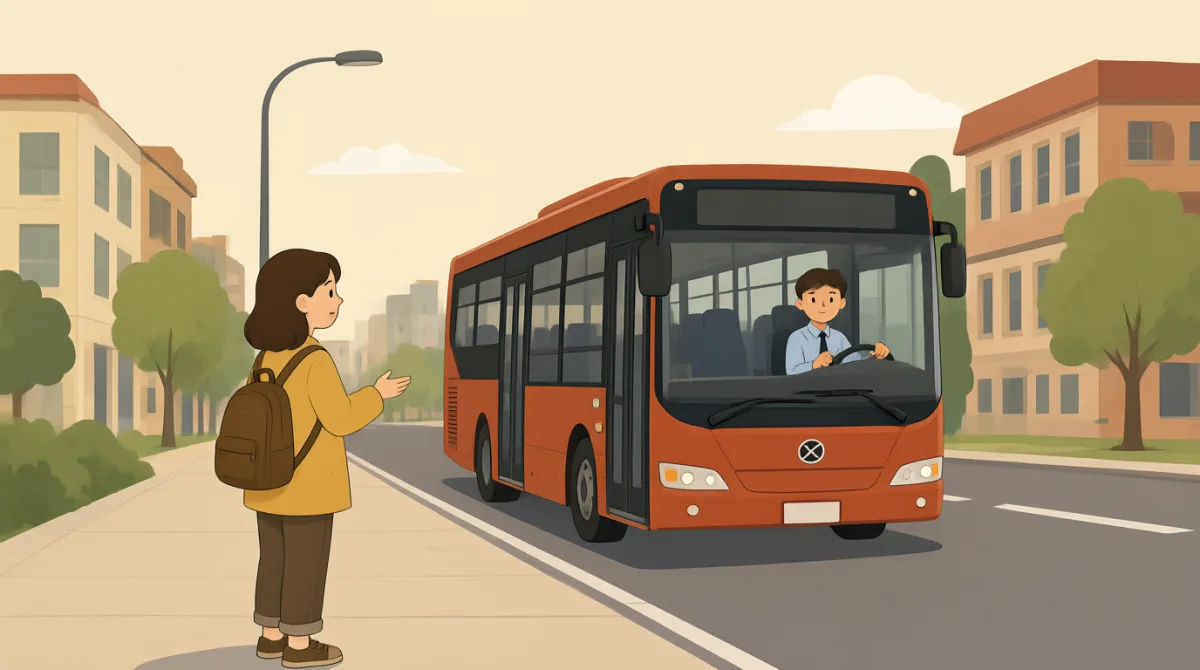

Excuse me, driver? Does this bus go to the City Art Museum?
ببخشید آقا، این اتوبوس به موزهٔ هنر شهر میرود؟

Yes, it does. You're on the right bus.
بله، میرود. سوار اتوبوس درستی شدهاید.
Oh, perfect! And how many stops is it from here?
آه، عالیه! از اینجا چند ایستگاه راهه؟
Let's see... about five or six stops. It's across from Central Park.
بذارید ببینم... حدود پنج یا شش ایستگاه. روبهروی پارک مرکزیه.
Okay, got it. Will you announce the stop, or should I keep an eye out?
باشه، فهمیدم. ایستگاه رو اعلام میکنید یا خودم حواسم باشه؟
The announcements are automatic. You'll hear it for the 'Central Park South' stop. That's the one you want.
اعلام ایستگاهها خودکاره. اسم ایستگاه «سنترال پارک ساوث» رو میشنوید. همون ایستگاهیه که میخواید.
Great, thanks so much for your help!
عالیه، خیلی ممنون از کمکتون!
No problem. Enjoy your visit!
خواهش میکنم. از بازدیدتون لذت ببرید!
واژگان6
- excuse meببخشید
A polite phrase used to get someone's attention or interrupt politely, like starting a conversation on a bus.
عبارتی مؤدبانه برای جلب توجه کسی یا مؤدبانه حرف او را قطع کردن؛ مثلاً برای شروع صحبت در اتوبوس.
- busاتوبوس
A large public vehicle that carries passengers along a fixed route; essential for talking about transportation.
وسیلهٔ نقلیهٔ عمومی بزرگی که مسافران را در مسیری مشخص جابهجا میکند؛ واژهای ضروری برای صحبت دربارهٔ رفتوآمد.
- stopایستگاه
A place where a bus pauses to let passengers get on or off; often used in questions about distance or location.
محلی که اتوبوس برای سوار یا پیاده کردن مسافران توقف میکند؛ معمولاً در پرسش دربارهٔ فاصله یا مکان به کار میرود.
- announceاعلام کردن
To make a public statement, like telling passengers about the next stop over a speaker system.
چیزی را بهصورت عمومی اطلاع دادن؛ مثلاً اعلام ایستگاه بعدی به مسافران از بلندگو.
- automaticخودکار
Something that happens by itself without needing manual control, like bus announcements that play on their own.
چیزی که بدون دخالت دستی و بهخودیخود انجام میشود؛ مثل اعلام ایستگاههای اتوبوس که بهطور خودکار پخش میشود.
- across fromروبهروی
Directly opposite something, used to describe the location of a place relative to a landmark like a park.
درست در سمت مقابل چیزی؛ برای توصیف موقعیت مکانی یک جا نسبت به نشانهای مانند پارک به کار میرود.
جملات کلیدی7
- 1
Excuse me, driver? Does this bus go to the City Art Museum?
ببخشید آقا، این اتوبوس به موزهٔ هنر شهر میرود؟
This is a polite way to ask for route information; 'Does this bus go to' is a yes/no question pattern useful for confirming destinations on public transport. Use it when unsure if you're on the correct vehicle.
این روشی مؤدبانه برای پرسیدن دربارهٔ مسیر است. الگوی 'Does this bus go to' برای پرسیدن سؤال بله یا خیر و اطمینان از مقصد وسایل نقلیهٔ عمومی به کار میرود. وقتی مطمئن نیستید سوار وسیلهٔ درستی شدهاید، از آن استفاده کنید.
- 2
Yes, it does. You're on the right bus.
بله، میرود. سوار اتوبوس درستی شدهاید.
A simple affirmative response using 'it does' to answer the question; 'on the right bus' means you've chosen correctly. This pattern reassures someone and is common in service interactions.
پاسخی مثبت و ساده است که در آن برای جواب دادن به سؤال از 'it does' استفاده شده است؛ 'on the right bus' یعنی وسیلهٔ درستی را انتخاب کردهاید. این الگو به طرف مقابل اطمینان میدهد و در مکالمههای خدماتی رایج است.
- 3
Oh, perfect! And how many stops is it from here?
آه، عالیه! از اینجا چند ایستگاه راهه؟
'How many stops' asks about the number of bus halts to a destination; 'from here' specifies the starting point. This sentence helps plan travel time and is practical for bus rides.
'How many stops' دربارهٔ تعداد ایستگاههای اتوبوس تا مقصد میپرسد و 'from here' نقطهٔ شروع را مشخص میکند. این جمله برای برنامهریزی زمان سفر مفید و در اتوبوس کاربردی است.
- 4
Let's see... about five or six stops. It's across from Central Park.
بذارید ببینم... حدود پنج یا شش ایستگاه. روبهروی پارک مرکزیه.
'Let's see' is a thinking filler; 'about five or six' uses approximation for estimates. 'Across from' describes location. Useful for giving directions with landmarks in travel scenarios.
'Let's see' عبارتی است که هنگام فکر کردن میگوییم؛ 'about five or six' برای بیان یک تخمین تقریبی است. 'Across from' موقعیت مکانی را توضیح میدهد. این عبارتها در موقعیتهای مربوط به سفر برای راهنمایی با استفاده از نشانههای مکانی مفیدند.
- 5
Will you announce the stop, or should I keep an eye out?
ایستگاه رو اعلام میکنید یا خودم حواسم باشه؟
This is an alternative question ('or') seeking confirmation on alerts; 'keep an eye out' idiom means to watch carefully. Grammar: future 'will' for predictions. Use when checking for notifications on transport.
این یک سؤال دوگزینهای با 'or' است که دربارهٔ اعلام ایستگاه اطمینان میگیرد؛ اصطلاح 'keep an eye out' یعنی با دقت مراقب چیزی بودن. از 'will' برای صحبت دربارهٔ آینده استفاده شده است. وقتی میخواهید بدانید در وسایل نقلیهٔ عمومی چیزی را اعلام میکنند یا نه، این جمله کاربرد دارد.
- 6
The announcements are automatic. You'll hear it for the 'Central Park South' stop.
اعلام ایستگاهها خودکاره. اسم ایستگاه «سنترال پارک ساوث» رو میشنوید.
'Are automatic' describes how something works; 'you'll hear' is future simple tense for expectations. This explains system features and is helpful for informing passengers about audio cues.
'Are automatic' توضیح میدهد چیزی چطور کار میکند؛ 'you'll hear' زمان آیندهٔ ساده است و دربارهٔ چیزی میگوید که انتظار میرود بشنوید. این ساختارها برای توضیح قابلیتهای یک سیستم و آگاه کردن مسافران از اعلانهای صوتی مفیدند.
- 7
Great, thanks so much for your help!
عالیه، خیلی ممنون از کمکتون!
A polite expression of gratitude; 'thanks so much' emphasizes appreciation. Use this to end helpful conversations, like after getting directions, to show good manners.
عبارتی مؤدبانه برای تشکر است؛ 'thanks so much' میزان قدردانی را بیشتر نشان میدهد. برای پایان دادن به گفتوگویی که در آن کسی کمکتان کرده، مثلاً پس از راهنمایی گرفتن، از این عبارت استفاده کنید تا مؤدب باشید.