Asking for Route Confirmation
Güzergâhı Teyit Etme
A passenger asks the bus driver if the bus goes to a specific destination, confirming they are on the correct bus.
Bir yolcu, doğru otobüste olduğundan emin olmak için şoföre otobüsün belirli bir yere gidip gitmediğini sorar.
Diyalog8
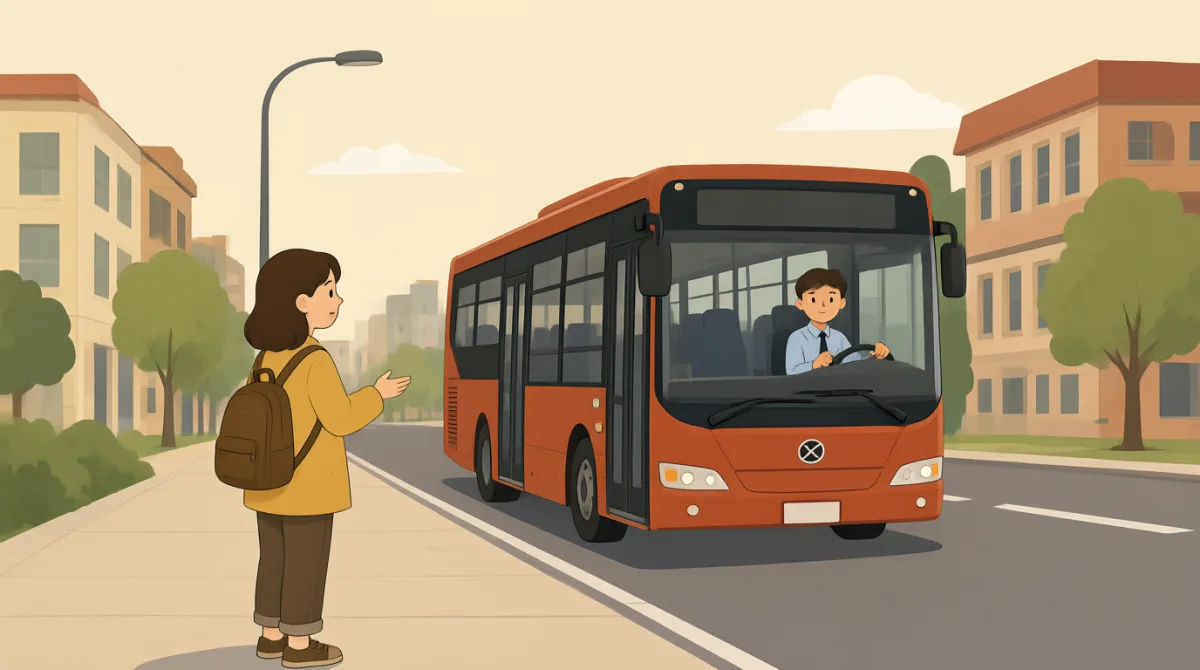

Excuse me, driver? Does this bus go to the City Art Museum?
Affedersiniz şoför bey, bu otobüs Şehir Sanat Müzesi'ne gidiyor mu?

Yes, it does. You're on the right bus.
Evet, gidiyor. Doğru otobüstesiniz.
Oh, perfect! And how many stops is it from here?
Aa, harika! Buradan kaç durak sürüyor?
Let's see... about five or six stops. It's across from Central Park.
Bir bakayım... yaklaşık beş ya da altı durak. Central Park'ın karşısında.
Okay, got it. Will you announce the stop, or should I keep an eye out?
Tamam, anladım. Durağı anons edecek misiniz, yoksa kendim mi takip edeyim?
The announcements are automatic. You'll hear it for the 'Central Park South' stop. That's the one you want.
Anonslar otomatik. 'Central Park South' durağı için anonsu duyacaksınız. İneceğiniz durak orası.
Great, thanks so much for your help!
Harika, yardımınız için çok teşekkür ederim!
No problem. Enjoy your visit!
Rica ederim. İyi gezmeler!
Kelime Bilgisi6
- excuse meaffedersiniz
A polite phrase used to get someone's attention or interrupt politely, like starting a conversation on a bus.
Birinin dikkatini kibarca çekmek ya da sözünü nazikçe kesmek için kullanılan bir ifade. Otobüste sohbete başlarken kullanabilirsiniz.
- busotobüs
A large public vehicle that carries passengers along a fixed route; essential for talking about transportation.
Yolcuları belirli bir güzergâhta taşıyan büyük toplu taşıma aracı. Ulaşım hakkında konuşurken sıkça kullanılır.
- stopdurak
A place where a bus pauses to let passengers get on or off; often used in questions about distance or location.
Otobüsün yolcu almak veya indirmek için durduğu yer. Mesafeyi ya da konumu sorarken sıkça kullanılır.
- announceanons etmek
To make a public statement, like telling passengers about the next stop over a speaker system.
Hoparlör sistemiyle yolculara bir sonraki durağı bildirmek gibi, herkese yönelik bir duyuru yapmak.
- automaticotomatik
Something that happens by itself without needing manual control, like bus announcements that play on their own.
Elle kontrol edilmeye gerek kalmadan kendiliğinden gerçekleşen şeyler için kullanılır. Örneğin, otobüs anonsları otomatik olarak çalabilir.
- across fromkarşısında
Directly opposite something, used to describe the location of a place relative to a landmark like a park.
Bir yerin, park gibi bir konum işaretinin tam karşısında olduğunu anlatır.
Önemli Cümleler7
- 1
Excuse me, driver? Does this bus go to the City Art Museum?
Affedersiniz şoför bey, bu otobüs Şehir Sanat Müzesi'ne gidiyor mu?
This is a polite way to ask for route information; 'Does this bus go to' is a yes/no question pattern useful for confirming destinations on public transport. Use it when unsure if you're on the correct vehicle.
Güzergâh hakkında bilgi istemenin kibar bir yoludur. 'Does this bus go to' (Bu otobüs ...'e gidiyor mu?) kalıbı, toplu taşımada gideceğiniz yeri teyit etmek için kullanabileceğiniz bir evet-hayır sorusudur. Doğru araçta olup olmadığınızdan emin değilseniz bu kalıptan yararlanın.
- 2
Yes, it does. You're on the right bus.
Evet, gidiyor. Doğru otobüstesiniz.
A simple affirmative response using 'it does' to answer the question; 'on the right bus' means you've chosen correctly. This pattern reassures someone and is common in service interactions.
Soruyu 'it does' kalıbıyla olumlu yanıtlayabilirsiniz; 'on the right bus' doğru otobüsü seçtiğiniz anlamına gelir. Bu ifade karşı tarafın içini rahatlatır ve hizmet sunulan ortamlarda sıkça kullanılır.
- 3
Oh, perfect! And how many stops is it from here?
Aa, harika! Buradan kaç durak sürüyor?
'How many stops' asks about the number of bus halts to a destination; 'from here' specifies the starting point. This sentence helps plan travel time and is practical for bus rides.
'How many stops' varış yerine kadar kaç durak olduğunu, 'from here' ise başlangıç noktasının neresi olduğunu sorar. Bu cümle yolculuk süresini planlamaya yardımcı olur ve otobüste işinize yarar.
- 4
Let's see... about five or six stops. It's across from Central Park.
Bir bakayım... yaklaşık beş ya da altı durak. Central Park'ın karşısında.
'Let's see' is a thinking filler; 'about five or six' uses approximation for estimates. 'Across from' describes location. Useful for giving directions with landmarks in travel scenarios.
'Let's see' düşünürken kullanılan bir ifadedir; 'about five or six' yaklaşık bir sayı verir. 'Across from' bir yerin konumunu tarif eder. Bu ifadeler, yol tarifi verirken çevredeki önemli yerlerden söz etmek için kullanışlıdır.
- 5
Will you announce the stop, or should I keep an eye out?
Durağı anons edecek misiniz, yoksa kendim mi takip edeyim?
This is an alternative question ('or') seeking confirmation on alerts; 'keep an eye out' idiom means to watch carefully. Grammar: future 'will' for predictions. Use when checking for notifications on transport.
Bu cümlede 'or' ile iki seçenek arasında bir soru sorulup bilgilendirme yapılıp yapılmayacağı teyit edilir. 'Keep an eye out' dikkatle gözlemek anlamında kullanılan bir deyimdir. 'Will' gelecek zamanla ilgili beklentileri anlatır. Toplu taşımada durak anonslarını sorarken kullanabilirsiniz.
- 6
The announcements are automatic. You'll hear it for the 'Central Park South' stop.
Anonslar otomatik. 'Central Park South' durağı için anonsu duyacaksınız.
'Are automatic' describes how something works; 'you'll hear' is future simple tense for expectations. This explains system features and is helpful for informing passengers about audio cues.
'Are automatic' bir şeyin nasıl çalıştığını açıklar; 'you'll hear' ise gelecekte olması beklenen bir durumu anlatan gelecek zamandır. Bu kalıplar, yolculara sesli uyarılar gibi sistem özellikleri hakkında bilgi verirken kullanışlıdır.
- 7
Great, thanks so much for your help!
Harika, yardımınız için çok teşekkür ederim!
A polite expression of gratitude; 'thanks so much' emphasizes appreciation. Use this to end helpful conversations, like after getting directions, to show good manners.
Bu, kibarca teşekkür etmenin bir yoludur. 'Thanks so much' minnettarlığı vurgular. Yol tarifi aldıktan sonra olduğu gibi, yardımcı bir sohbeti nazikçe bitirirken kullanabilirsiniz.