Child Kicking Seat on Bus/Train
کودکی که در اتوبوس یا قطار به صندلی لگد میزند
A parent apologizes to a fellow passenger because their child is repeatedly kicking the back of their seat on public transportation.
والدی از مسافر کناری عذرخواهی میکند، چون فرزندش مدام به پشتی صندلی او لگد میزند.
گفتوگو6
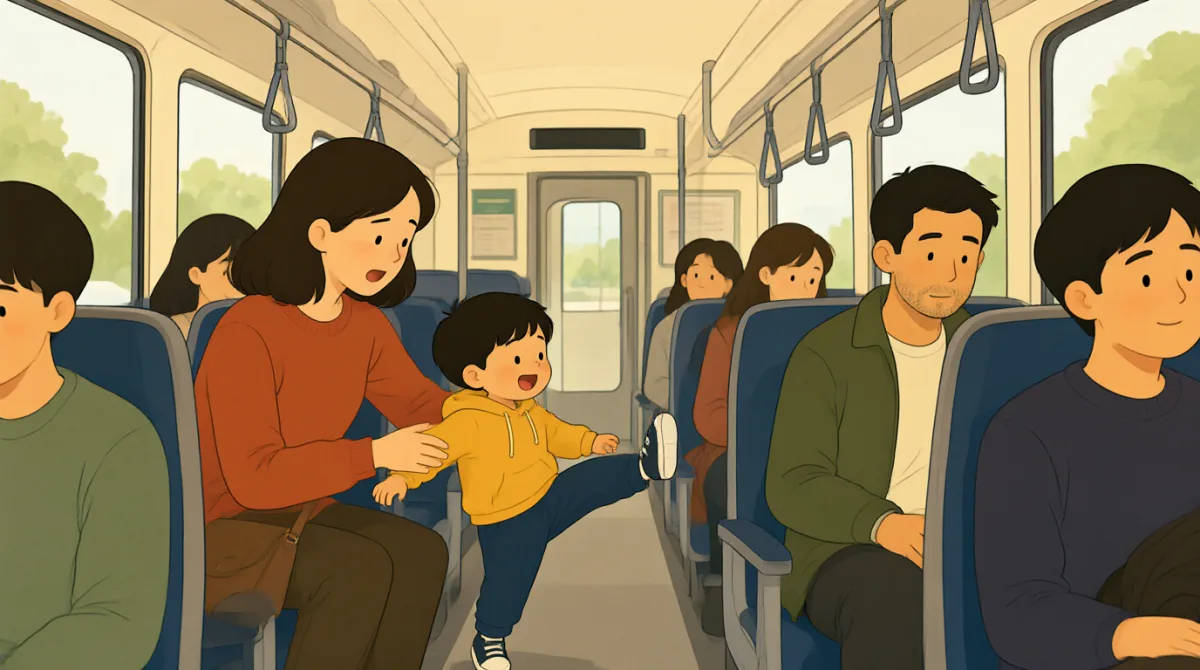

Oh, I am so sorry about that. Is my son kicking your seat?
اوه، واقعاً بابت این موضوع عذر میخوام. پسرم داره به صندلی شما لگد میزنه؟

It's alright, yes, he is a bit. No worries, kids will be kids.
اشکالی نداره، آره، یهکم لگد میزنه. نگران نباشید، بچهان دیگه.
I'm really sorry. Sometimes he just gets a little antsy on long rides. Here, let me distract him with something.
واقعاً متأسفم. گاهی توی سفرهای طولانی کمی بیقرار میشه. بذارید با یه چیزی حواسش رو پرت کنم.
Thanks, I appreciate that. Don't worry too much about it.
ممنون، لطف دارید. خیلی نگرانش نباشید.
I'm trying to get him to stop. My apologies again.
دارم سعی میکنم جلوش رو بگیرم. باز هم عذر میخوام.
It's perfectly fine. Just a few more stops for me anyway.
اصلاً اشکالی نداره. من که فقط چند ایستگاه دیگه پیاده میشم.
واژگان8
- sorryمتأسفم؛ ببخشید
An expression used to apologize when you feel regret for something, like a child's bad behavior. It's very common in everyday English.
وقتی بابت کاری، مثل رفتار نامناسب یک کودک، احساس پشیمانی میکنید، از این عبارت برای عذرخواهی استفاده میکنید. این عبارت در گفتوگوهای روزمرهٔ انگلیسی خیلی رایج است.
- kickingلگد زدن
The action of hitting something repeatedly with the foot, often used when describing playful or annoying movements by children.
یعنی چند بار با پا به چیزی ضربه زدن. این واژه را اغلب برای توصیف حرکتهای بازیگوشانه یا آزاردهندهٔ بچهها به کار میبرند.
- seatصندلی
A place to sit, especially on public transport like a bus or train. In this context, it refers to the back of the seat in front of someone.
جایی برای نشستن، بهویژه در وسایل نقلیهٔ عمومی مثل اتوبوس یا قطار. اینجا منظور پشتی صندلی جلوی یک نفر است.
- alrightاشکالی ندارد؛ خوب است
A casual way to say 'it's okay' or 'no problem,' often used to accept an apology without making a big deal.
شیوهای خودمانی برای گفتن «اشکالی ندارد» یا «مشکلی نیست» است. معمولاً برای پذیرفتن عذرخواهی و نشاندادن اینکه موضوع را بزرگ نمیکنید، به کار میرود.
- antsyبیقرار
Feeling restless or unable to sit still, especially during long trips. It's informal and useful for describing fidgety children.
یعنی بیتاب باشید یا نتوانید آرام بنشینید، بهخصوص در سفرهای طولانی. این واژه غیررسمی است و برای توصیف بچههای وولخور مناسب است.
- distractحواس کسی را پرت کردن
To take someone's attention away from something annoying by giving them something else to focus on, like a toy for a child.
یعنی با دادن چیزی دیگر برای توجهکردن، ذهن کسی را از موضوعی آزاردهنده منحرف کنید؛ مثلاً با اسباببازی حواس کودک را پرت کنید.
- appreciateقدردان بودن؛ قدردانی کردن
To feel grateful for someone's action or kindness. It's polite and shows thanks in response to an apology or help.
یعنی بابت کاری یا لطفی که کسی کرده احساس سپاسگزاری کنید. این واژه مؤدبانه است و برای تشکر از عذرخواهی یا کمک به کار میرود.
- apologiesعذرخواهی؛ پوزش
A formal or repeated way to say 'sorry.' Use it when you want to emphasize your regret, like 'my apologies.'
شیوهای رسمیتر یا تکرارشده برای گفتن «متأسفم» است. وقتی میخواهید پشیمانیتان را پررنگتر نشان دهید، مثلاً در عبارت «my apologies»، از آن استفاده کنید.
جملات کلیدی7
- 1
Oh, I am so sorry about that. Is my son kicking your seat?
اوه، واقعاً بابت این موضوع عذر میخوام. پسرم داره به صندلی شما لگد میزنه؟
This sentence starts with a polite apology using 'Oh, I am so sorry about that' to express immediate regret. The question checks the situation politely. Useful for initiating an apology in public; note the present continuous 'is kicking' for ongoing actions.
این جمله با عبارت مؤدبانهٔ 'Oh, I am so sorry about that' شروع میشود تا پشیمانی فوری را نشان دهد. سپس با پرسشی مؤدبانه دربارهٔ وضعیت مطمئن میشوید. برای شروع عذرخواهی در مکان عمومی کاربردی است؛ دقت کنید که 'is kicking' زمان حال استمراری است و کاری را توصیف میکند که همین حالا ادامه دارد.
- 2
It's alright, yes, he is a bit. No worries, kids will be kids.
اشکالی نداره، آره، یهکم لگد میزنه. نگران نباشید، بچهان دیگه.
A reassuring response to an apology. 'It's alright' means no harm done, and 'No worries' is casual for 'don't worry.' The proverb 'kids will be kids' excuses child behavior. Great for accepting apologies gracefully; 'a bit' softens the complaint.
پاسخی اطمینانبخش به عذرخواهی است. 'It's alright' یعنی آسیبی نرسیده یا اشکالی ندارد و 'No worries' عبارتی خودمانی برای گفتن «نگران نباشید» است. ضربالمثل 'kids will be kids' رفتار بچهها را طبیعی جلوه میدهد. 'a bit' هم از شدت گلایه کم میکند.
- 3
I'm really sorry. Sometimes he just gets a little antsy on long rides.
واقعاً متأسفم. گاهی توی سفرهای طولانی کمی بیقرار میشه.
Emphasizes sincerity with 'really sorry' and explains the reason using 'sometimes' for occasional behavior. 'Gets a little antsy' describes restlessness. Useful for giving context in apologies; simple present 'gets' for habits.
عبارت 'really sorry' صداقت عذرخواهی را پررنگ میکند و 'sometimes' نشان میدهد که این رفتار گاهی پیش میآید. 'Gets a little antsy' بیقراری را توصیف میکند. برای توضیحدادن دلیل عذرخواهی مفید است؛ 'gets' در زمان حال ساده برای بیان عادت به کار رفته است.
- 4
Here, let me distract him with something.
بذارید با یه چیزی حواسش رو پرت کنم.
Offers a solution politely with 'let me' to suggest helping. 'Distract with something' means diverting attention. Practical for showing action after apologizing; imperative 'let me' is courteous.
'Let me' مؤدبانه پیشنهاد میکند که خودتان کاری انجام دهید و کمک کنید. 'Distract with something' یعنی حواس کسی را با چیزی پرت کنید. بعد از عذرخواهی، نشاندادن اینکه دارید برای حل مشکل کاری میکنید مفید است؛ ساختار 'let me' حالت پیشنهادی و مؤدبانه دارد.
- 5
Thanks, I appreciate that. Don't worry too much about it.
ممنون، لطف دارید. خیلی نگرانش نباشید.
Expresses thanks and reassurance. 'I appreciate that' is polite gratitude, and 'Don't worry too much' minimizes the issue. Ideal for responding kindly; 'too much' adds a gentle tone.
این جمله هم تشکر میکند و هم به طرف مقابل اطمینان میدهد. 'I appreciate that' روشی مؤدبانه برای ابراز قدردانی است و 'Don't worry too much' از اهمیت موضوع کم میکند. 'too much' لحن جمله را ملایمتر میکند.
- 6
I'm trying to get him to stop. My apologies again.
دارم سعی میکنم جلوش رو بگیرم. باز هم عذر میخوام.
Shows effort with present continuous 'I'm trying to get him to stop' for ongoing action. 'My apologies again' repeats the sorry formally. Useful for follow-up apologies; infinitive 'to stop' after 'get.'
'I'm trying to get him to stop' با زمان حال استمراری نشان میدهد که تلاش هنوز ادامه دارد. 'My apologies again' عذرخواهی را به شکلی رسمی تکرار میکند. برای عذرخواهی دوباره مفید است؛ پس از 'get' مصدر با 'to' آمده است: 'to stop'.
- 7
It's perfectly fine. Just a few more stops for me anyway.
اصلاً اشکالی نداره. من که فقط چند ایستگاه دیگه پیاده میشم.
Fully accepts with 'perfectly fine' meaning completely okay. 'Just a few more stops' explains the short duration, and 'anyway' adds casualness. Helpful for ending the conversation positively; 'for me' personalizes it.
'Perfectly fine' یعنی کاملاً اشکالی ندارد و پذیرش کامل را نشان میدهد. 'Just a few more stops' میگوید مدت زیادی باقی نمانده و 'anyway' لحن را خودمانی میکند. 'for me' هم موضوع را به گوینده مربوط میکند.