Chatting With the Driver
Conversando con el conductor
On the way to the hotel, Emma chats with David about the trip and asks how long the ride will take. David shares a few helpful details about the hotel.
De camino al hotel, Emma conversa con David sobre el viaje y le pregunta cuánto durará el trayecto. David le da algunos detalles útiles sobre el hotel.
Diálogo8
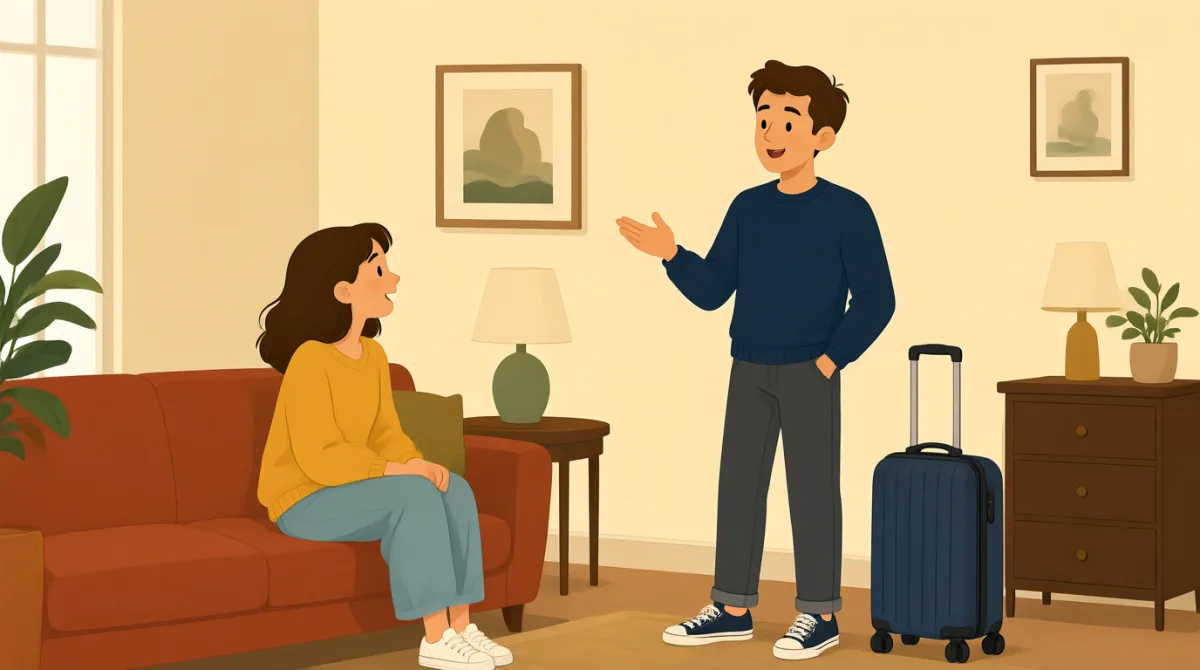

This is a nice ride. I’m glad the airport wasn’t too busy.
El viaje está siendo agradable. Me alegra que el aeropuerto no estuviera demasiado lleno.

Yes, it’s usually quiet in the afternoon. Was your flight long?
Sí, por la tarde suele estar tranquilo. ¿Fue largo tu vuelo?
About five hours. I watched a movie, but I couldn’t sleep.
Unas cinco horas. Vi una película, pero no pude dormir.
That can be tiring. The hotel is about fifteen minutes away.
Eso puede ser agotador. El hotel está a unos quince minutos.
Great. Does the hotel have a place to get breakfast?
Genial. ¿Hay algún lugar en el hotel donde se pueda desayunar?
Yes, there’s a café beside the lobby. Breakfast starts at seven.
Sí, hay una cafetería junto al vestíbulo. El desayuno empieza a las siete.
Good to know. Is there a bus stop near the hotel?
Qué bueno saberlo. ¿Hay alguna parada de autobús cerca del hotel?
There’s one across the street. The front desk can show you the route.
Hay una al otro lado de la calle. En recepción pueden indicarte el camino.
Vocabulario8
- a nice rideun viaje agradable
A pleasant or comfortable trip in a vehicle. You can use this phrase to say that you are enjoying a journey.
Un trayecto placentero o cómodo en un vehículo. Puedes usar esta expresión para decir que estás disfrutando del viaje.
- wasn’t too busyno estaba demasiado lleno
Means a place did not have too many people or too much activity. You can use “wasn’t too busy” to describe a quiet time or place.
Significa que no había demasiada gente ni mucho movimiento en un lugar. Puedes usar “wasn’t too busy” para describir un momento o lugar tranquilo.
- five hourscinco horas
A way to say how long something took. You can use “about [number] hours” to give an approximate length of time.
Una manera de decir cuánto duró algo. Puedes usar “about [number] hours” para indicar una duración aproximada.
- tiringagotador
Something tiring makes you feel tired. You can use it to describe a long trip or a busy day.
Algo agotador hace que te sientas cansado. Puedes usar esta palabra para describir un viaje largo o un día ajetreado.
- fifteen minutes awaya quince minutos
Means it takes about fifteen minutes to reach a place. You can use “[time] away” to talk about how far a place is by travel time.
Significa que se tarda unos quince minutos en llegar a un lugar. Puedes usar “[time] away” para decir cuánto se tarda en llegar a un sitio.
- beside the lobbyjunto al vestíbulo
Means next to the lobby, the main entrance and waiting area of a hotel. Use “beside” to explain where something is.
Significa al lado del vestíbulo, la entrada principal y zona de espera de un hotel. Usa “beside” para indicar dónde está algo.
- across the streetal otro lado de la calle
Means on the other side of the street. Use this phrase to give a simple location.
Significa en el lado opuesto de la calle. Usa esta expresión para indicar una ubicación de forma sencilla.
- show you the routeindicarte el camino
Means help you see which way to go. You can use “show you the route” when asking someone for directions.
Significa ayudar a alguien a ver por dónde ir. Puedes usar “show you the route” cuando le pidas indicaciones a alguien.
Frases clave7
- 1
Was your flight long?
¿Fue largo tu vuelo?
This is a simple way to ask about someone’s travel experience. You can change “flight” to another journey, such as “bus ride” or “train ride.”
Esta es una forma sencilla de preguntar por la experiencia de viaje de alguien. Puedes cambiar “flight” por otro trayecto, como “bus ride” o “train ride”.
- 2
I watched a movie, but I couldn’t sleep.
Vi una película, pero no pude dormir.
This sentence describes two things that happened during a trip. Use “but” to connect contrasting ideas.
Esta oración describe dos cosas que ocurrieron durante un viaje. Usa “but” para conectar ideas opuestas.
- 3
The hotel is about fifteen minutes away.
El hotel está a unos quince minutos.
Use this sentence to tell someone how long it takes to reach a place. Replace “the hotel” and “fifteen minutes” with other places and travel times.
Usa esta oración para decirle a alguien cuánto se tarda en llegar a un lugar. Sustituye “the hotel” y “fifteen minutes” por otros lugares y tiempos de viaje.
- 4
Does the hotel have a place to get breakfast?
¿Hay algún lugar en el hotel donde se pueda desayunar?
This is a polite way to ask whether a hotel offers breakfast. You can replace “breakfast” with another service or facility.
Esta es una forma cortés de preguntar si un hotel ofrece desayuno. Puedes sustituir “breakfast” por otro servicio o instalación.
- 5
Breakfast starts at seven.
El desayuno empieza a las siete.
Use this short sentence to give the time an activity or service begins. Replace “Breakfast” with another event or service.
Usa esta oración breve para decir a qué hora empieza una actividad o un servicio. Sustituye “Breakfast” por otro evento o servicio.
- 6
Is there a bus stop near the hotel?
¿Hay alguna parada de autobús cerca del hotel?
This is a useful way to ask whether a place is nearby. Replace “a bus stop” and “the hotel” to ask about other places.
Esta es una forma útil de preguntar si hay un lugar cerca. Sustituye “a bus stop” y “the hotel” para preguntar por otros lugares.
- 7
The front desk can show you the route.
En recepción pueden indicarte el camino.
This sentence explains who can help with directions. You can replace “the front desk” with another person or service that can help.
Esta oración explica quién puede ayudarte a encontrar el camino. Puedes sustituir “the front desk” por otra persona o servicio que pueda ayudar.