Offering Help to Someone Else
عرض المساعدة على شخص آخر
You witness someone else spilling coffee. You want to offer practical help, such as getting napkins or alerting staff, without being intrusive.
تشاهد شخصًا يسكب قهوته. تريد أن تعرض عليه مساعدة عملية، مثل إحضار المناديل أو إبلاغ العاملين، من دون أن تتطفل.
حوار8
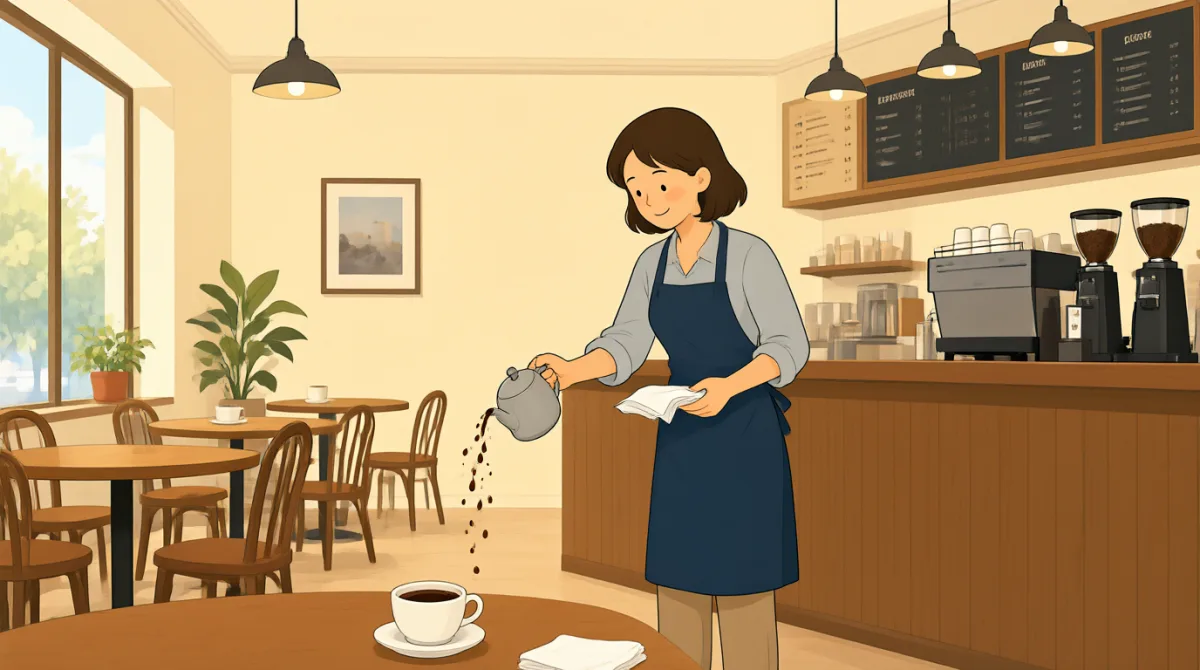

Oh, no! Are you okay? Looks like you've spilled your coffee!
أوه، لا! هل أنت بخير؟ يبدو أنك سكبت قهوتك!

Ugh, yeah, completely soaked it. My hand just slipped. What a mess!
أوه، أجل، ابتلت تمامًا. انزلقت يدي فحسب. يا لها من فوضى!
Don't worry about it. Happens to the best of us. Do you need a hand with anything? I could grab some napkins, or maybe alert the staff if you want?
لا تقلق. هذا يحدث لأفضلنا. هل تحتاج إلى أي مساعدة؟ يمكنني إحضار بعض المناديل، أو ربما إبلاغ العاملين إن أردت.
That would be so helpful, thank you! If you could just point me to where the napkins are, I can probably manage. Don't want to bother the staff too much.
سيكون ذلك مفيدًا جدًا، شكرًا لك! إذا دللتني فقط على مكان المناديل، فغالبًا سأتمكن من تدبر الأمر. لا أريد إزعاج العاملين كثيرًا.
No bother at all. They're usually by the counter, right next to the sugar station. I'll go fetch them for you. Don't move, I'll be right back.
لا إزعاج على الإطلاق. عادةً ما تكون قرب المنضدة، بجانب ركن السكر مباشرةً. سأحضرها لك. ابقَ مكانك، سأعود حالًا.
Oh, you don't have to! I can go.
أوه، لا داعي لذلك! يمكنني الذهاب بنفسي.
It's no trouble, really. You stay put and deal with the immediate spill. I'll be quick.
لا بأس حقًا. ابقَ في مكانك وتعامل مع ما انسكب الآن. لن أتأخر.
Okay, thank you so much! That's really kind of you.
حسنًا، شكرًا جزيلًا! هذا لطف كبير منك.
المفردات10
- spilledسكب
Past tense of 'spill', meaning to accidentally pour liquid out of a container, like coffee on the floor or clothes. Use it to describe accidents: 'I spilled my drink.'
هذه صيغة الماضي من 'spill'، وتعني أن يُفرغ المرء سائلًا من وعاء عن طريق الخطأ، كأن يسكب القهوة على الأرض أو الملابس. تُستخدم لوصف الحوادث: 'I spilled my drink.' (سكبت شرابي.)
- soakedمبتل تمامًا
Covered or filled with liquid, often completely wet. In this context, it describes clothes or items after spilling: 'My shirt is soaked with water.' It's useful for everyday accidents.
تعني أن شيئًا ما غُمر بسائل أو ابتلّ به، وغالبًا ما يكون مبللًا تمامًا. في هذا السياق، تصف الملابس أو الأشياء بعد انسكاب سائل عليها: 'My shirt is soaked with water.' (قميصي مبتل تمامًا بالماء.) وهي مفيدة في الحديث عن الحوادث اليومية.
- slippedانزلق
Past tense of 'slip', meaning to slide or lose control accidentally. Common in accidents: 'The cup slipped from my hand.' Helps explain why something fell.
هذه صيغة الماضي من 'slip'، وتعني أن ينزلق شيء أو يفقد المرء السيطرة عليه عن طريق الخطأ. وتشيع في وصف الحوادث: 'The cup slipped from my hand.' (انزلق الكوب من يدي.) وهي تساعد على توضيح سبب سقوط شيء ما.
- messفوضى
A dirty or disordered situation, often from an accident. Use it to express frustration: 'What a mess!' It's casual and common in informal English.
تعني حالة متسخة أو غير مرتبة، وغالبًا ما تنتج عن حادث. تُستخدم للتعبير عن الانزعاج: 'What a mess!' (يا لها من فوضى!) وهي كلمة شائعة وغير رسمية في الإنجليزية اليومية.
- grabيحضر بسرعة
To quickly take or get something. Informal and practical: 'Grab some napkins' means to fetch them fast. Good for offering quick help in daily life.
تعني أن يأخذ المرء شيئًا أو يحضره بسرعة. وهي عبارة غير رسمية وعملية: 'Grab some napkins' تعني أن تحضر بعض المناديل بسرعة. وهي مناسبة لعرض المساعدة السريعة في الحياة اليومية.
- alertيُبلغ
To warn or inform someone about a problem. Here, 'alert the staff' means to tell workers about the spill. Useful in public places like cafes.
تعني أن يحذّر المرء شخصًا من مشكلة أو يخبره بها. هنا، تعني 'alert the staff' إخبار العاملين بالانسكاب. وهي مفيدة في الأماكن العامة مثل المقاهي.
- botherيزعج
To cause trouble or inconvenience. 'No bother' means it's not a problem at all. Polite way to reassure someone when helping: 'It's no bother to help you.'
تعني أن يسبب المرء متاعب أو إزعاجًا لشخص ما. عبارة 'No bother' تعني أن الأمر لا يسبب أي مشكلة. وهي طريقة مهذبة لطمأنة شخص ما عند مساعدته: 'It's no bother to help you.' (لا أمانع مساعدتك.)
- fetchيذهب لإحضار
To go and bring back something. Similar to 'get', but implies going to retrieve: 'I'll fetch the napkins.' Kind and helpful in offering assistance.
تعني أن يذهب المرء ليحضر شيئًا ويعود به. وهي تشبه 'get'، لكنها توحي بالذهاب لاسترجاع الشيء: 'I'll fetch the napkins.' (سأذهب لإحضار المناديل.) وتُظهر اللطف والاستعداد للمساعدة.
- stay putابقَ مكانك
An idiom meaning to remain in place, don't move. Casual advice: 'Stay put and I'll help.' Useful for keeping someone safe during cleanup.
تعبير اصطلاحي يعني أن يبقى الشخص في مكانه وألا يتحرك. نصيحة غير رسمية: 'Stay put and I'll help.' (ابقَ مكانك وسأساعدك.) وهو مفيد للحفاظ على سلامة شخص ما أثناء التنظيف.
- kindلطيف
Nice or helpful in a gentle way. 'That's really kind of you' expresses gratitude for someone's help. Common in polite responses to favors.
تعني أن الشخص ودود أو يساعد بلطف. تعبّر عبارة 'That's really kind of you' عن الامتنان لمساعدة شخص ما. وهي شائعة في الرد المهذب على تقديم المعروف.
الجمل الأساسية7
- 1
Oh, no! Are you okay? Looks like you've spilled your coffee!
أوه، لا! هل أنت بخير؟ يبدو أنك سكبت قهوتك!
This is a concerned reaction to an accident. 'Oh, no!' shows surprise and worry. 'Are you okay?' checks for injury first. Useful for starting a helpful conversation; the present perfect 'you've spilled' describes a recent action.
هذا ردّ يعبر عن القلق عند وقوع حادث. تُظهر 'Oh, no!' المفاجأة والقلق، أما 'Are you okay?' فتطمئن أولًا على أن الشخص لم يُصب بأذى. يفيد هذا التعبير في بدء حديث تُعرض فيه المساعدة؛ كما أن صيغة المضارع التام في 'you've spilled' تصف فعلًا حدث للتو.
- 2
Don't worry about it. Happens to the best of us.
لا تقلق. هذا يحدث لأفضلنا.
Reassures someone after a mistake. 'Don't worry about it' means no need to feel bad. 'Happens to the best of us' is an idiom saying accidents happen to everyone, even good people. Great for comforting friends casually.
تطمئن هذه العبارة شخصًا بعد ارتكاب خطأ. تعني 'Don't worry about it' أنه لا داعي للشعور بالضيق. أما 'Happens to the best of us' فهو تعبير اصطلاحي معناه أن الحوادث تحدث للجميع، حتى لأفضل الناس. وهو مناسب لمواساة الأصدقاء بأسلوب عفوي.
- 3
Do you need a hand with anything? I could grab some napkins, or maybe alert the staff if you want?
هل تحتاج إلى أي مساعدة؟ يمكنني إحضار بعض المناديل، أو ربما إبلاغ العاملين إن أردت.
Offers help politely. 'Need a hand' is an idiom for assistance. The conditional 'I could' suggests options without pressure. Useful pattern for volunteering help in situations like spills; shows specific actions.
تعرض هذه العبارة المساعدة بأدب. 'Need a hand' تعبير اصطلاحي يعني طلب المساعدة. وصيغة الشرط في 'I could' تعرض خيارات من دون ضغط. يفيد هذا النمط في عرض المساعدة عند مواقف مثل انسكاب السوائل، ويذكر أفعالًا محددة.
- 4
That would be so helpful, thank you!
سيكون ذلك مفيدًا جدًا، شكرًا لك!
Accepts an offer gratefully. 'That would be' is conditional for future help. Adds 'so' for emphasis on helpfulness. Essential for polite responses when someone assists you; builds positive interactions.
تقبل هذه العبارة عرض المساعدة مع الامتنان. تُستخدم 'That would be' للتحدث عن مساعدة مستقبلية بصيغة شرطية، وتؤكد كلمة 'so' مدى فائدتها. وهي أساسية للرد بأدب حين يساعدك أحد، كما تسهم في بناء تواصل إيجابي.
- 5
No bother at all. They're usually by the counter, right next to the sugar station.
لا إزعاج على الإطلاق. عادةً ما تكون قرب المنضدة، بجانب ركن السكر مباشرةً.
Downplays the effort of helping. 'No bother at all' reassures it's easy. Gives directions with 'by' and 'next to' for location. Practical for guiding someone in a cafe; uses simple prepositions for everyday navigation.
تُهوّن هذه العبارة من عناء المساعدة. تطمئن 'No bother at all' الشخص إلى أن الأمر سهل. ثم تعطي توجيهات باستخدام 'by' و'next to' لتحديد المكان. وهي عملية لإرشاد شخص في مقهى، وتستخدم حروف جر بسيطة للتوجيه في الحياة اليومية.
- 6
You stay put and deal with the immediate spill. I'll be quick.
ابقَ مكانك وتعامل مع ما انسكب الآن. لن أتأخر.
Instructs someone to stay still while offering to act. 'Stay put' is an idiom for not moving. 'Immediate' means right now. 'I'll be quick' promises speed. Useful for managing accidents safely; imperative form for directions.
تطلب هذه العبارة من الشخص أن يبقى ثابتًا بينما يتولى المتحدث المساعدة. 'Stay put' تعبير اصطلاحي يعني ألا يتحرك الشخص. وتعني 'immediate' أن الأمر يحدث الآن، أما 'I'll be quick' فتعد بالعودة سريعًا. وهي مفيدة للتعامل مع الحوادث بأمان، وتستخدم صيغة الأمر لإعطاء التوجيهات.
- 7
Okay, thank you so much! That's really kind of you.
حسنًا، شكرًا جزيلًا! هذا لطف كبير منك.
Shows appreciation. 'Thank you so much' emphasizes gratitude. 'That's really kind of you' compliments the helper. Perfect ending phrase for accepting favors; 'so much' and 'really' intensify politeness in English.
تعبّر هذه العبارة عن الامتنان. تؤكد 'Thank you so much' شدة الشكر، بينما تمدح 'That's really kind of you' الشخص الذي قدم المساعدة. وهي عبارة ختامية مناسبة لقبول المعروف؛ فكلمتا 'so much' و'really' تزيدان من قوة التعبير المهذب في الإنجليزية.