Handling Payment and Receipt
付款和領取收據
The cashier tells the customer the total cost, and the customer handles the payment using cash, card, or mobile payment. They then receive the receipt.
收銀員告訴顧客總價,顧客使用現金、銀行卡或移動支付完成付款。然後他們會收到收據。
對話8
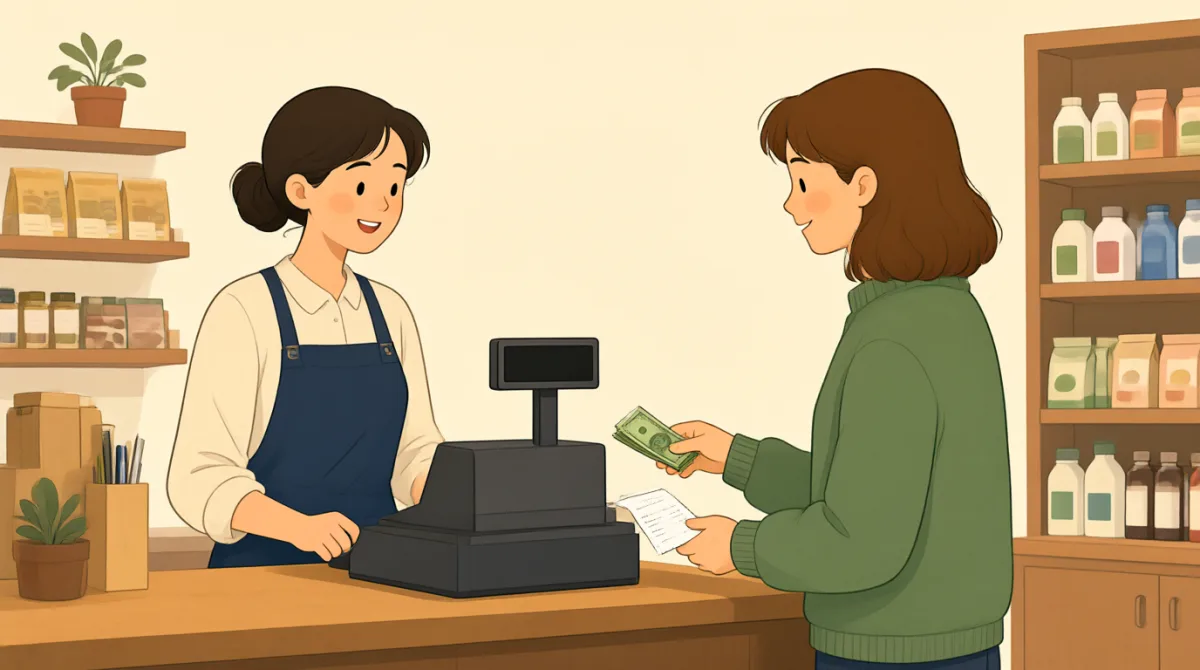

Your total is $12.75.
您的總共是12.75美元。

Okay. Do you take card?
好的。你們接受刷卡嗎?
Yes, we do. Just insert your card here.
是的,我們接受。請把您的卡插到這裡。
Alright. And can I get a receipt?
好的。我能拿到收據嗎?
Certainly. It'll print out right after the transaction is complete.
當然可以。交易完成後會立即列印出來。
Perfect. Thanks!
太好了。謝謝!
You're welcome. Here's your receipt. Have a great day!
不客氣。這是您的收據。祝您有美好的一天!
You too!
你也是!
詞彙6
- total總額
The total amount is the final sum of money you need to pay for your order. Use it when the cashier tells you the cost, like 'Your total is $12.75.'
總額是您需要為訂單支付的最終金額。收銀員告訴您費用時會使用這個詞,例如“Your total is $12.75.”
- card銀行卡
A card refers to a credit or debit card used for payment. In fast food, ask 'Do you take card?' to check if they accept it.
銀行卡指用於付款的信用卡或簽帳金融卡。在快餐店,您可以問“Do you take card?”,確認他們是否接受刷卡付款。
- insert插入
To insert means to put your card into a machine slot. It's common in payment instructions, like 'Insert your card here' at stores.
Insert 的意思是把卡放入機器的卡槽中。在商店的付款指示中很常見,例如“Insert your card here”。
- receipt收據
A receipt is a printed paper that shows what you bought and how much you paid. Always ask for one after paying to keep a record.
收據是顯示您購買了什麼以及支付了多少錢的紙質憑證。付款後最好總是索要一張,以便留作記錄。
- transaction交易
A transaction is the process of paying for something. It's used in formal contexts like 'after the transaction is complete' when using a card.
Transaction 指付款購買某物的過程。使用銀行卡時,可以在正式場合使用這個詞,例如“after the transaction is complete”。
- print out列印出來
To print out means to produce a paper copy from a machine. In payments, it refers to the receipt coming out, like 'It'll print out right after.'
Print out 的意思是透過機器製作紙質副本。在付款場景中,它指收據從機器中列印出來,例如“It'll print out right after.”
關鍵句7
- 1
Your total is $12.75.
您的總額是12.75美元。
This is a common way cashiers announce the final amount to pay. It's useful for customers to hear and confirm. Note the structure: 'Your [noun] is [amount].' for stating costs.
這是收銀員告知顧客最終應付金額的一種常見說法。顧客聽到後可以確認金額。請注意這個結構:“Your [noun] is [amount].”,用於說明費用。
- 2
Do you take card?
你們接受刷卡嗎?
This polite question asks if the store accepts card payments. Use it when you prefer not to use cash. 'Take' here means 'accept'; it's a yes/no question for quick confirmation.
這是一個禮貌的問題,用來詢問商店是否接受刷卡付款。不想使用現金時可以這樣問。這裡的“Take”表示“接受”;這是一個可以快速確認的“是”或“否”疑問句。
- 3
Yes, we do. Just insert your card here.
是的,我們接受。請把您的卡插到這裡。
This responds affirmatively and gives instructions. 'Yes, we do' is a short way to answer 'Do you...?'. Useful for service workers; 'just' makes it sound simple and helpful.
這句話先作出肯定回答,然後給出操作指示。“Yes, we do”是回答“Do you...?”的一種簡短說法。服務人員經常使用它;“just”讓語氣聽起來簡單又親切。
- 4
And can I get a receipt?
那我可以拿一張收據嗎?
This requests a receipt after paying. Add 'And' to connect to previous talk. It's polite with 'can I'; use it anytime you want proof of purchase.
這是付款後索要收據的說法。句首加上“And”可以和前面的對話連線起來。使用“can I”會顯得禮貌,您在任何想要購買憑證的時候都可以這樣問。
- 5
Certainly. It'll print out right after the transaction is complete.
當然可以。交易完成後會立即列印出來。
'Certainly' means 'of course' politely. 'It'll' is short for 'It will'; future tense for predictions. Useful for assuring customers about the process in service situations.
“Certainly”是禮貌地表示“當然可以”的說法。“It'll”是“It will”的縮寫,用於表示對未來情況的預測。在服務場景中,它可以讓顧客放心瞭解接下來的流程。
- 6
You're welcome. Here's your receipt. Have a great day!
不客氣。這是您的收據。祝您今天愉快!
This is a standard polite response to 'thanks,' followed by handing over the item and a friendly goodbye. Use it to end interactions positively; 'Have a great day' is common in American English service.
這是對“謝謝”的標準禮貌回應,接著把物品交給對方,並友好地道別。您可以用它來積極地結束一段交流;“Have a great day”是美式英語服務場景中很常見的說法。
- 7
You too!
你也是!
A casual way to return a wish like 'Have a great day.' It's short and friendly; use it to mirror the speaker's politeness without repeating the full phrase.
這是回應“Have a great day.”等祝福的一種隨意說法。它簡短而友好,可以用來回應對方的禮貌,同時不必重複完整的祝福。