Handling Payment and Receipt
การชำระเงินและรับใบเสร็จ
The cashier tells the customer the total cost, and the customer handles the payment using cash, card, or mobile payment. They then receive the receipt.
พนักงานแคชเชียร์แจ้งยอดรวมให้ลูกค้าทราบ จากนั้นลูกค้าชำระเงินด้วยเงินสด บัตร หรือการชำระเงินผ่านมือถือ แล้วรับใบเสร็จ
บทสนทนา8
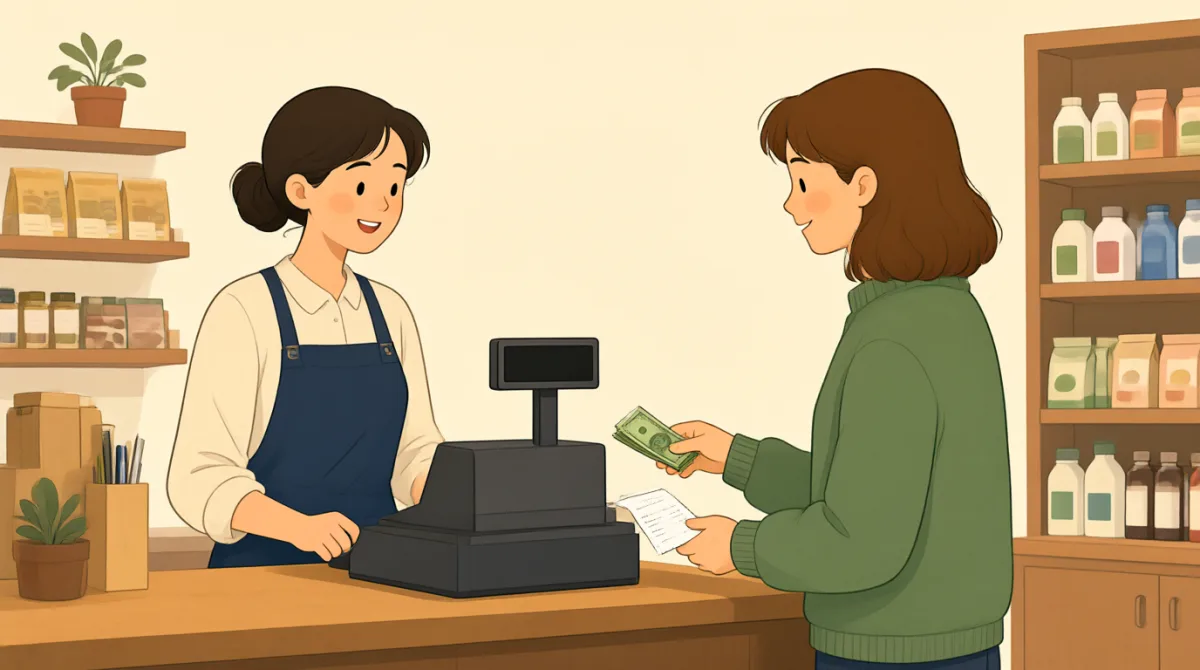

Your total is $12.75.
ยอดรวมของคุณคือ 12.75 ดอลลาร์ค่ะ

Okay. Do you take card?
โอเค รับบัตรไหมครับ
Yes, we do. Just insert your card here.
รับค่ะ เสียบบัตรตรงนี้ได้เลยค่ะ
Alright. And can I get a receipt?
ได้ครับ แล้วขอใบเสร็จได้ไหมครับ
Certainly. It'll print out right after the transaction is complete.
ได้เลยค่ะ ใบเสร็จจะพิมพ์ออกมาทันทีที่ทำรายการเสร็จค่ะ
Perfect. Thanks!
เยี่ยมเลย ขอบคุณครับ
You're welcome. Here's your receipt. Have a great day!
ยินดีค่ะ นี่ใบเสร็จค่ะ ขอให้วันนี้เป็นวันที่ดีนะคะ
You too!
เช่นกันครับ
คำศัพท์6
- totalยอดรวม
The total amount is the final sum of money you need to pay for your order. Use it when the cashier tells you the cost, like 'Your total is $12.75.'
ยอดรวมคือเงินทั้งหมดที่คุณต้องจ่ายสำหรับรายการที่สั่ง ใช้เมื่อแคชเชียร์แจ้งราคา เช่น 'Your total is $12.75.' (ยอดรวมของคุณคือ 12.75 ดอลลาร์)
- cardบัตร
A card refers to a credit or debit card used for payment. In fast food, ask 'Do you take card?' to check if they accept it.
คำว่า 'card' หมายถึงบัตรเครดิตหรือบัตรเดบิตที่ใช้ชำระเงิน ที่ร้านฟาสต์ฟู้ด ถามว่า 'Do you take card?' เพื่อเช็กว่ารับบัตรไหม
- insertเสียบ
To insert means to put your card into a machine slot. It's common in payment instructions, like 'Insert your card here' at stores.
'insert' หมายถึงใส่บัตรเข้าไปในช่องของเครื่อง มักใช้ในคำแนะนำการชำระเงิน เช่น 'Insert your card here' (เสียบบัตรตรงนี้)
- receiptใบเสร็จ
A receipt is a printed paper that shows what you bought and how much you paid. Always ask for one after paying to keep a record.
ใบเสร็จคือกระดาษที่พิมพ์แสดงรายการที่ซื้อและจำนวนเงินที่จ่าย หลังชำระเงินแล้ว ควรขอใบเสร็จไว้เป็นหลักฐาน
- transactionการทำรายการ
A transaction is the process of paying for something. It's used in formal contexts like 'after the transaction is complete' when using a card.
'transaction' หมายถึงขั้นตอนการชำระเงิน ใช้ในบริบทที่ค่อนข้างเป็นทางการ เช่น 'after the transaction is complete' (หลังทำรายการเสร็จ) เมื่อชำระด้วยบัตร
- print outพิมพ์ออกมา
To print out means to produce a paper copy from a machine. In payments, it refers to the receipt coming out, like 'It'll print out right after.'
'print out' หมายถึงสร้างสำเนากระดาษด้วยเครื่อง ในการชำระเงินหมายถึงใบเสร็จที่พิมพ์ออกมา เช่น 'It'll print out right after.' (เดี๋ยวก็พิมพ์ออกมาทันที)
ประโยคสำคัญ7
- 1
Your total is $12.75.
ยอดรวมของคุณคือ 12.75 ดอลลาร์ค่ะ
This is a common way cashiers announce the final amount to pay. It's useful for customers to hear and confirm. Note the structure: 'Your [noun] is [amount].' for stating costs.
นี่เป็นวิธีที่แคชเชียร์ใช้บ่อยในการแจ้งยอดเงินสุดท้ายที่ต้องจ่าย ลูกค้าจะได้ทราบและตรวจสอบยอดได้ สังเกตโครงสร้าง 'Your [noun] is [amount].' ใช้แจ้งค่าใช้จ่าย
- 2
Do you take card?
รับบัตรไหมครับ
This polite question asks if the store accepts card payments. Use it when you prefer not to use cash. 'Take' here means 'accept'; it's a yes/no question for quick confirmation.
ประโยคสุภาพนี้ใช้ถามว่าร้านรับชำระด้วยบัตรไหม ใช้เมื่อคุณไม่อยากจ่ายเงินสด ในที่นี้ 'take' หมายถึง 'รับ' และเป็นคำถามที่ตอบได้ว่าใช่หรือไม่ใช่
- 3
Yes, we do. Just insert your card here.
รับค่ะ เสียบบัตรตรงนี้ได้เลยค่ะ
This responds affirmatively and gives instructions. 'Yes, we do' is a short way to answer 'Do you...?'. Useful for service workers; 'just' makes it sound simple and helpful.
ประโยคนี้ตอบรับพร้อมบอกวิธีชำระ 'Yes, we do' เป็นคำตอบสั้น ๆ สำหรับคำถาม 'Do you...?' พนักงานบริการใช้ได้บ่อย ส่วน 'just' ช่วยให้ฟังดูง่ายและเป็นมิตร
- 4
And can I get a receipt?
แล้วขอใบเสร็จได้ไหมครับ
This requests a receipt after paying. Add 'And' to connect to previous talk. It's polite with 'can I'; use it anytime you want proof of purchase.
ใช้ประโยคนี้ขอใบเสร็จหลังชำระเงิน เติม 'And' เพื่อเชื่อมกับสิ่งที่พูดก่อนหน้า การใช้ 'can I' ทำให้ฟังสุภาพ ใช้ได้ทุกครั้งที่ต้องการหลักฐานการซื้อ
- 5
Certainly. It'll print out right after the transaction is complete.
ได้เลยค่ะ ใบเสร็จจะพิมพ์ออกมาทันทีที่ทำรายการเสร็จค่ะ
'Certainly' means 'of course' politely. 'It'll' is short for 'It will'; future tense for predictions. Useful for assuring customers about the process in service situations.
'Certainly' หมายถึง 'ได้เลย' ในแบบสุภาพ 'It'll' เป็นรูปย่อของ 'It will' ใช้พูดถึงสิ่งที่คาดว่าจะเกิดขึ้นในอนาคต ประโยคนี้มีประโยชน์สำหรับให้ลูกค้ามั่นใจเกี่ยวกับขั้นตอนการบริการ
- 6
You're welcome. Here's your receipt. Have a great day!
ยินดีค่ะ นี่ใบเสร็จค่ะ ขอให้วันนี้เป็นวันที่ดีนะคะ
This is a standard polite response to 'thanks,' followed by handing over the item and a friendly goodbye. Use it to end interactions positively; 'Have a great day' is common in American English service.
นี่เป็นคำตอบสุภาพที่ใช้ตามหลังคำขอบคุณ แล้วส่งของให้พร้อมกล่าวลาอย่างเป็นมิตร ใช้ปิดท้ายบทสนทนาให้รู้สึกดี 'Have a great day' เป็นคำพูดที่พนักงานบริการในภาษาอังกฤษแบบอเมริกันใช้กันบ่อย
- 7
You too!
เช่นกันครับ
A casual way to return a wish like 'Have a great day.' It's short and friendly; use it to mirror the speaker's politeness without repeating the full phrase.
เป็นวิธีตอบกลับคำอวยพร เช่น 'Have a great day.' แบบสั้น ๆ และเป็นมิตร ใช้ตอบรับด้วยความสุภาพโดยไม่ต้องพูดซ้ำทั้งประโยค