Handling Payment and Receipt
भुगतान करना और रसीद लेना
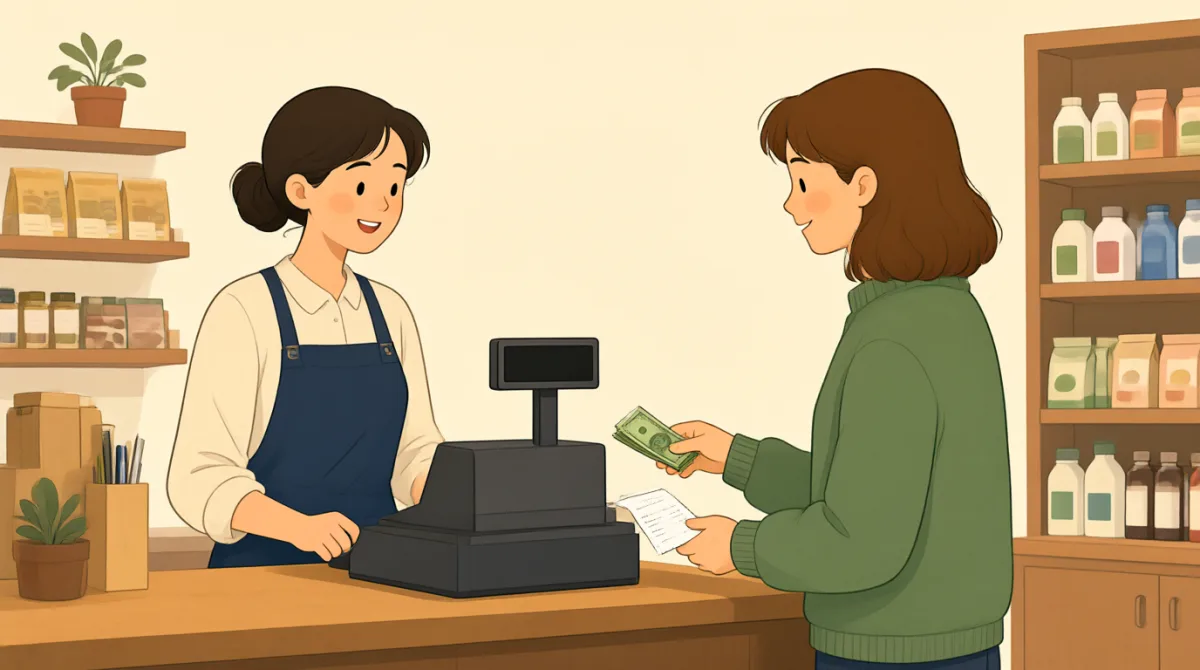
The cashier tells the customer the total cost, and the customer handles the payment using cash, card, or mobile payment. They then receive the receipt.
कैशियर ग्राहक को कुल कीमत बताता है और ग्राहक नकद, कार्ड या मोबाइल भुगतान से पैसे चुकाता है। फिर उसे रसीद मिलती है।
संवाद8

Your total is $12.75.
आपका कुल बिल 12.75 डॉलर है।

Okay. Do you take card?
ठीक है। क्या आप कार्ड लेते हैं?
Yes, we do. Just insert your card here.
हाँ, लेते हैं। बस अपना कार्ड यहाँ डाल दीजिए।
Alright. And can I get a receipt?
अच्छा। और क्या मुझे रसीद मिल सकती है?
Certainly. It'll print out right after the transaction is complete.
ज़रूर। लेन-देन पूरा होते ही यह प्रिंट होकर निकल आएगी।
Perfect. Thanks!
बढ़िया। शुक्रिया!
You're welcome. Here's your receipt. Have a great day!
कोई बात नहीं। ये लीजिए आपकी रसीद। आपका दिन अच्छा गुज़रे!
You too!
आपका भी!
शब्दावली6
- totalकुल राशि
The total amount is the final sum of money you need to pay for your order. Use it when the cashier tells you the cost, like 'Your total is $12.75.'
कुल राशि वह अंतिम रकम है जो आपको अपने ऑर्डर के लिए चुकानी होती है। कैशियर जब कीमत बताता है, तब इसका इस्तेमाल होता है, जैसे 'Your total is $12.75.' (आपका कुल बिल 12.75 डॉलर है।)
- cardकार्ड
A card refers to a credit or debit card used for payment. In fast food, ask 'Do you take card?' to check if they accept it.
यहाँ card से मतलब भुगतान के लिए इस्तेमाल होने वाले क्रेडिट या डेबिट कार्ड से है। फ़ास्ट फ़ूड की जगह पर यह जानने के लिए पूछें कि वे कार्ड स्वीकार करते हैं या नहीं: 'Do you take card?' (क्या आप कार्ड लेते हैं?)
- insertडालना
To insert means to put your card into a machine slot. It's common in payment instructions, like 'Insert your card here' at stores.
insert का मतलब है कार्ड को मशीन के स्लॉट में डालना। भुगतान के निर्देशों में यह आम है, जैसे दुकानों पर 'Insert your card here' (अपना कार्ड यहाँ डालें)।
- receiptरसीद
A receipt is a printed paper that shows what you bought and how much you paid. Always ask for one after paying to keep a record.
रसीद एक छपा हुआ कागज़ है, जिसमें लिखा होता है कि आपने क्या खरीदा और कितने पैसे दिए। भुगतान के बाद हिसाब रखने के लिए रसीद माँग लें।
- transactionलेन-देन
A transaction is the process of paying for something. It's used in formal contexts like 'after the transaction is complete' when using a card.
transaction का मतलब है किसी चीज़ के लिए भुगतान करने की प्रक्रिया। कार्ड से भुगतान के संदर्भ में औपचारिक तौर पर इसका इस्तेमाल होता है, जैसे 'after the transaction is complete' (लेन-देन पूरा होने के बाद)।
- print outप्रिंट होकर निकलना
To print out means to produce a paper copy from a machine. In payments, it refers to the receipt coming out, like 'It'll print out right after.'
print out का मतलब है मशीन से कागज़ की प्रति निकलना। भुगतान के समय इससे मतलब रसीद के प्रिंट होकर निकलने से है, जैसे 'It'll print out right after.' (यह तुरंत बाद प्रिंट होकर निकल आएगी।)
मुख्य वाक्य7
- 1
Your total is $12.75.
आपका कुल बिल 12.75 डॉलर है।
This is a common way cashiers announce the final amount to pay. It's useful for customers to hear and confirm. Note the structure: 'Your [noun] is [amount].' for stating costs.
कैशियर चुकाई जाने वाली अंतिम रकम बताने के लिए आम तौर पर यह वाक्य कहता है। ग्राहक इसे सुनकर रकम की पुष्टि कर सकते हैं। कीमत बताने का ढाँचा है: 'Your [noun] is [amount].' ([आपकी/आपका] [चीज़] [रकम] है।)
- 2
Do you take card?
क्या आप कार्ड लेते हैं?
This polite question asks if the store accepts card payments. Use it when you prefer not to use cash. 'Take' here means 'accept'; it's a yes/no question for quick confirmation.
यह विनम्रता से पूछने का तरीका है कि दुकान कार्ड से भुगतान स्वीकार करती है या नहीं। जब आप नकद के बजाय कार्ड से भुगतान करना चाहें, तब पूछें। यहाँ 'take' का मतलब 'accept' (स्वीकार करना) है। यह जल्दी से हाँ या ना में जवाब पाने वाला सवाल है।
- 3
Yes, we do. Just insert your card here.
हाँ, लेते हैं। बस अपना कार्ड यहाँ डाल दीजिए।
This responds affirmatively and gives instructions. 'Yes, we do' is a short way to answer 'Do you...?'. Useful for service workers; 'just' makes it sound simple and helpful.
यह हाँ में जवाब देते हुए निर्देश भी देता है। 'Yes, we do' का इस्तेमाल 'Do you...?' का छोटा जवाब देने के लिए होता है। सेवा देने वाले लोग इसे अक्सर कहते हैं। 'just' से निर्देश आसान और मददगार लगता है।
- 4
And can I get a receipt?
और क्या मुझे रसीद मिल सकती है?
This requests a receipt after paying. Add 'And' to connect to previous talk. It's polite with 'can I'; use it anytime you want proof of purchase.
भुगतान के बाद रसीद माँगने के लिए यह वाक्य कहें। पहले की बात से जोड़ने के लिए 'And' लगाएँ। 'can I' इसे विनम्र बनाता है। खरीदारी का सबूत चाहिए हो, तो इसका इस्तेमाल करें।
- 5
Certainly. It'll print out right after the transaction is complete.
ज़रूर। लेन-देन पूरा होते ही यह प्रिंट होकर निकल आएगी।
'Certainly' means 'of course' politely. 'It'll' is short for 'It will'; future tense for predictions. Useful for assuring customers about the process in service situations.
'Certainly' का विनम्र अर्थ 'of course' (बिल्कुल) है। 'It'll', 'It will' का संक्षिप्त रूप है और भविष्य की बात बताता है। सेवा के दौरान ग्राहक को प्रक्रिया के बारे में आश्वस्त करने के लिए यह उपयोगी है।
- 6
You're welcome. Here's your receipt. Have a great day!
कोई बात नहीं। ये लीजिए आपकी रसीद। आपका दिन अच्छा गुज़रे!
This is a standard polite response to 'thanks,' followed by handing over the item and a friendly goodbye. Use it to end interactions positively; 'Have a great day' is common in American English service.
'thanks' का यह एक आम और विनम्र जवाब है। इसके बाद सामने वाले को चीज़ देते हुए दोस्ताना विदाई दी जाती है। बातचीत को अच्छे ढंग से खत्म करने के लिए इसका इस्तेमाल करें। अमेरिकी अंग्रेज़ी में सेवा के दौरान 'Have a great day' कहना आम है।
- 7
You too!
आपका भी!
A casual way to return a wish like 'Have a great day.' It's short and friendly; use it to mirror the speaker's politeness without repeating the full phrase.
'Have a great day' जैसी शुभकामना का जवाब देने का यह छोटा और दोस्ताना तरीका है। पूरी बात दोहराए बिना सामने वाले की विनम्रता का जवाब देने के लिए इसका इस्तेमाल करें।