Handling Payment and Receipt
পেমেন্ট করা ও রসিদ নেওয়া
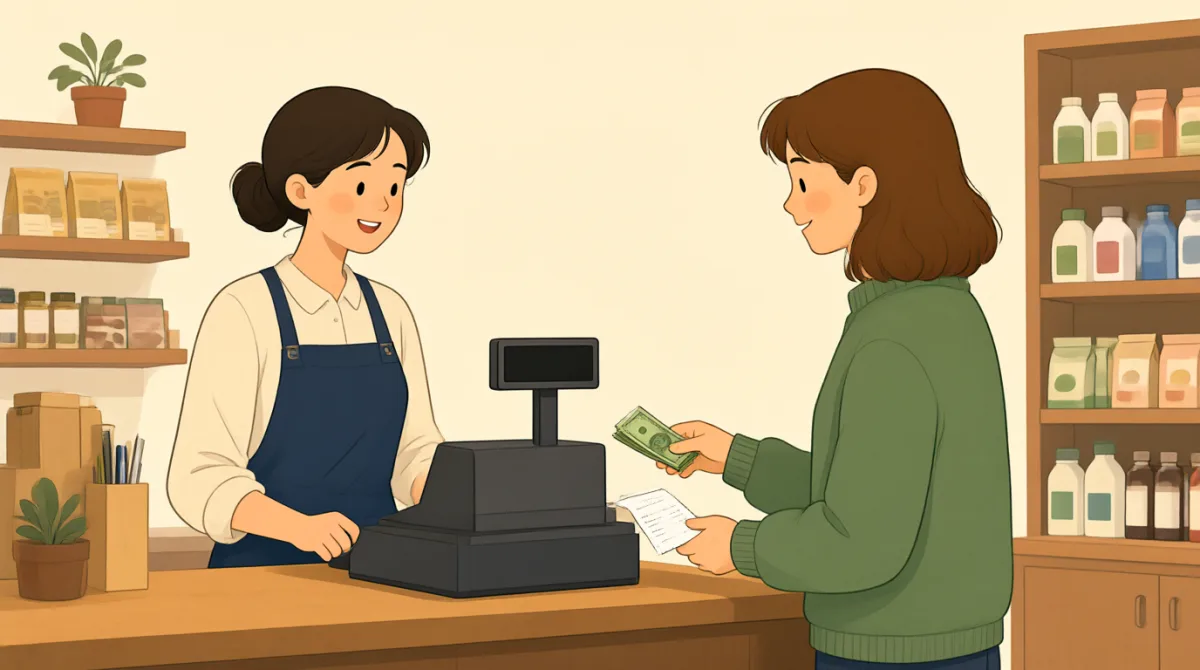
The cashier tells the customer the total cost, and the customer handles the payment using cash, card, or mobile payment. They then receive the receipt.
ক্যাশিয়ার ক্রেতাকে মোট দাম জানান, আর ক্রেতা নগদ টাকা, কার্ড বা মোবাইল পেমেন্টের মাধ্যমে দাম পরিশোধ করেন। এরপর তিনি রসিদ পান।
সংলাপ8

Your total is $12.75.
আপনার মোট ১২.৭৫ ডলার।

Okay. Do you take card?
আচ্ছা। আপনারা কি কার্ড নেন?
Yes, we do. Just insert your card here.
হ্যাঁ, নিই। কার্ডটা এখানে ঢুকিয়ে দিন।
Alright. And can I get a receipt?
বেশ। আর আমি কি একটা রসিদ পেতে পারি?
Certainly. It'll print out right after the transaction is complete.
অবশ্যই। লেনদেন সম্পন্ন হলেই এটা প্রিন্ট হয়ে বের হবে।
Perfect. Thanks!
দারুণ। ধন্যবাদ!
You're welcome. Here's your receipt. Have a great day!
আপনাকে স্বাগতম। এই নিন আপনার রসিদ। আপনার দিনটি ভালো কাটুক!
You too!
আপনারও!
শব্দভান্ডার6
- totalমোট দাম
The total amount is the final sum of money you need to pay for your order. Use it when the cashier tells you the cost, like 'Your total is $12.75.'
মোট দাম হলো আপনার অর্ডারের জন্য যে পরিমাণ টাকা দিতে হবে। ক্যাশিয়ার যখন দাম জানান, তখন এই শব্দটি ব্যবহার করা হয়, যেমন 'Your total is $12.75.' (আপনার মোট ১২.৭৫ ডলার।)
- cardকার্ড
A card refers to a credit or debit card used for payment. In fast food, ask 'Do you take card?' to check if they accept it.
এখানে card বলতে পেমেন্টের জন্য ব্যবহৃত ক্রেডিট বা ডেবিট কার্ড বোঝায়। ফাস্ট ফুডের দোকানে কার্ড নেয় কি না জানতে বলুন, 'Do you take card?' (আপনারা কি কার্ড নেন?)
- insertঢোকানো
To insert means to put your card into a machine slot. It's common in payment instructions, like 'Insert your card here' at stores.
insert মানে কোনো কিছুর ভেতরে ঢোকানো। কার্ড পেমেন্টের সময় কার্ডটি মেশিনের স্লটে ঢোকাতে বলা হয়, যেমন 'Insert your card here' (আপনার কার্ডটি এখানে ঢোকান)।
- receiptরসিদ
A receipt is a printed paper that shows what you bought and how much you paid. Always ask for one after paying to keep a record.
receipt হলো কেনাকাটার বিবরণ ও কত টাকা দেওয়া হয়েছে তা লেখা কাগজ। পেমেন্টের পর হিসাবের প্রমাণ হিসেবে রসিদটি চাইতে পারেন।
- transactionলেনদেন
A transaction is the process of paying for something. It's used in formal contexts like 'after the transaction is complete' when using a card.
transaction হলো কোনো কিছুর দাম পরিশোধ করার প্রক্রিয়া। কার্ডে পেমেন্টের ক্ষেত্রে আনুষ্ঠানিকভাবে বলা হয়, 'after the transaction is complete' (লেনদেন সম্পন্ন হওয়ার পর)।
- print outপ্রিন্ট হয়ে বের হওয়া
To print out means to produce a paper copy from a machine. In payments, it refers to the receipt coming out, like 'It'll print out right after.'
print out মানে কোনো যন্ত্র থেকে কাগজে ছাপিয়ে বের করা। পেমেন্টের ক্ষেত্রে এটি রসিদ বের হওয়াকে বোঝায়, যেমন 'It'll print out right after.' (এর পরপরই এটা প্রিন্ট হয়ে বের হবে।)
গুরুত্বপূর্ণ বাক্য7
- 1
Your total is $12.75.
আপনার মোট ১২.৭৫ ডলার।
This is a common way cashiers announce the final amount to pay. It's useful for customers to hear and confirm. Note the structure: 'Your [noun] is [amount].' for stating costs.
ক্যাশিয়াররা মোট কত টাকা দিতে হবে তা জানাতে সাধারণত এই বাক্যটি বলেন। ক্রেতারাও দাম শুনে নিশ্চিত হতে পারেন। দাম জানাতে এই গঠনটি খেয়াল করুন: 'Your [noun] is [amount].' (আপনার [বিশেষ্য] হলো [পরিমাণ]।)
- 2
Do you take card?
আপনারা কি কার্ড নেন?
This polite question asks if the store accepts card payments. Use it when you prefer not to use cash. 'Take' here means 'accept'; it's a yes/no question for quick confirmation.
দোকানে কার্ডে পেমেন্ট করা যায় কি না জানতে ভদ্রভাবে এই প্রশ্নটি করা হয়। নগদ টাকা দিতে না চাইলে এটি বলতে পারেন। এখানে 'take' মানে 'accept' (গ্রহণ করা); দ্রুত হ্যাঁ-না উত্তর পাওয়ার জন্য প্রশ্নটি করা হয়।
- 3
Yes, we do. Just insert your card here.
হ্যাঁ, নিই। কার্ডটা এখানে ঢুকিয়ে দিন।
This responds affirmatively and gives instructions. 'Yes, we do' is a short way to answer 'Do you...?'. Useful for service workers; 'just' makes it sound simple and helpful.
এই উত্তরে হ্যাঁ বলার পাশাপাশি কী করতে হবে তা জানানো হয়েছে। 'Yes, we do' হলো 'Do you...?' প্রশ্নের সংক্ষিপ্ত উত্তর। সেবাকর্মীরা এটি ব্যবহার করতে পারেন; 'just' বললে নির্দেশটি সহজ ও সহায়ক শোনায়।
- 4
And can I get a receipt?
আর আমি কি একটা রসিদ পেতে পারি?
This requests a receipt after paying. Add 'And' to connect to previous talk. It's polite with 'can I'; use it anytime you want proof of purchase.
পেমেন্টের পর রসিদ চাইতে এই বাক্যটি ব্যবহার করুন। আগের কথার সঙ্গে যোগ করতে 'And' বলা হয়েছে। 'can I' থাকায় বাক্যটি ভদ্র শোনায়; কেনাকাটার প্রমাণ চাইলে এটি বলতে পারেন।
- 5
Certainly. It'll print out right after the transaction is complete.
অবশ্যই। লেনদেন সম্পন্ন হলেই এটা প্রিন্ট হয়ে বের হবে।
'Certainly' means 'of course' politely. 'It'll' is short for 'It will'; future tense for predictions. Useful for assuring customers about the process in service situations.
'Certainly' মানে ভদ্রভাবে 'of course' (অবশ্যই)। 'It'll' হলো 'It will'-এর সংক্ষিপ্ত রূপ; ভবিষ্যতে কিছু ঘটবে বোঝাতে এটি ব্যবহৃত হয়। সেবার ক্ষেত্রে প্রক্রিয়াটি সম্পর্কে ক্রেতাকে আশ্বস্ত করতে এই বাক্যটি কাজে লাগে।
- 6
You're welcome. Here's your receipt. Have a great day!
আপনাকে স্বাগতম। এই নিন আপনার রসিদ। আপনার দিনটি ভালো কাটুক!
This is a standard polite response to 'thanks,' followed by handing over the item and a friendly goodbye. Use it to end interactions positively; 'Have a great day' is common in American English service.
কেউ 'thanks' বললে এটি ভদ্রভাবে উত্তর দেওয়ার প্রচলিত উপায়। এরপর জিনিসটি এগিয়ে দিয়ে বন্ধুত্বপূর্ণ বিদায় জানানো হয়। কথাবার্তা সুন্দরভাবে শেষ করতে এটি বলুন। আমেরিকান ইংরেজিতে সেবার ক্ষেত্রে 'Have a great day' বলা খুবই প্রচলিত।
- 7
You too!
আপনারও!
A casual way to return a wish like 'Have a great day.' It's short and friendly; use it to mirror the speaker's politeness without repeating the full phrase.
'Have a great day'-এর মতো শুভকামনার জবাবে সংক্ষেপে ও বন্ধুত্বপূর্ণভাবে এটি বলা হয়। পুরো কথাটি আবার না বলে একই সৌজন্য ফিরিয়ে দিতে এই বাক্যটি ব্যবহার করুন।