A Day by the Sea
วันหนึ่งริมทะเล
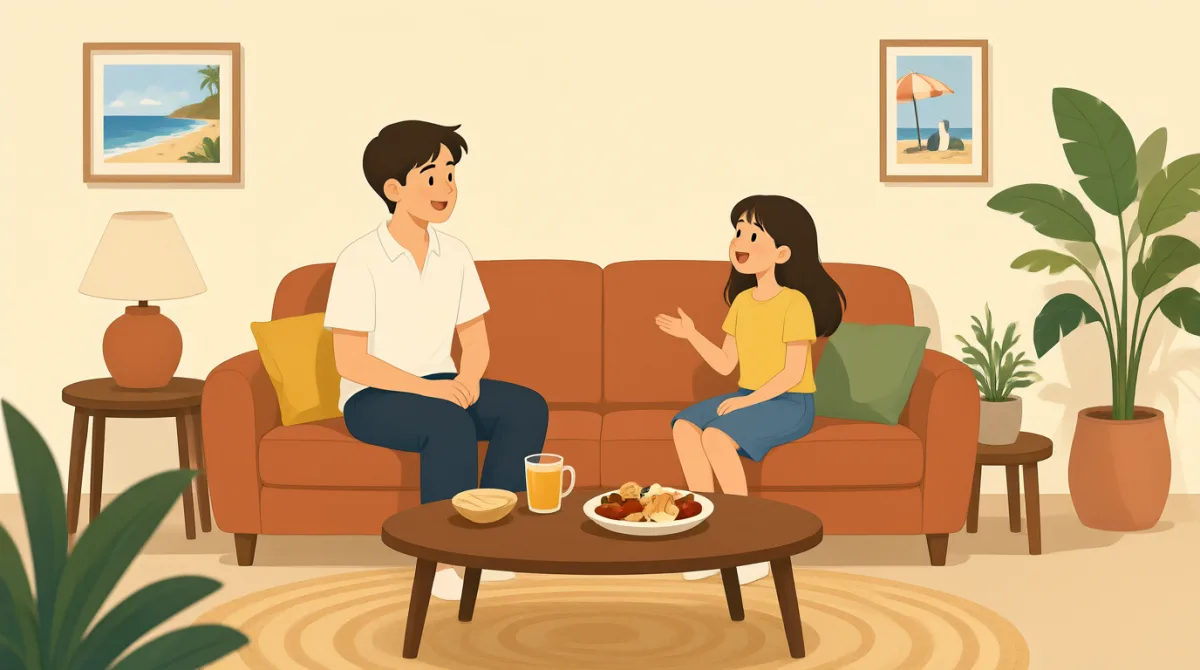
Mia tells Emma about the things she did on vacation, from walking along the beach to trying local food.
มีอาเล่าให้เอมมาฟังว่าเธอทำอะไรบ้างตอนเที่ยว ตั้งแต่เดินเล่นริมชายหาดไปจนถึงลองชิมอาหารท้องถิ่น
บทสนทนา8

What did you do on your first day at the coast?
วันแรกที่ไปเที่ยวทะเล เธอทำอะไรบ้าง?

I walked along the beach and watched the waves.
ฉันเดินเล่นริมชายหาดแล้วก็ดูคลื่น
That sounds lovely. Did you go swimming, too?
ฟังดูน่าสนุกจัง แล้วเธอได้ลงเล่นน้ำด้วยไหม?
No, the water was too cold, so I just put my feet in.
ไม่ได้ลง น้ำเย็นเกินไป ฉันก็เลยแค่เอาเท้าจุ่มน้ำ
What else did you do during your trip?
ระหว่างทริปเธอทำอะไรอีกบ้าง?
I visited a small market and bought a few snacks.
ฉันแวะไปตลาดเล็กๆ แล้วก็ซื้อขนมมานิดหน่อย
Did you try any local food while you were there?
ตอนอยู่ที่นั่น เธอได้ลองกินอาหารท้องถิ่นบ้างไหม?
Yes, I had fresh fish and a bowl of seafood soup.
ได้กินสิ ฉันกินปลาสดกับซุปทะเลหนึ่งชาม
คำศัพท์8
- walked along the beachเดินเล่นริมชายหาด
This means you walked beside the sea on the sand. Use “walked along” to say you moved beside something.
หมายถึงเดินบนผืนทรายเลียบทะเล ใช้ “walked along” เมื่อพูดถึงการเดินไปตามแนวข้างๆ สิ่งใดสิ่งหนึ่ง
- watched the wavesดูคลื่น
This means you looked at the water as it moved toward the shore. You can use “watched” for something you looked at for a while.
หมายถึงมองดูน้ำที่เคลื่อนเข้าหาฝั่ง ใช้ “watched” กับสิ่งที่เรามองดูอยู่สักพักหนึ่งได้
- put my feet inเอาเท้าจุ่มน้ำ
This means Mia put her feet into the water but did not go swimming. Use this phrase when you dip just part of your body into water.
หมายถึงมีอาเอาเท้าจุ่มลงไปในน้ำ แต่ไม่ได้ลงว่ายน้ำ ใช้วลีนี้เมื่อจุ่มร่างกายลงในน้ำเพียงบางส่วน
- a small marketตลาดเล็กๆ
This is a little place where people buy and sell food or other things. You can use “a small” before a singular noun to describe its size.
หมายถึงสถานที่เล็กๆ ที่ผู้คนซื้อขายอาหารหรือสิ่งของอื่นๆ วาง “a small” ไว้หน้าคำนามเอกพจน์เพื่อบอกขนาดของสิ่งนั้น
- bought a few snacksซื้อขนมมานิดหน่อย
This means Mia purchased some small foods to eat between meals. Use “a few” with plural things when you mean a small number.
หมายถึงมีอาซื้อของกินเล่นเล็กๆ น้อยๆ ไว้กินระหว่างมื้อ ใช้ “a few” กับคำนามพหูพจน์เมื่อต้องการบอกว่ามีจำนวนไม่มาก
- local foodอาหารท้องถิ่น
This means food that is common in the place you are visiting. You can ask about it when you travel.
หมายถึงอาหารที่พบได้ทั่วไปในสถานที่ที่เราไปเที่ยว ใช้ถามถึงอาหารแบบนี้ได้เวลาเดินทาง
- fresh fishปลาสด
This means fish that is recently caught or prepared. You can use “fresh” to describe food that is not old.
หมายถึงปลาที่เพิ่งจับหรือเพิ่งเตรียม ใช้ “fresh” บรรยายอาหารที่ไม่เก่าได้
- seafood soupซุปทะเล
This is soup made with seafood, such as fish or shellfish. You can use this phrase to name a kind of soup.
หมายถึงซุปที่ทำจากอาหารทะเล เช่น ปลา หรือหอย ใช้วลีนี้เรียกซุปชนิดหนึ่งได้
ประโยคสำคัญ8
- 1
What did you do on your first day at the coast?
วันแรกที่ไปเที่ยวทะเล เธอทำอะไรบ้าง?
This is a useful question for asking about someone's activities during a trip. Change “your first day” to another time, such as “your last day.”
คำถามนี้ใช้ถามถึงกิจกรรมที่ใครสักคนทำระหว่างทริปได้ ลองเปลี่ยน “your first day” เป็นช่วงเวลาอื่น เช่น “your last day”
- 2
I walked along the beach and watched the waves.
ฉันเดินเล่นริมชายหาดแล้วก็ดูคลื่น
This describes two past activities in one sentence. Use “I [past activity] and [past activity]” to talk about things you did.
ประโยคนี้บอกกิจกรรมสองอย่างที่ทำไปแล้วในประโยคเดียว ใช้รูปแบบ “I [past activity] and [past activity]” เพื่อเล่าถึงสิ่งที่ทำมาแล้ว
- 3
Did you go swimming, too?
แล้วเธอได้ลงเล่นน้ำด้วยไหม?
This is a simple way to ask if someone did an activity as well. Replace “go swimming” with another activity, such as “go shopping.”
นี่เป็นวิธีง่ายๆ ในการถามว่าอีกฝ่ายทำกิจกรรมนั้นด้วยหรือเปล่า ลองเปลี่ยน “go swimming” เป็นกิจกรรมอื่น เช่น “go shopping”
- 4
No, the water was too cold, so I just put my feet in.
ไม่ได้ลง น้ำเย็นเกินไป ฉันก็เลยแค่เอาเท้าจุ่มน้ำ
This explains why Mia did not swim and what she did instead. Use “too [adjective], so…” to give a reason and result.
ประโยคนี้อธิบายว่าทำไมมีอาถึงไม่ได้ว่ายน้ำ และเธอทำอะไรแทน ใช้ “too [adjective], so…” เพื่อบอกเหตุผลและผลที่ตามมา
- 5
What else did you do during your trip?
ระหว่างทริปเธอทำอะไรอีกบ้าง?
Use this question to ask about more activities someone did. “What else” is a helpful way to continue a conversation.
ใช้คำถามนี้ถามถึงกิจกรรมอื่นๆ ที่อีกฝ่ายทำได้ “What else” เป็นวิธีชวนคุยต่อที่มีประโยชน์
- 6
I visited a small market and bought a few snacks.
ฉันแวะไปตลาดเล็กๆ แล้วก็ซื้อขนมมานิดหน่อย
This sentence gives two examples of things Mia did on her trip. Use the simple past to describe completed activities.
ประโยคนี้ยกตัวอย่างสองอย่างที่มีอาทำระหว่างทริป ใช้รูปอดีตกาลธรรมดาเพื่อเล่ากิจกรรมที่ทำเสร็จแล้ว
- 7
Did you try any local food while you were there?
ตอนอยู่ที่นั่น เธอได้ลองกินอาหารท้องถิ่นบ้างไหม?
This is a useful question about food someone tried during a visit. Replace “local food” with a dish or drink to ask about something specific.
คำถามนี้ใช้ถามถึงอาหารที่อีกฝ่ายได้ลองกินระหว่างไปเที่ยว ลองเปลี่ยน “local food” เป็นชื่ออาหารหรือเครื่องดื่ม เพื่อถามถึงสิ่งใดสิ่งหนึ่งโดยเฉพาะ
- 8
Yes, I had fresh fish and a bowl of seafood soup.
ได้กินสิ ฉันกินปลาสดกับซุปทะเลหนึ่งชาม
This is a natural way to say what you ate. Use “I had” followed by foods or drinks when talking about a meal.
นี่เป็นวิธีพูดอย่างเป็นธรรมชาติว่าเรากินอะไร ใช้ “I had” ตามด้วยชื่ออาหารหรือเครื่องดื่มเมื่อพูดถึงมื้ออาหาร